


Background
Cumbria Fire and Rescue Service (CFRS) runs active public outreach programmes focused on water safety and road danger, particularly during spring and summer months when young people increasingly visit the Lake District's rivers and lakes. Cold water shock — the involuntary gasping response triggered by sudden immersion in cold water — is a leading cause of accidental drowning in the region.
The Deployment
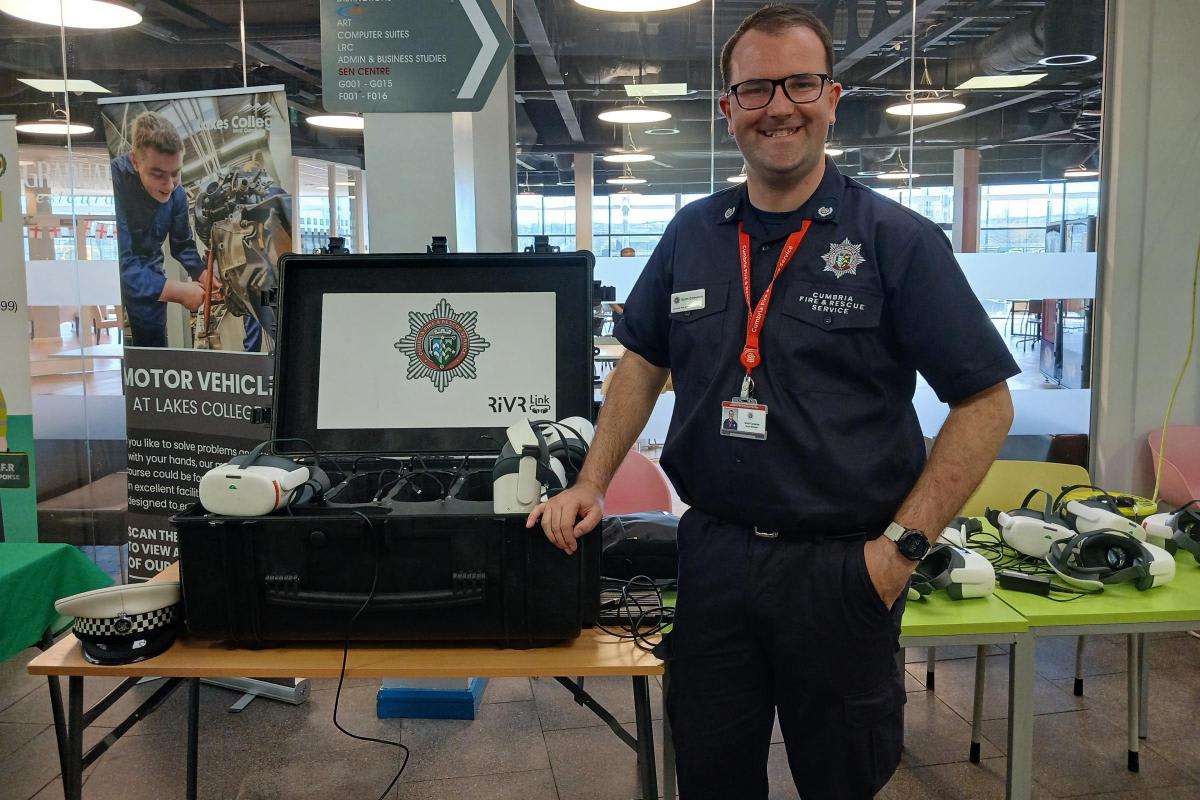
In April 2026, Scott Cameron, Group Manager (Prevention and Protection) at CFRS, visited Lakes College in Workington to deliver safety messaging to students using VR headsets. The visit was timed ahead of summer, when the risk of cold water incidents rises sharply. The CFRS stall used headsets to place users inside first-person simulated scenarios: one depicting a person falling into a pond near a factory, another placing students in a dangerous driving situation.
CFRS was joined by North West Ambulance Service (NWAS), which delivered hands-on CPR instruction alongside the immersive CFRS content. The combined event also highlighted career opportunities in public services.
Content and Messaging
The VR scenarios were selected to make abstract danger visceral. The cold water scenario illustrated the shock, panic, and disorientation of sudden immersion, while the road crash scenario reinforced safe driving awareness. Both topics are priority prevention areas for CFRS, which attends hundreds of water-related incidents in Cumbria each year.
Outcomes
The deployment reflects an established CFRS approach of using VR-based immersive scenarios to deliver safety education in schools and colleges, complementing traditional presentations with an experiential dimension designed to increase recall and behaviour change.


