


Background
Pre-flight walkaround inspections are a mandatory element of type rating in commercial aviation. Traditional training is constrained by aircraft availability, weather conditions, and restricted airside access, making consistent high-quality instruction difficult to deliver at scale. Until March 2026, no VR-based system had received formal regulatory recognition from the UK Civil Aviation Authority as an approved training device.
The Deployment
Jet2.com became the first airline to deploy the TACET Walkaround system, installing six units across its training centres in Manchester and Bradford. The system was developed by Exeter-based immersive technology specialist Cineon in partnership with Jet2. In early 2026 the UK CAA certified TACET Walkaround as an Other Training Device — the first VR-based system to receive this regulatory classification for pilot training in the UK. Jet2 can now formally credit VR-based inspection training within its approved syllabi.
The TACET System
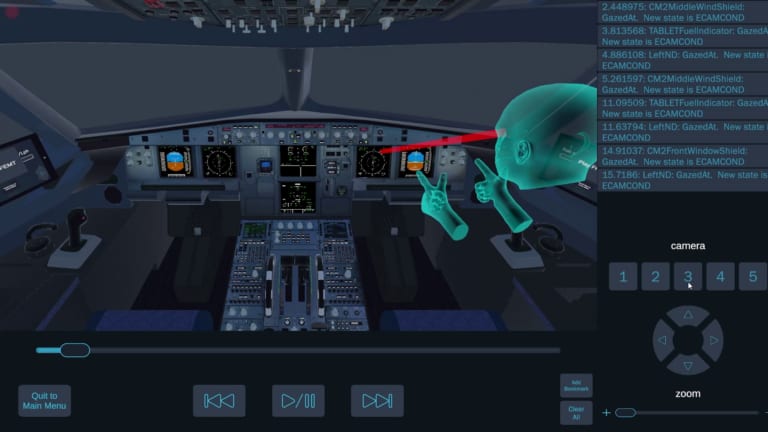
TACET recreates Boeing 737-800 and Airbus A321neo aircraft with over 100 inspection points in a high-fidelity virtual environment. Integrated eye-tracking monitors where trainee pilots direct their attention during virtual walkaround checks, capturing scan patterns, attention distribution, and hazard-detection behaviour. This data supports Competency-Based Training and Assessment (CBTA) and Evidence-Based Training (EBT) frameworks, providing objective, quantifiable insight in place of subjective instructor evaluation.
Empathic Learning Engine
Underpinning the platform is Cineon's Empathic Learning Engine, an emotion-AI model trained on behavioural datasets. The engine interprets visual attention and assesses situational awareness during virtual inspections, generating performance metrics on gaze strategy, inspection efficiency, and human factors such as workload and fatigue.
Significance
The CAA certification establishes VR as an approved means of compliance for structured pre-flight walkaround training in the UK. Additional aircraft types are in development, and the system was publicly demonstrated at the European Aviation Training Summit (EATS 2025) in Cascais, Portugal in November 2025, ahead of the formal regulatory approval announced in March 2026.


