


Background
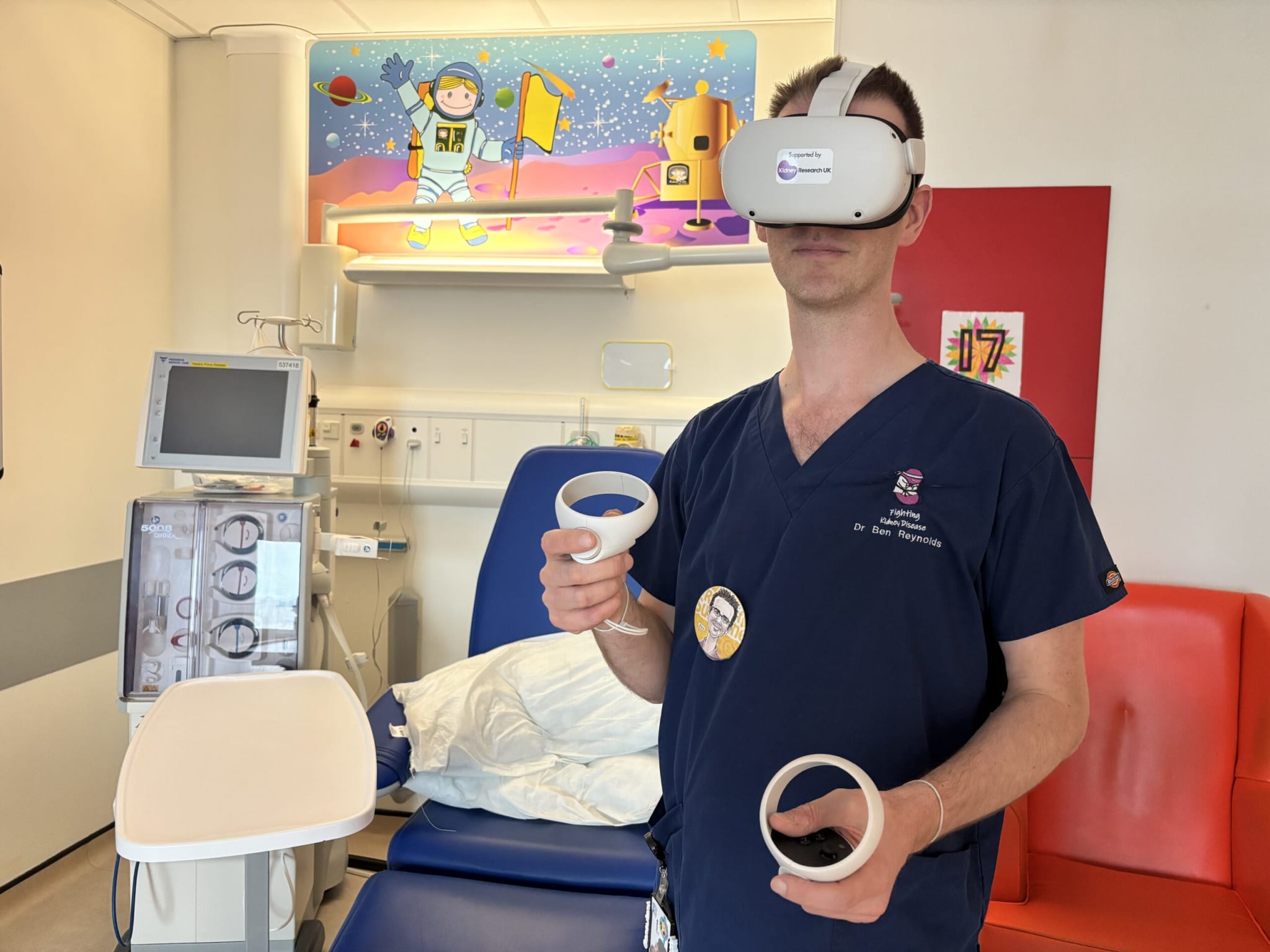
NHS Greater Glasgow and Clyde (NHSGGC) has deployed a virtual reality training tool at the Royal Hospital for Children in Glasgow to help patients and their families learn how to perform peritoneal dialysis at home. The project was inspired by Dr Ben Reynolds, a Paediatric Nephrologist at the Royal Hospital for Children, who began gaming in VR during the Covid pandemic and recognised the technology's potential for patient education.
The deployment
The training tool immerses users in a simulation of the dialysis setup process, guiding them step by step through the procedure in a risk-free environment. Patients and families work through the process as many times as they need before being discharged to administer dialysis at home. The experience is designed to mirror the physical motions of a real session, building procedural familiarity before patients encounter the equipment in earnest.
Currently used for peritoneal dialysis, the tool is being extended to cover at-home haemodialysis. Both forms of dialysis involve removing waste and excess water from the blood for patients with kidney failure.
Hardware and software
NHSGGC has three VR headsets available for patient and family use. The application was co-developed over more than five years of iterative design with clinicians, nurses, patients, and families. Professor Vassilis Charisis of Edinburgh Napier University (who led the VR research, previously at Glasgow Caledonian University) worked closely with Dr Reynolds throughout development. The project received grant funding from the charity Kidney Research UK and endowment funding from NHSGGC, with support from the West of Scotland Innovation Hub.
Outcomes
The tool has been used successfully by families across Scotland. The clinical team reports it reduces anxiety about at-home dialysis, supports more informed decision-making between dialysis modalities, and reduces the need for repeated in-hospital training visits. A reduction in patient travel is also cited as a secondary environmental benefit. The project was recognised at the Centre of Engineering Education and Development industry awards for innovation and collaboration.


