


Background
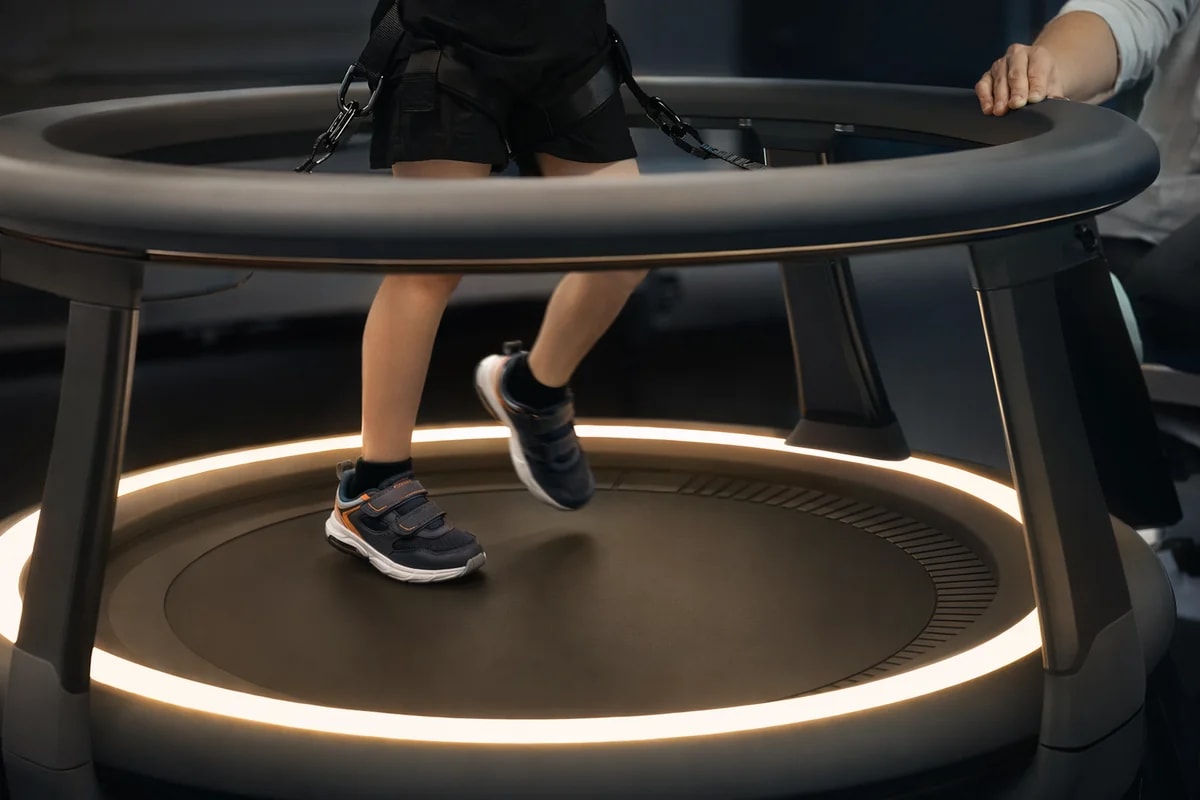
Rutgers University's WINLAB (Wireless Information Network Laboratory) in New Jersey has deployed the Omni One omnidirectional treadmill platform from Virtuix as part of a research initiative into AI-assisted neurodivergent therapy. The collaboration, announced in May 2026, focuses on autism therapy for children and broader behavioral analytics applications.
The Deployment
The Omni One platform enables users to walk and run 360 degrees within VR environments, introducing full-body locomotion as a therapeutic interaction modality. The research initiative explores whether combining immersive virtual environments with full-body movement and adaptive AI may enhance engagement and learning outcomes compared to traditional therapy approaches that rely primarily on visual and audio interaction.
Researchers at WINLAB plan to evaluate a range of patient response indicators over time, including attention, movement patterns, response timing, engagement consistency, and spatial interaction.
Approach
The project combines Virtuix's locomotion hardware with AI-enhanced immersive environments specifically designed to support movement-centered interactions and spatial navigation. This positions the deployment within an emerging category of movement-first XR therapy, distinct from seated or stationary VR approaches.
The work at Rutgers follows an earlier Omni One deployment to Florida Gulf Coast University for evaluation across physical therapy, occupational therapy, neurological rehabilitation, and clinical simulation -- indicating growing university-sector interest in full-body VR for healthcare research.
Context
The global autism spectrum disorder (ASD) treatment market is projected to grow from approximately $9.2 billion in 2026 to over $18 billion by 2034, according to Fortune Business Insights, at a compound annual growth rate of around 9%. Virtuix sees this expanding demand as validation for movement-centered, AI-enabled VR as a next-generation therapeutic tool.

