


Background
Sacramento City College in California has expanded its aviation education programme with a three-unit deployment of immersive flight simulation technology from True Course Simulations (TCS), a developer of VR and mixed reality flight training devices headquartered in Prescott, Arizona.
The deployment
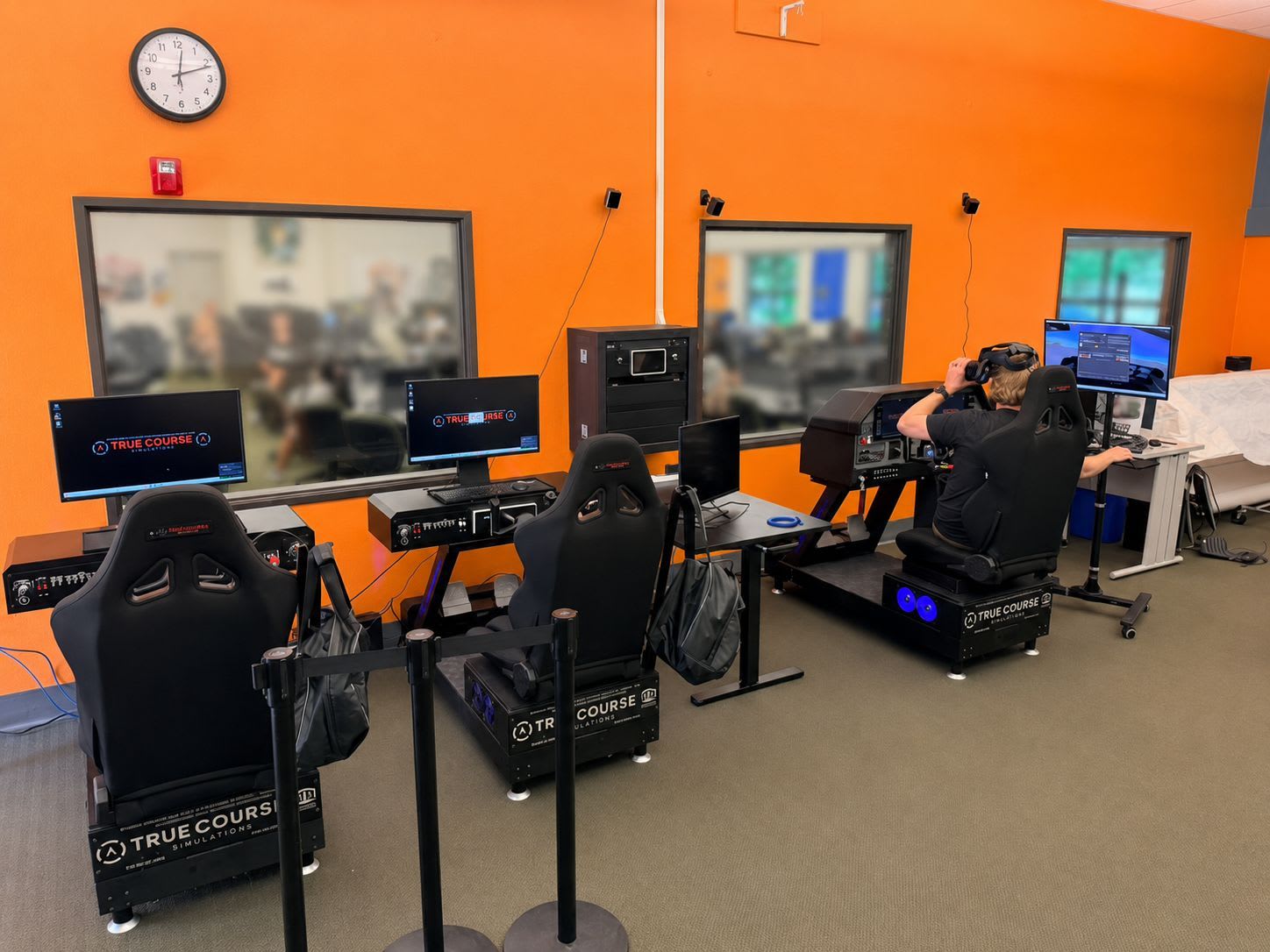
The installation comprises one Mixed Reality (MR) Immersive Flight Simulator and two VR Immersive Flight Simulators. The MR unit combines a physical cockpit with an MR headset that blends real instruments and controls with a virtual outside world, enabling students to interact with tangible avionics while flying through digitally rendered environments. The two VR units deliver full visual isolation, immersing students in a 360-degree virtual cockpit for procedural and flight skills training.
Hardware and software
Each TCS simulator is built around a physical cockpit with pro-grade controls, subtle motion actuation for pitch, roll, and yaw cues, and a high-resolution headset. The system runs TCS's Virtual Flight Instructor Courseware, which records and analyses each session against 70+ structured lessons and delivers performance feedback through an integrated LMS backend. Students can practice complex and high-risk manoeuvres — engine failures, emergency landings, stalls, and IFR procedures — without risk to aircraft or personnel.
Leadership and intent
The deployment was led by Paul Estabrook, Dean of Technology and Innovation at Sacramento City College. The college frames the installation as a step toward bridging classroom aviation theory with practical simulation experience, positioning students for faster skill acquisition before transitioning to real aircraft.
Outcomes context
TCS has documented a 30% reduction in time-to-solo at Embry-Riddle Aeronautical University following comparable deployments, a benchmark the Sacramento City College programme will be measured against.

