


Background
The United States faces a projected shortfall of skilled semiconductor workers, and hands-on cleanroom experience is a longstanding bottleneck in training the next generation of chip-fabrication technicians. Physical cleanrooms are expensive, contamination-sensitive, and hard to expose large undergraduate classes to.
The deployment
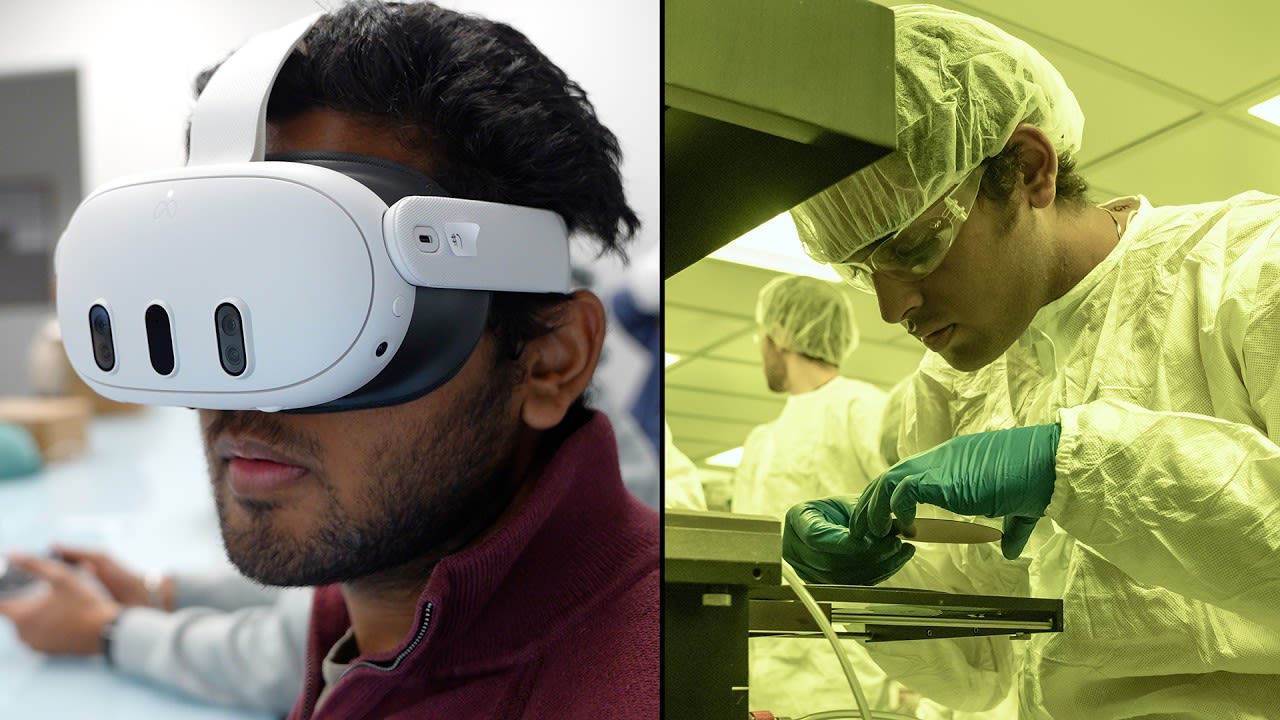
At Virginia Tech, undergraduate students in Professor Wei Zhou's semiconductor processing course now use virtual reality headsets to train in cleanroom environments without leaving the classroom. The pilot lets students rehearse gowning, contamination control, and core fabrication procedures in an immersive simulation before entering a live cleanroom.
The technology
The experience uses 360-degree video VR modules delivered on standalone headsets. Each module places the learner inside a working cleanroom, face to face with the equipment and process steps such as photolithography, etching, deposition, and metrology. The content was developed by the Cornell NanoScale Facility (CNF) with Cornell's Center for Teaching Innovation, with a planned library of more than 30 modules.
Collaboration and aims
Virginia Tech's pilot runs in collaboration with Cornell University, extending CNF's VR cleanroom curriculum to a new institution. The aim is to broaden access to semiconductor-fabrication training and help close the workforce gap by giving students realistic, repeatable cleanroom experience at scale.

