


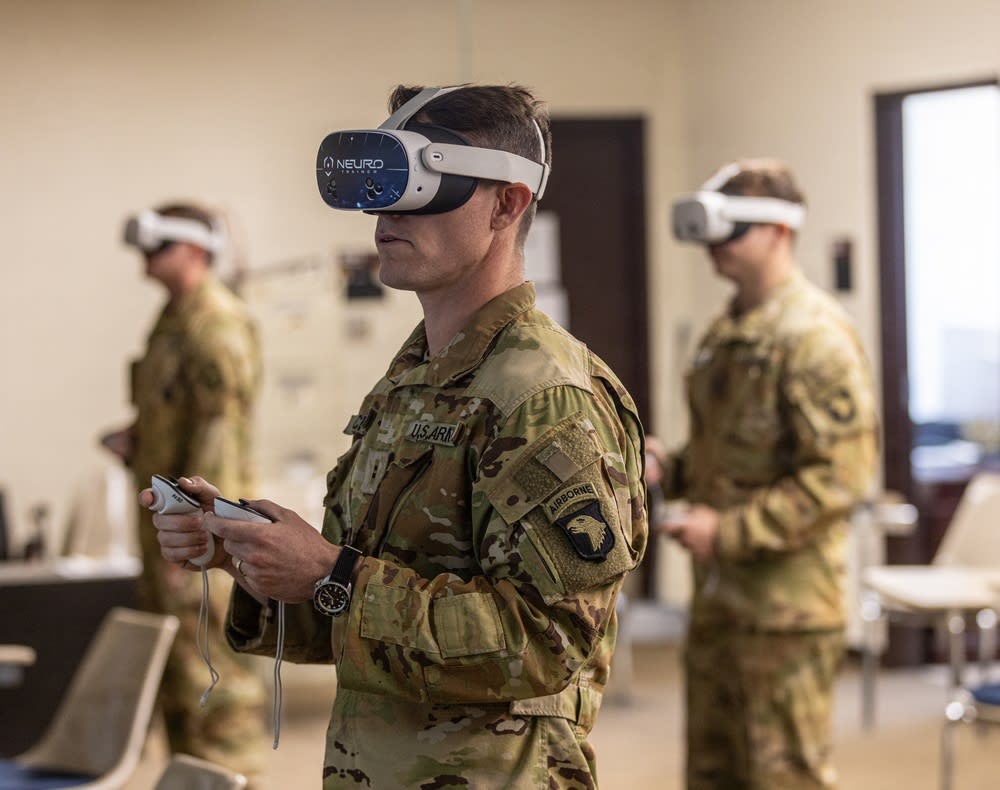
The 101st Combat Aviation Brigade began a 32-week pilot test of the NeuroTrainer virtual reality training system at Fort Campbell, Kentucky, on 20 October 2026. The pilot is designed to assess whether the system can build mental endurance and strengthen cognitive performance among Soldiers, as part of Department of War-directed efforts to evaluate emerging technologies for military training.
The Department of War identified specialized units in July 2026 to test NeuroTrainer and determine its effectiveness for integration into aviation training. The Fort Campbell test mirrors assessments directed at other units, including the Navy Aviation Weapons School, an Air Force Special Operations Squadron and the 75th Ranger Regiment.
How the training works
Soldiers wear VR headsets and hold motion controllers in a unit classroom. NeuroTrainer is described as a headset-based trainer designed to prime the brain for tasks that demand significant mental effort; for the brigade, such tasks include low-level flight and nighttime air assault missions. One CH-47 Chinook maintenance test pilot who tried it said the tasks challenged hand-eye coordination and the ability to track multiple objects at once.
Pilot structure
The first phase is a design validation period. Brigade Soldiers take part in a group onboarding session and individual familiarization training before being evaluated in a helicopter simulator. The brigade's Holistic Health and Fitness team is monitoring the tests and believes the performance results could help identify mental barriers in pilots, such as stress, oversaturation or emotional regulation.
The testing will help the Department of War decide whether NeuroTrainer can enhance the aviation mission and build aircrew mental resiliency. The pilot is under way and no results have been reported.


