

The Alhambra in Granada now runs a digital replica of its 67 hectares that shows what is happening across the monument in real time. The Agencia Digital de Andalucía developed it within the Alhambra Living Lab project with the Patronato de la Alhambra y Generalife, the Universidad de Granada and the technology company Libelium. It is meant to help managers anticipate risks to the historic fabric and improve how visits are run. The Junta de Andalucía's Consejo de Gobierno recorded the twin's entry into operation in a session dated 16 September 2026, and the project was presented at the TAIGranada event in October 2026.
How it works
A network of sensors across the site feeds the twin: 39 for visitor capacity and movement, seven for structural monitoring of the historic buildings and 16 for environmental monitoring of air, soil, noise and particulates. IDEAL reports that the twin combines thousands of 3D images with more than 70 sensor-fed indicators, a count that differs from the Junta's sensor totals. The indicators capture vibration, inclination of certain structures and weather conditions, and the data is integrated into a three-dimensional representation of the monument. Regional officials say this lets conservators plan repairs, predict wear, simulate climatic and seismic effects and study visitor flows without touching the monument.
Use during the Granada earthquake swarm
According to the Junta de Andalucía, the twin proved its usefulness during the recent seismic swarm in the province of Granada. IDEAL reports that the model showed in real time how visitors moved towards open spaces during the tremors, and the sensor probes measure residual impact and stress drift in the architecture afterwards.
Visitor-facing experiences
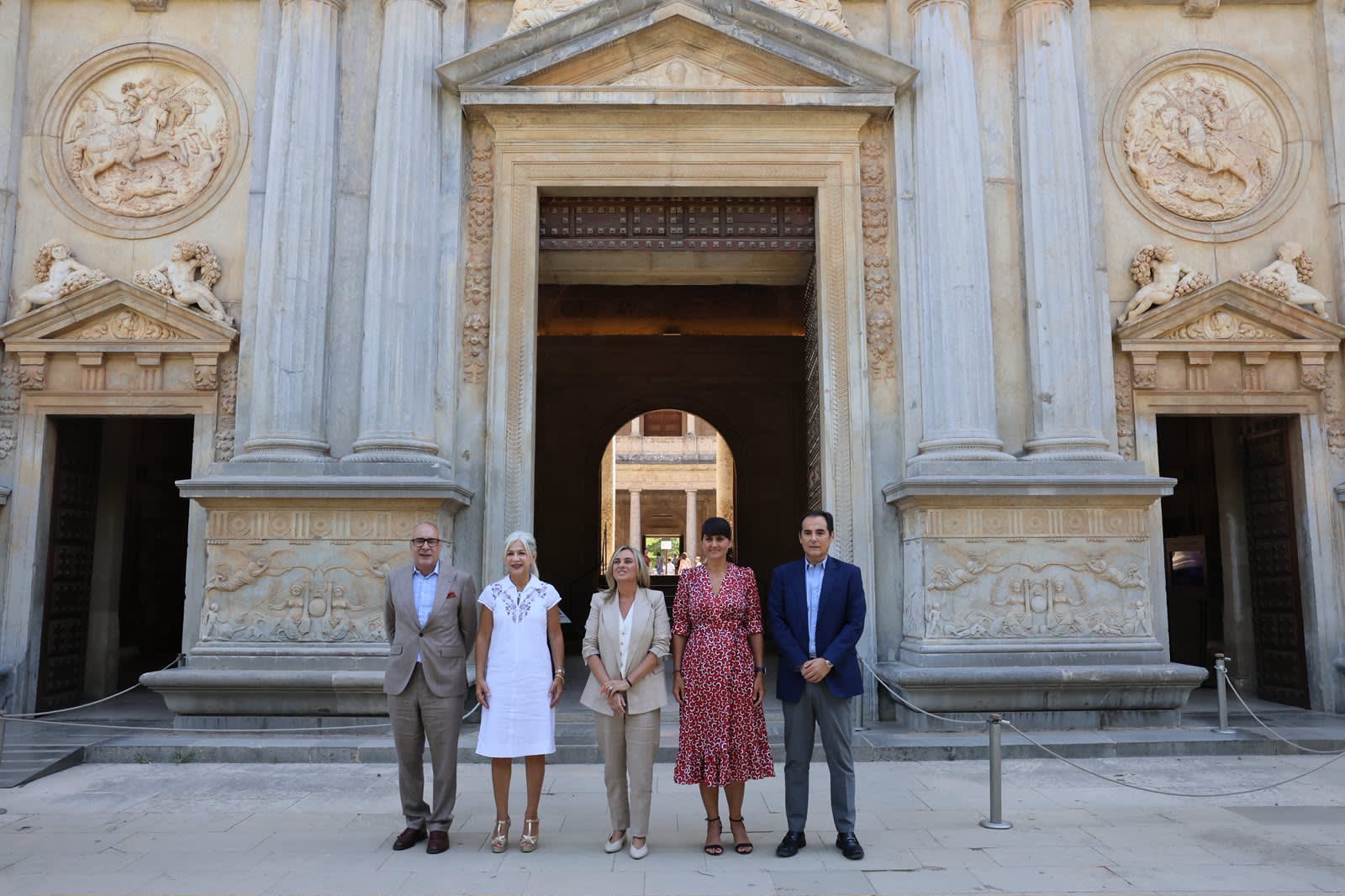
The management twin is not fully open to the public. The Patronato does, however, offer a web-based virtual visit of the monument that includes gamification: users can create an avatar and interact with others in settings such as the Palace of Charles V, and a conversational agent adapts explanations to each visitor's profile. The Junta describes further immersive virtual-world spaces and augmented reality recreations of areas closed to visitors as features that will be added.
Funding
The Junta reports an investment of more than EUR 2.3 million, 75% of it co-financed by European NextGenerationEU funds through the Spain Living Lab project.


