


Background
A two-year research pilot launching in 2026 by Cardiff Council and Cardiff University is examining the impact of immersive virtual reality learning on student engagement, enjoyment, and academic attainment in schools serving low-income communities across the Cardiff area. The study runs through to 2028 and is jointly funded by the two partners, with Cardiff Council covering the Campus-XR platform licences and five headsets, and Cardiff University funding a further five — for a total deployment of 10 headsets across approximately five participating schools.
Research design
The research is led by a postgraduate researcher at Cardiff University conducting a PhD-level study, working directly with teachers in each participating school to embed VR across a wide range of subject areas before gathering qualitative and quantitative data on its impact. Three primary research questions frame the work:
- Does immersive VR learning increase classroom enjoyment?
- Does it measurably increase lesson engagement?
- Does it produce an uplift in knowledge retention and academic performance?
The Cardiff team visits schools frequently over the course of the study to observe lessons, interview students and teachers, run baseline and follow-up assessments, and pull platform usage data directly from the teacher portal.
Hardware and software stack
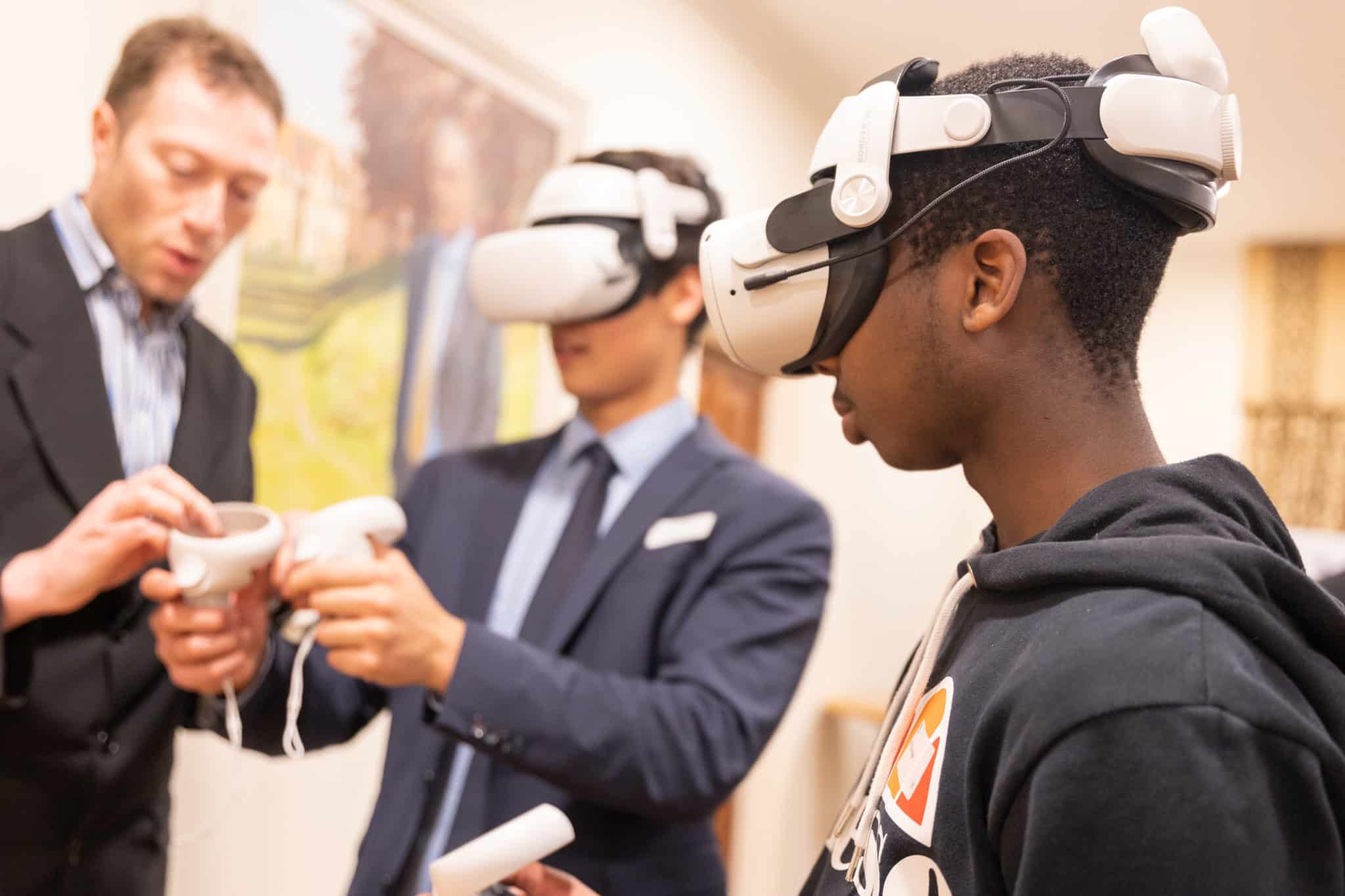
Each Meta Quest headset is paired with a BOBOVR head strap and battery accessory to improve fit and extend session length — both important practical considerations for classroom use with children. Headsets run Campus-XR, a VR-and-AI learning platform originally developed at Bradfield College and distributed in the UK in partnership with Academia the Technology Group and Meta.
Targeting educational equity
The pilot deliberately targets schools with very limited technology budgets and students from some of the most economically disadvantaged backgrounds in Wales, inverting the usual pattern where emerging educational technology reaches well-funded independent schools first and only trickles down to the state sector years later. The project is designed to function simultaneously as a rigorous academic study and as a practical real-world test of VR as a tool for educational equity.
Implications for the sector
For the wider XR industry, the study represents an unusually rigorous piece of independent academic research in a field where much existing evidence for the impact of VR on learning remains anecdotal or drawn from small single-subject trials. A multi-school, multi-subject, two-year longitudinal study conducted by a UK research university and feeding into a full PhD thesis has the potential to produce some of the most substantive peer-reviewed evidence the education VR sector has seen to date — findings that are expected to inform how schools, local authorities, and universities across the UK and internationally think about deploying immersive technology in the classroom over the coming decade.


