

Background
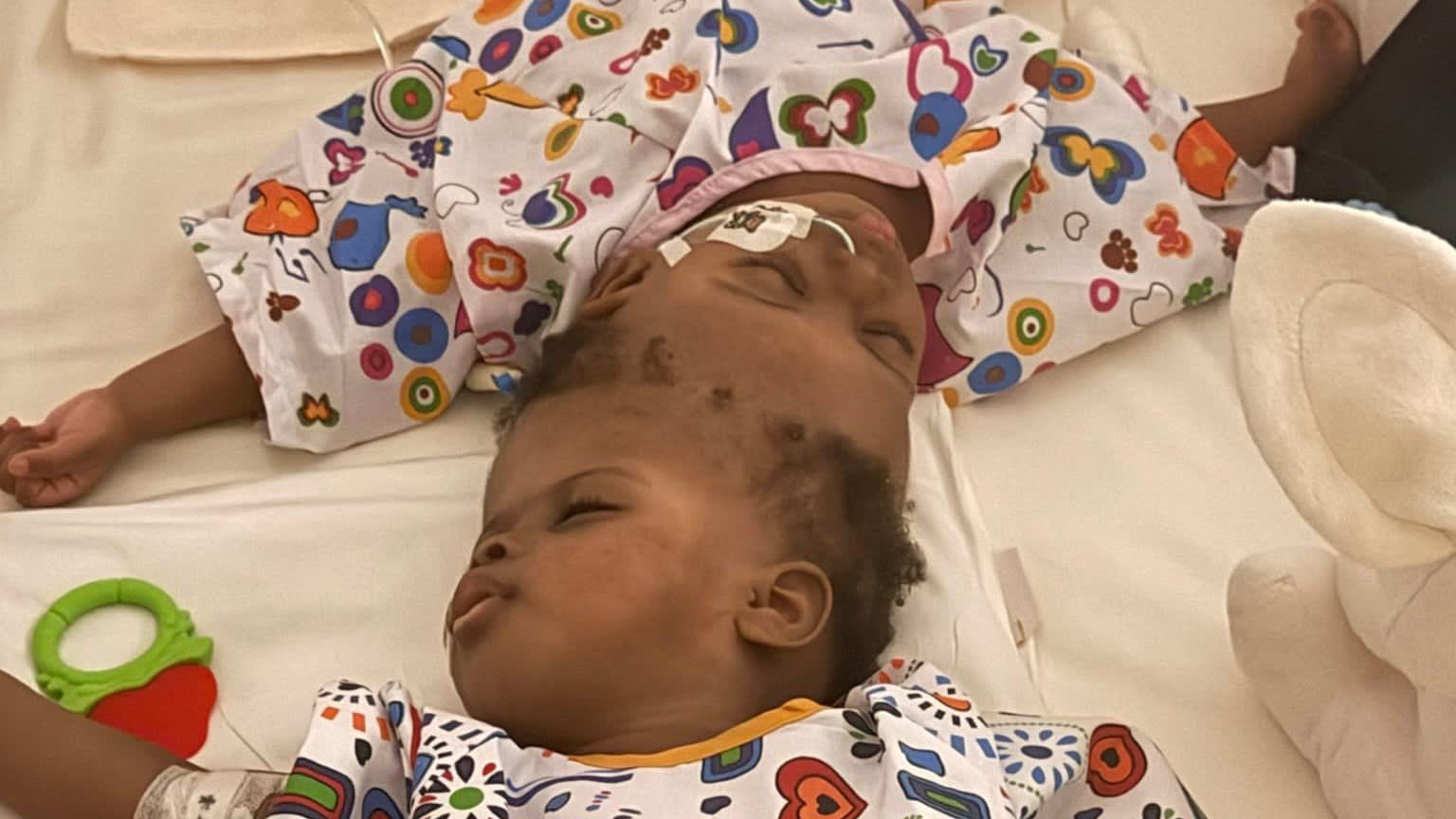
Mercy and Goodness were born in June 2023 in Ekiti State, south-western Nigeria, joined at the head with fused skulls, shared brain tissue and connected blood vessels — a rare condition called craniopagus twinning that occurs in roughly one in 2.5 million births. At six months old they were referred to Gemini Untwined, a UK charity that focuses exclusively on research and surgery for craniopagus twins. The twins later travelled to PureHealth SEHA Sheikh Khalifa Medical City in Abu Dhabi, where a team of more than 60 surgeons and clinicians from four countries prepared to separate them.
Planning the separation in mixed reality
In the months leading up to the final operation, the surgical team rehearsed the procedure and mapped the twins' anatomy using 3D imaging, virtual reality simulation and augmented-reality overlays, alongside ultrasound-guided tissue expansion. CT and MRI scans were converted into interactive, patient-specific 3D models — a digital twin of each child's anatomy — so that surgeons working across four countries could study the shared veins and arteries and practise the steps before operating. The charity's founder and lead surgeon, quoted below, has described how modelling and practice simulation in augmented reality has advanced in recent years.
AI-designed implants
The mixed-reality platform supplied by XRlabs overlaid the CT data as real-time 3D models, letting surgeons design patient-specific skull implants in seconds. The underlying AI model was trained on the head shapes of similarly aged infants so that each implant's curvature matched normal developmental anatomy, removing the need for manual design. The implants were then 3D-printed for the reconstruction stage. XRlabs describes the work as a world first in AI-designed, patient-specific implants created using extended reality.
The surgery
The separation was carried out as four staged operations over four months in 2025, totalling more than 40 hours, with the final procedure lasting 12 hours. Surgeons used a new "Open Book" technique that relies on gravity rather than traditional retractors to support the brain, reducing pressure and potential trauma. Earlier, more gradual tissue expansion with silicone expanders meant the children did not need skin grafts during recovery.
Outcomes
It was the ninth successful craniopagus separation led by Gemini Untwined, and the first in the UAE. Mercy and Goodness have made a full recovery, can see each other's faces for the first time, and have returned home to Nigeria.

