

The Dian Fossey Gorilla Fund's Ellen DeGeneres Campus in Kinigi, Rwanda, opened in early 2022 near Volcanoes National Park as a global centre for gorilla conservation, research and public education. South Africa-based immersive studio Habitat XR was commissioned to design three complementary immersive experiences that form a core part of the on-site visitor journey, addressing the challenge of giving visitors meaningful access to endangered mountain gorillas without adding pressure to fragile ecosystems or relying solely on costly and tightly regulated physical treks.
The centrepiece is the Irmelin DiCaprio Theatre, a purpose-built 360° immersive cinema funded by Leonardo DiCaprio. Eight daisy-chained 4K laser projectors deliver 50 million pixels across a 43-metre by 2.5-metre panoramic canvas, screening ultrawide 16:1 superpanoramic footage at 25K resolution. A 10.2 surround sound system comprising 37 speakers and over 186 square metres of custom acoustic panelling creates spatial audio to envelop groups of up to 30 visitors. At launch, the theatre screened two original films: 'A Day in the Life of Gorillas', produced by Habitat XR and the Dian Fossey Gorilla Fund, and 'Saving Mountain Gorillas: The Dian Fossey Legacy', produced by the National Geographic Society's Impact Media Lab in collaboration with Habitat XR. Topaz Labs' Video AI was used to upscale footage to 25K, and SGO's Mistika VR handled 360° stitching.
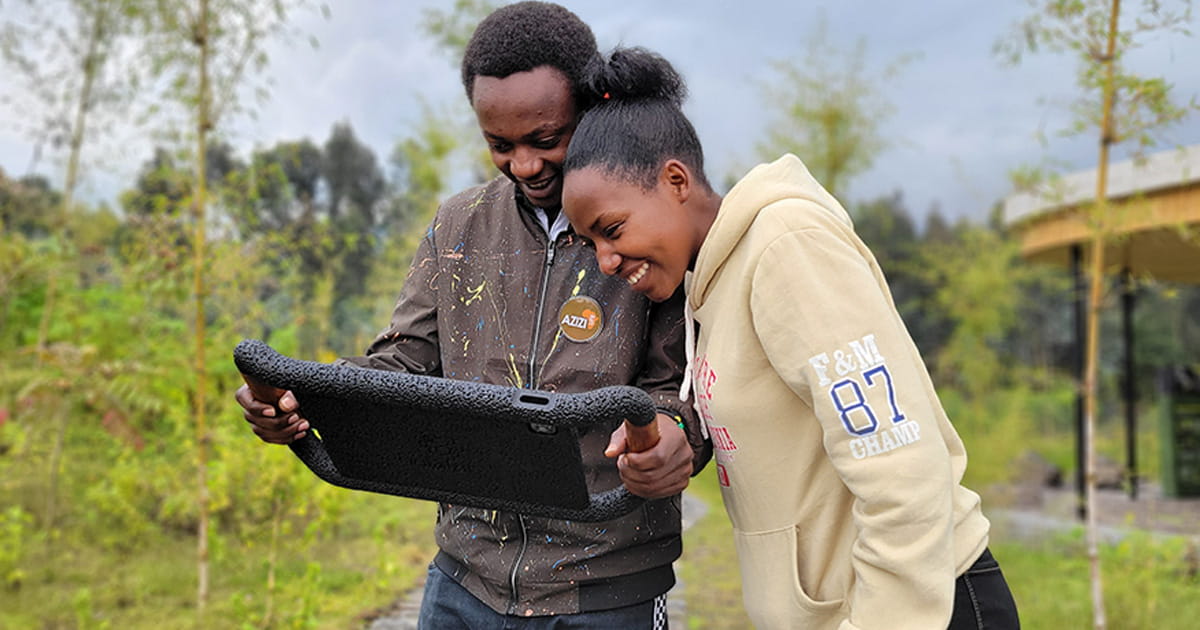
In the campus gardens, Habitat XR developed GorillAR, an augmented reality experience running on three Apple iPad Pro M1 devices housed in custom biodegradable cases 3D-printed from cornstarch to resemble local volcanic rock. The app uses ARKit's ARLightEstimate to match lighting conditions, placing a photorealistic CGI silverback gorilla into the real environment. Visitors encounter seven distinct gorilla behaviours along the garden trails, from feeding to nest-building, each triggered by scanning physical markers.
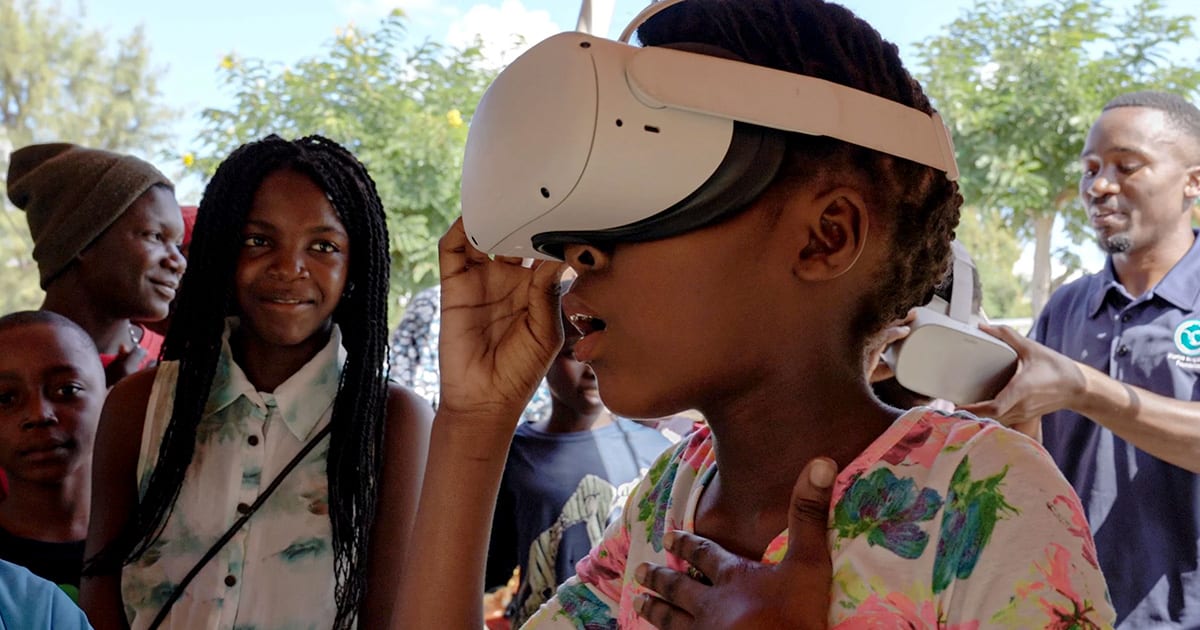
Additional VR kiosks offer individual, controller-free engagement through a touchscreen interface, allowing visitors to explore gorilla behaviours in close-up virtual reality. Together, the three experiences have become central to the campus visit. Since opening, the campus has welcomed more than 150,000 visitors from over 150 countries, providing an accessible alternative to physical gorilla trekking for visitors of all ages and physical abilities.