


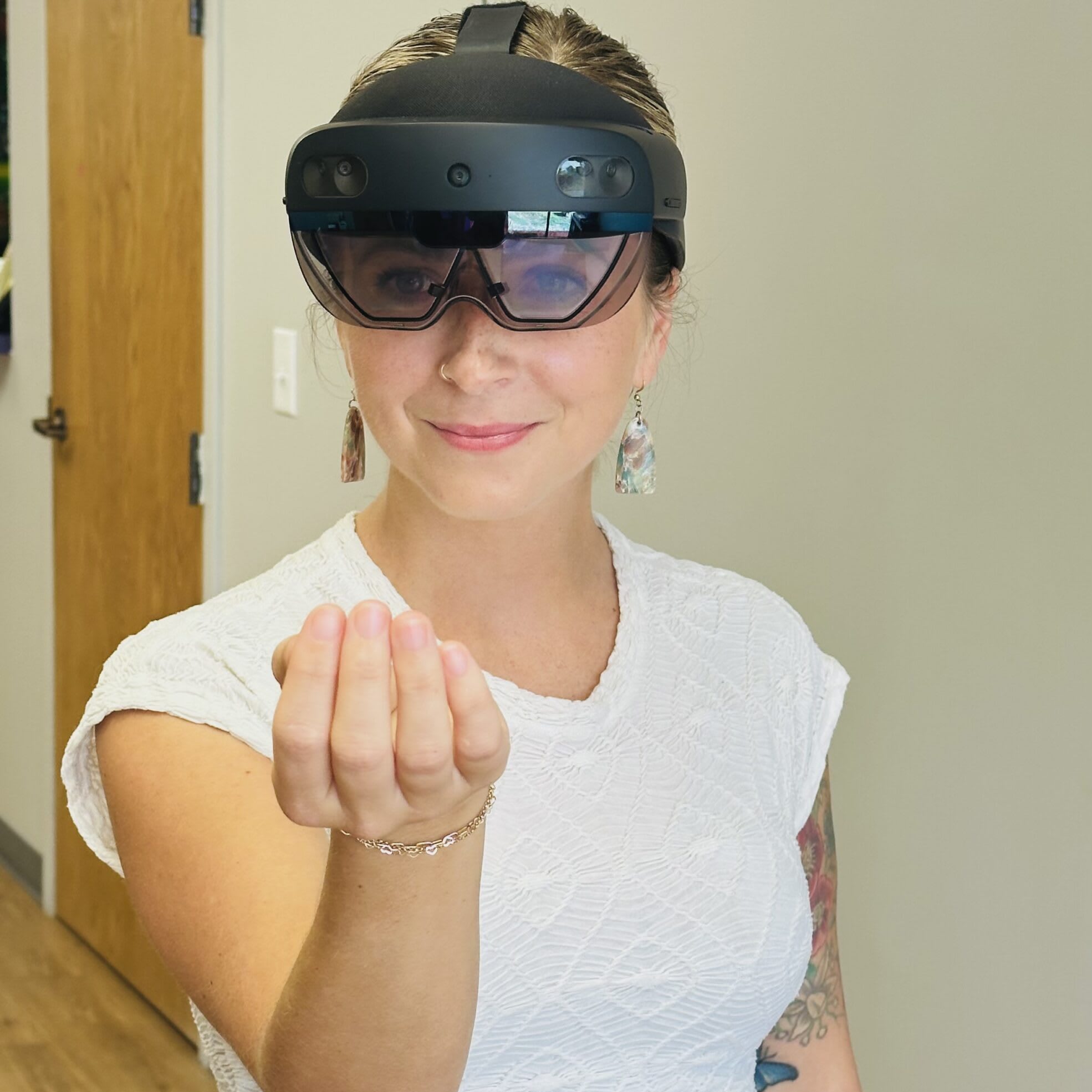
Cook Vision Therapy Center, a practice in Marietta, Georgia, uses the VTS4-HoloLens augmented reality system for neuro-optometric rehabilitation and developmental vision care. The system, made by HTS Vision, pairs vergence exercises with an AR headset so patients work with holograms in the room rather than on a flat screen.
The clinic says it was one of the first practices in the United States to adopt the system in 2022, and its clinical team has used it since. A September 2026 press release from the clinic marks the milestone, and the clinic describes the system as one tool within personalized care, with its doctors guiding the plan.
How the therapy works
Patients wear the headset and interact with colorful holograms floating in space. The clinic says the headset requires the brain to use both eyes together in real time, and describes the resulting treatment as highly engaging.
The clinic's page cites the maker's product documentation for what the system can do:
- It can present three-dimensional stereo targets.
- Its independent eye tracking can follow where each eye is pointing and use that reading to change the demand placed on eye teaming.
- It can save each patient's session results so a doctor can review progress across visits.
These are capabilities as described by the maker; the clinic's sources do not state how it uses the saving and review features in practice.
The clinic's page also relays the maker's statement that the VTS-4 HoloLens does not treat or diagnose any specific medical condition or disease. The headset is presented as a tool within the clinic's doctor-guided care.
Where it is used
The practice is in Marietta and serves families across Metro Atlanta. The benefits above are the clinic's own descriptions; no independent outcome measurements are reported.


