

Background
Training in robotic surgery has been limited by the need to be physically present in the operating theatre. Space, sterility and scheduling cap how many residents and visiting specialists can watch a case, and the console's own stereoscopic view - the thing the operating surgeon actually sees - is lost the moment a procedure is put through ordinary videoconferencing.
What Germans Trias deployed
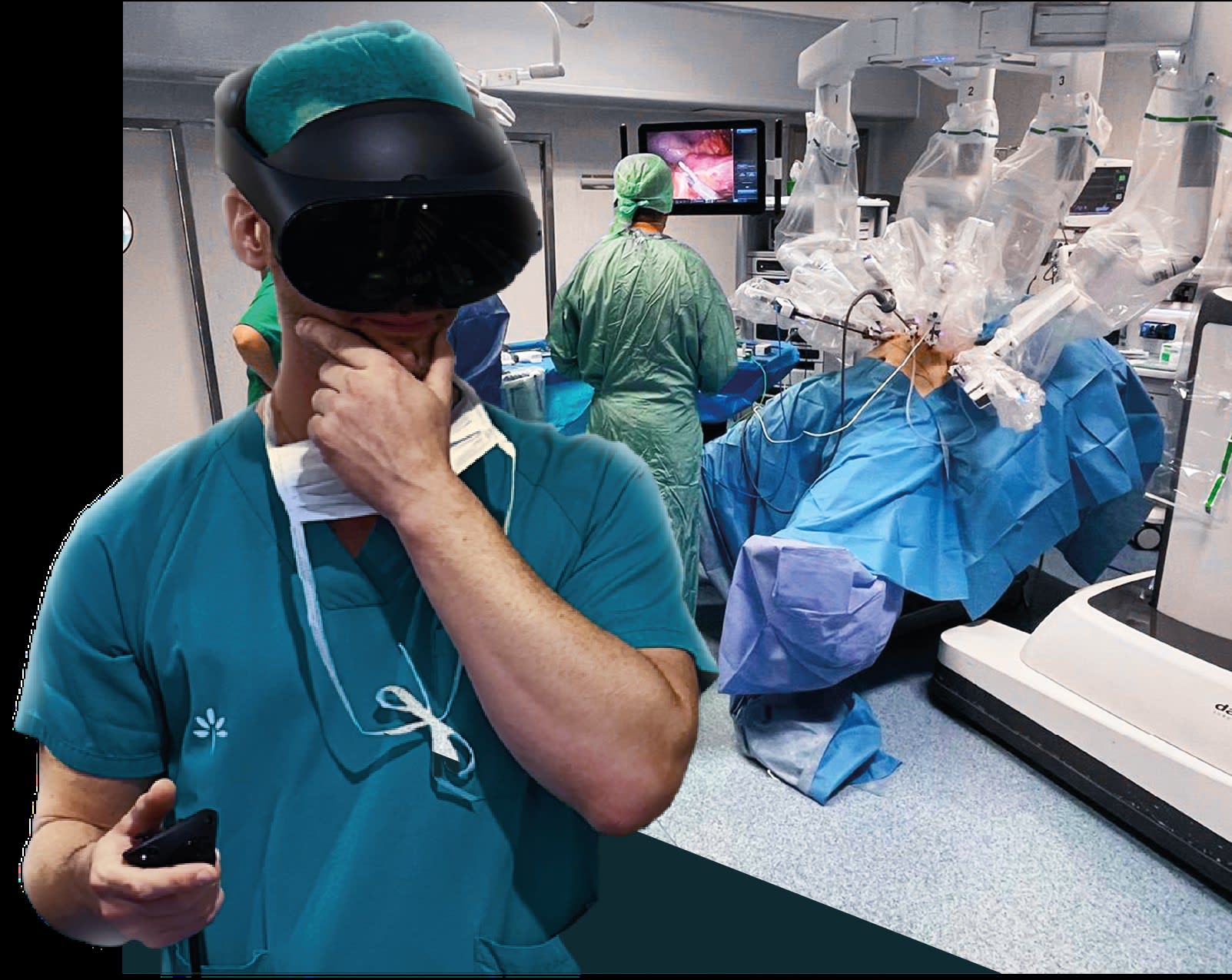
Hospital Universitari Germans Trias i Pujol in Badalona, a Catalan reference centre for robotic surgery, equipped its da Vinci Xi theatres with the mSurgery collaborative telepresence platform. The system captures the da Vinci console's stereoscopic feed in real time and transmits it remotely, so a participant offsite sees the surgical field in 3D at up to ten times magnification, in 4K, with the same depth perception as the surgeon at the console.
Two further cameras are captured alongside it: a 360-degree camera giving a full view of the theatre, and a camera framed on the robot console so remote viewers can watch the surgeon's hands on the controls. Telefonica supplies fibre and 5G connectivity end to end and the edge computing that composites the streams into a single immersive session; Abex Excelencia Robotica, which supplies the da Vinci systems in Spain, contributed the robotic-surgery side. The pilot was presented in October 2023 at the XXIV Reunion Nacional de Cirugia in Alicante as the first immersive 3D robotic surgery and training deployment on the da Vinci system.
How it is used
Participants join from a VR headset, a tablet or a PC through a web session rather than an installed app. In the pilot, Meta Quest 3, Quest Pro and Quest 2 and Pico 4 headsets were used. Communication runs both ways: remote surgeons and residents talk to the theatre team and draw graphical annotations directly onto the image, and procedures can be recorded to build a teaching library.
The hospital's General and Digestive Surgery service, and its bariatric surgery team in particular, tested, refined and validated the setup. In April 2024 the theatre streamed a live robotic bariatric operation by Dr Jordi Tarasco to roughly 250 registered delegates at the 19th International Bariatric and Metabolic Surgery Course hosted with Hospital Universitari de Bellvitge, and in February 2024 a live case was linked to Telefonica's stand at Mobile World Congress in Barcelona. In October 2025 the hospital reported a further step: an emergency robotic appendicectomy supervised remotely and immersively by a specialist away from the hospital, within its 365-day emergency robotic surgery programme.

