


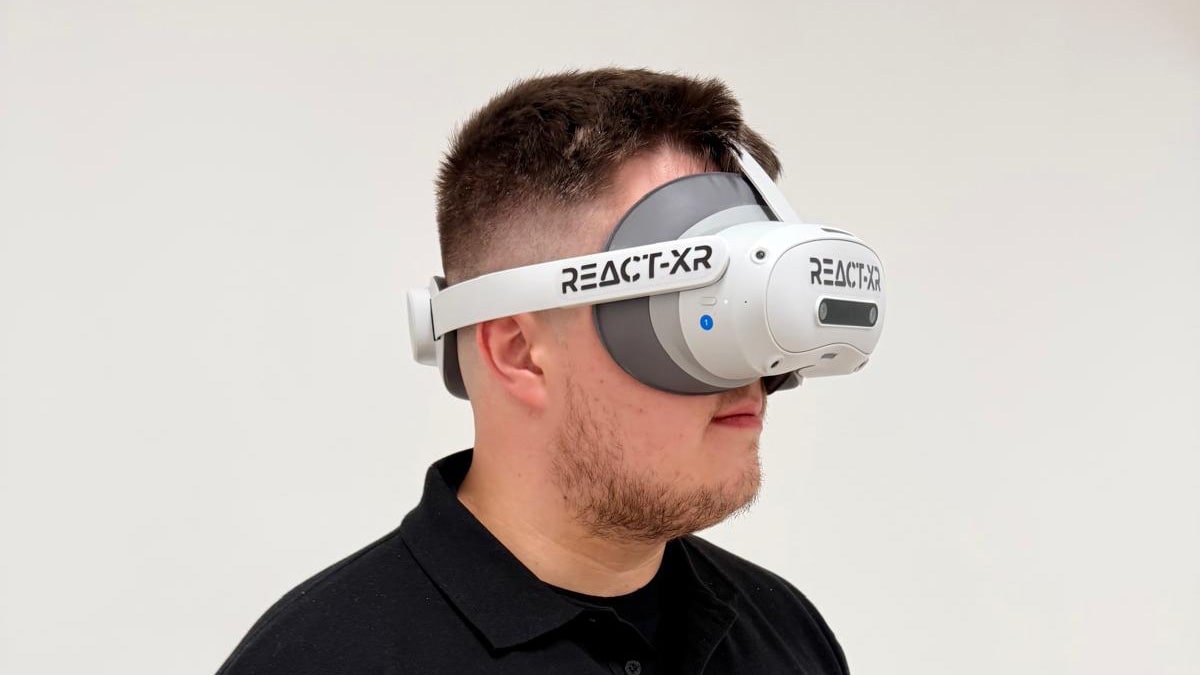
The University of Huddersfield's School of Human and Health Sciences has become the first UK higher education institution to train student paramedics for mass casualty incidents in virtual reality, working with Manchester-based emergency response training specialists REACT-XR.
Up to six students at a time use VR headsets and REACT-XR software in the immersive suite in the Daphne Steele Building on the university's National Health Innovation Campus (NHIC) in Huddersfield. The software recreates major incidents such as road traffic collisions and terrorist attacks at public events in real time, letting far more students perform triage than is practical when an incident is staged with actors or mannequins.
The scenarios were designed by Hazardous Area Response Team (HART) paramedics, and the university says REACT-XR is the only UK supplier offering both Ten Second Triage (TST) and the Major Incident Triage Tool (MITT) in VR. Core clinical steps are gated: a student cannot progress until an airway has been opened using the head tilt, chin lift procedure.
The university's stated driver is scale and repeatability. Its accrediting body, the Health and Care Professions Council (HCPC), expects paramedics to be competent in major incident triage and to practise it regularly, which is difficult to deliver for growing cohorts through live simulation alone. VR removes the need to scout locations, employ actors or volunteers as casualties, or apply moulage, so sessions can run more than annually if needed. Live simulations continue alongside the VR training.
REACT-XR delivers its training on fully offline standalone headsets, with performance and progress data synced when connectivity is available. The deployment was funded by the university's senior leadership team. Huddersfield says it hopes to extend access to partner agencies such as West Yorkshire Fire and Rescue Service, and intends the training to prepare students before they begin real-world placements with Yorkshire Ambulance Service.
A September 2026 BBC follow-up confirmed that the university's first master's cohort was using the system. Students reported greater confidence, less anxiety about facing major incidents, faster application of lecture learning and stronger retention. These are participant testimonials rather than results from a formal evaluation. Nick Holbrook, an A&E operations team leader with Yorkshire Ambulance Service, described the experience as close to a real incident as classroom training could provide.


