

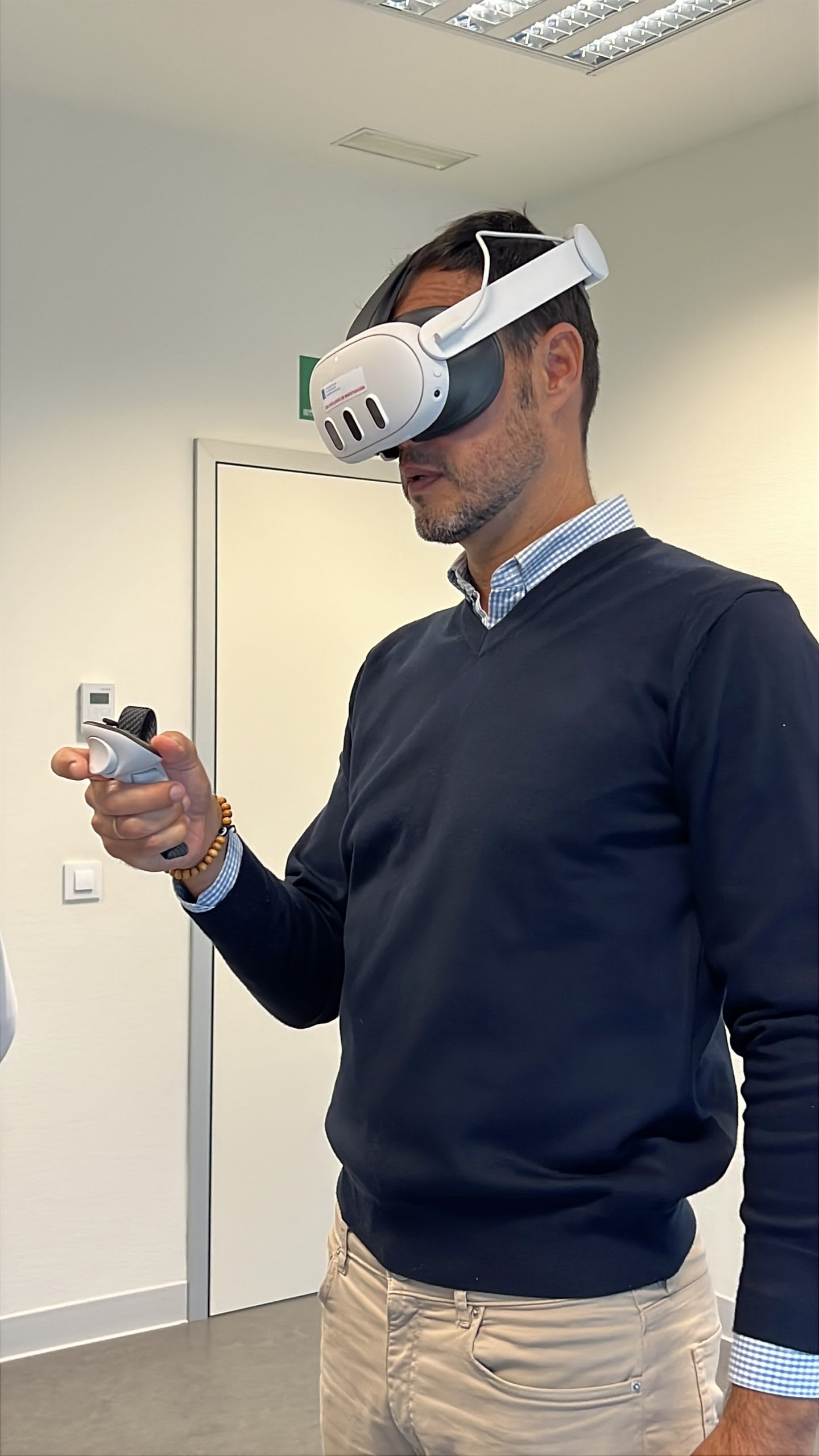
The Instituto de Investigación Sanitaria Galicia Sur (IISGS) and the public Hospital Álvaro Cunqueiro in Vigo, Spain, announced on 10 November 2026 the launch of a project that combines immersive virtual reality with therapeutic exercise for patients receiving cell therapy. It is aimed at inpatients admitted for a bone marrow transplant or CAR-T treatment, who are to use VR headsets to help them cope with isolation.
The project is described as a step forward for the hospital's pioneering therapeutic exercise programme, started in 2017. Dr Carmen Albo, head of the hospital's Hematology and Hemotherapy Service, leads it. In her words, exercise is safe and necessary during these intensive treatments, but uncertainty and isolation reduce patients' adherence to conventional exercise tables.
How it is meant to work
Patients are to wear a VR headset, shown in the project's press photo as a Meta Quest 3, and be immersed in playful virtual environments through exergaming. The organisers state that these environments are intended to reduce stress, ease anxiety and improve pain tolerance while keeping patients active. Pablo Campo, a HealthyFit researcher who specialises in applying immersive VR, says the system assesses the intensity of effort in real time and lets patients move to other places and settings without leaving the room.
Partners and support
- IISGS and Hospital Álvaro Cunqueiro: project leads, with the hospital as the venue.
- Universidade de Vigo: Campo's research affiliation alongside IISGS.
- ASOTRAME, the Galician association of people affected by bone marrow transplants: supports the programme and takes part directly in its design.
- Igalia, a free software consultancy: facilitates the purchase of the technical equipment.
Evaluation and next steps
The release says the project will be evaluated in a clinical trial comparing patients who use the technology with those on the conventional exercise programme, and it also refers to the trial as current. No patient use or results have been reported yet. If the results confirm expectations, the researchers plan to transfer the methodology to the national scientific community through GETH-TC.


