

Jetstar, the Australian low-cost carrier, has been a customer of aviation VR training specialist StaplesVR for about seven years, using virtual reality to train engineering and maintenance staff on procedures that would otherwise require a full-flight simulator or a real aircraft. The training runs on forensically accurate, true-scale digital replicas of aircraft built with LiDAR scanning and photogrammetry in the Unity engine, so that buttons, handles and switches sit exactly where they are on the real airframe. Trainees complete a guided procedural walk-through followed by an in-VR assessment, and completion and pass/fail results can be logged to a learning management system.
Halldale Group's trade coverage of the EATS 2025 conference reported that Jetstar's Engineering Training Manager would join StaplesVR at the event "to discuss the airline's implementation of VR in maintenance training", the clearest independent indication that Jetstar's own engineering training staff treat this as an operating programme rather than a trial.
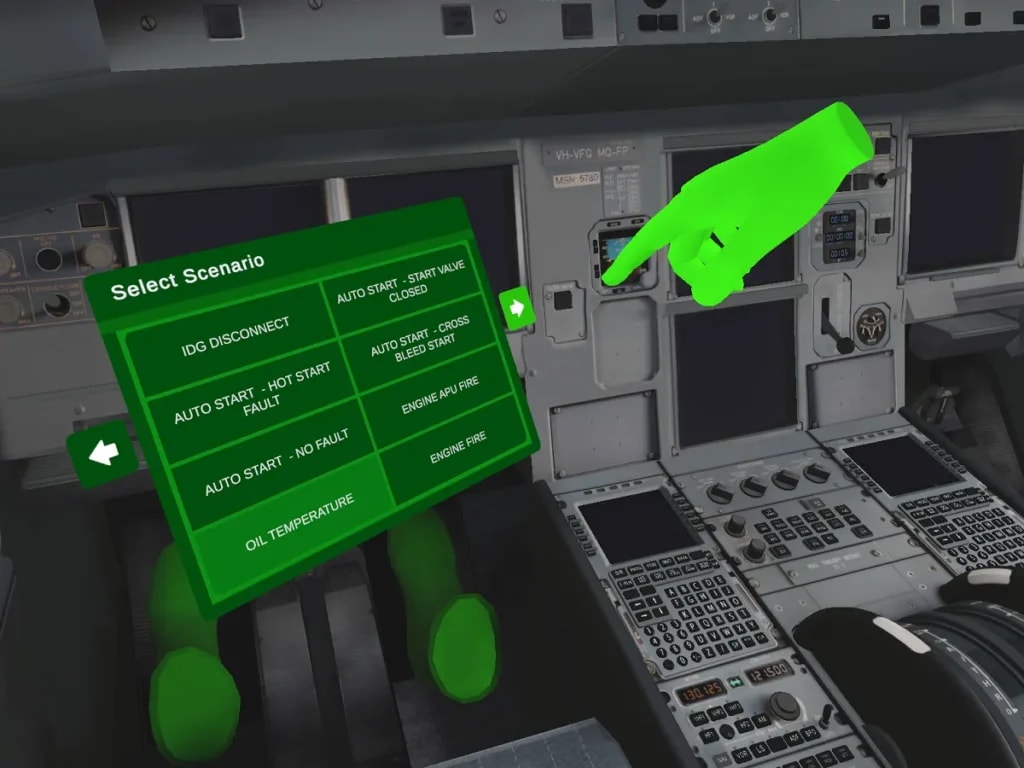
One application described by the vendor is engine ground run training, in which engineers rehearse the ground-run process and respond to injected faults such as a hung start, IDG disconnect, cross-bleed start or APU fire inside a VR cockpit replica instead of occupying a full-flight simulator slot. That is the supplier's account of what the module allows airlines to do in general, not a measured Jetstar result. StaplesVR's own module page carries a customer testimonial attributed to "Roselene Bosco, Engineering Training Manager" claiming an annual return of $500,000 and the release of simulator slots back to pilots. That page does not name the airline, and the trade report gives Jetstar's Engineering Training Manager as Roselene Lockesh, so the testimonial is not conclusively Jetstar's and is recorded here as a vendor-published claim rather than a confirmed Jetstar outcome. A screenshot published with the trade interview and credited to the vendor shows an in-headset fault-scenario menu matching the published engine ground run curriculum, inside a cockpit bearing the Australian registration prefix VH-.
The vendor describes its software as headset-agnostic, so no headset model is recorded for this deployment.

