


Background
Kennedy Krieger Institute, a Baltimore-based nonprofit specialising in neurodevelopmental disabilities, has launched a virtual reality pilot inside its CORE Foundations programme to help neurodiverse adults practise daily-living and employment skills in a controlled, low-stakes setting. CORE Foundations sits within Kennedy Krieger's broader Neurodiversity at Work initiative and currently serves around 60 adults with disabilities across Maryland.
The deployment
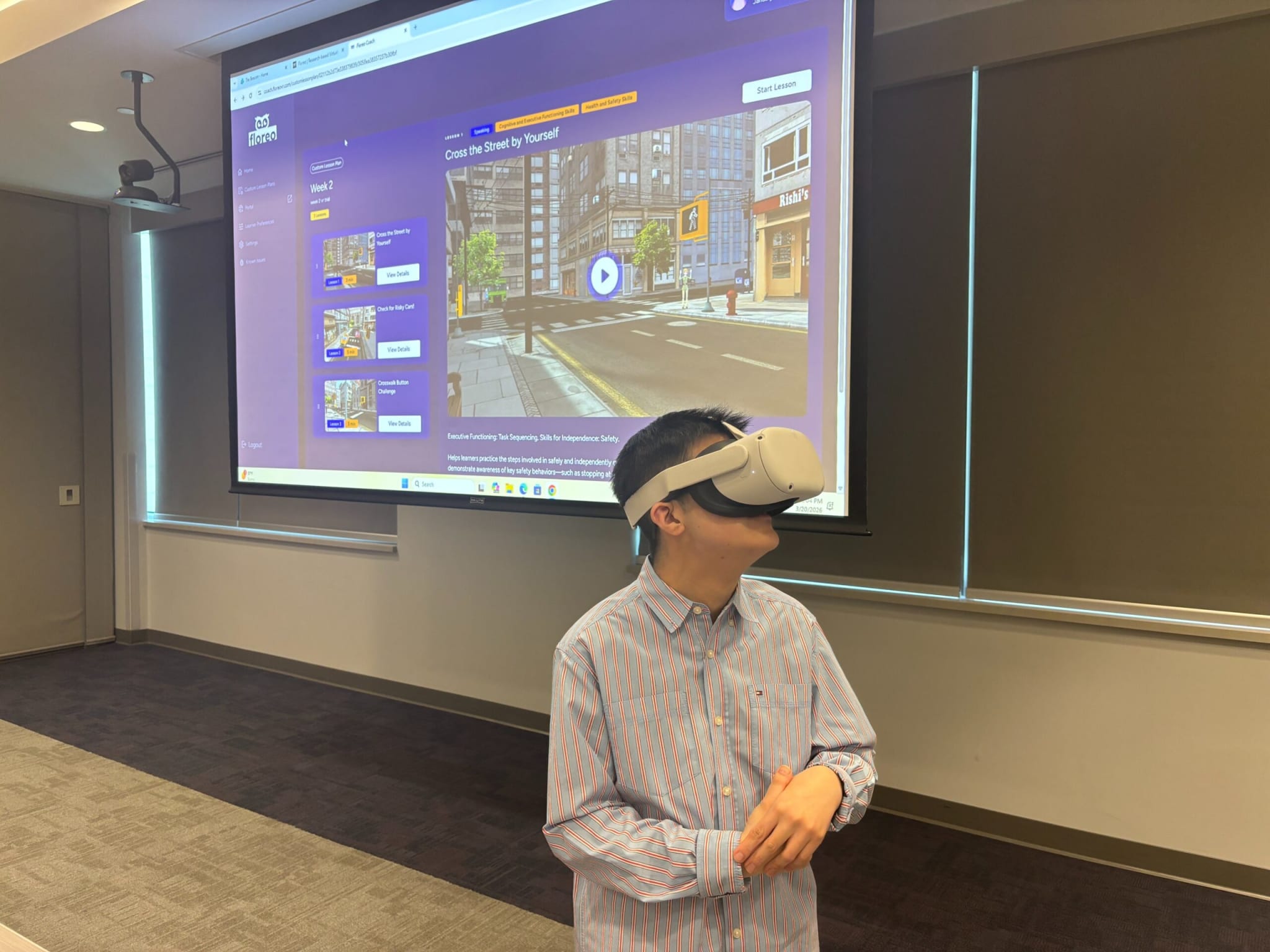
The pilot launched in February 2026 at Kennedy Krieger's Rockville location with four community members as initial participants. Each user wears a 6DoF standalone headset while an instructor supervises via a paired coaching device that streams the learner's view in real time. The supervising staff member can prompt the learner, pace the lesson, and capture session data without removing the headset.
The team is using VR primarily for travel training, practising bus journeys, route number recognition, fare negotiation, and crossing busy intersections, alongside conversational scenarios and sensory-regulation environments. Lessons can be repeated until the learner is comfortable, with the software monitoring response timing and accuracy to track progression. Plans to extend the curriculum to employment-readiness scenarios including job interviews and workplace social cues are already underway.
Hardware and software
- Headset: Meta Quest 2, used as a standalone 6DoF device
- Software platform: Floreo, developed by a Bethesda, Maryland behavioural-therapy company, with a library of immersive lessons designed for neurodiverse learners covering communication, life skills, and sensory regulation
- Coaching interface: a paired tablet or browser-based co-pilot view used by the instructor to guide and observe the lesson in real time
Funding and governance
The VR rollout was funded through a grant from the federal American Rescue Plan Act, administered at state level by the Maryland Developmental Disabilities Administration. CORE Foundations more broadly receives operating funding via Maryland's Division of Rehabilitation Services and private donors. Kennedy Krieger frames the pilot as both a service-delivery innovation and an evidence-gathering exercise to support a future comprehensive research study.
Outcomes and outlook
The instructor leading the sessions reports that headset lessons are translating into observable real-world behaviour, including participants looking both ways together before crossing the street after returning from VR practice. The institute's stated long-term ambition is to make the technology available to all 60 CORE Foundations members and to broaden the curriculum from functional life skills into job development.

