


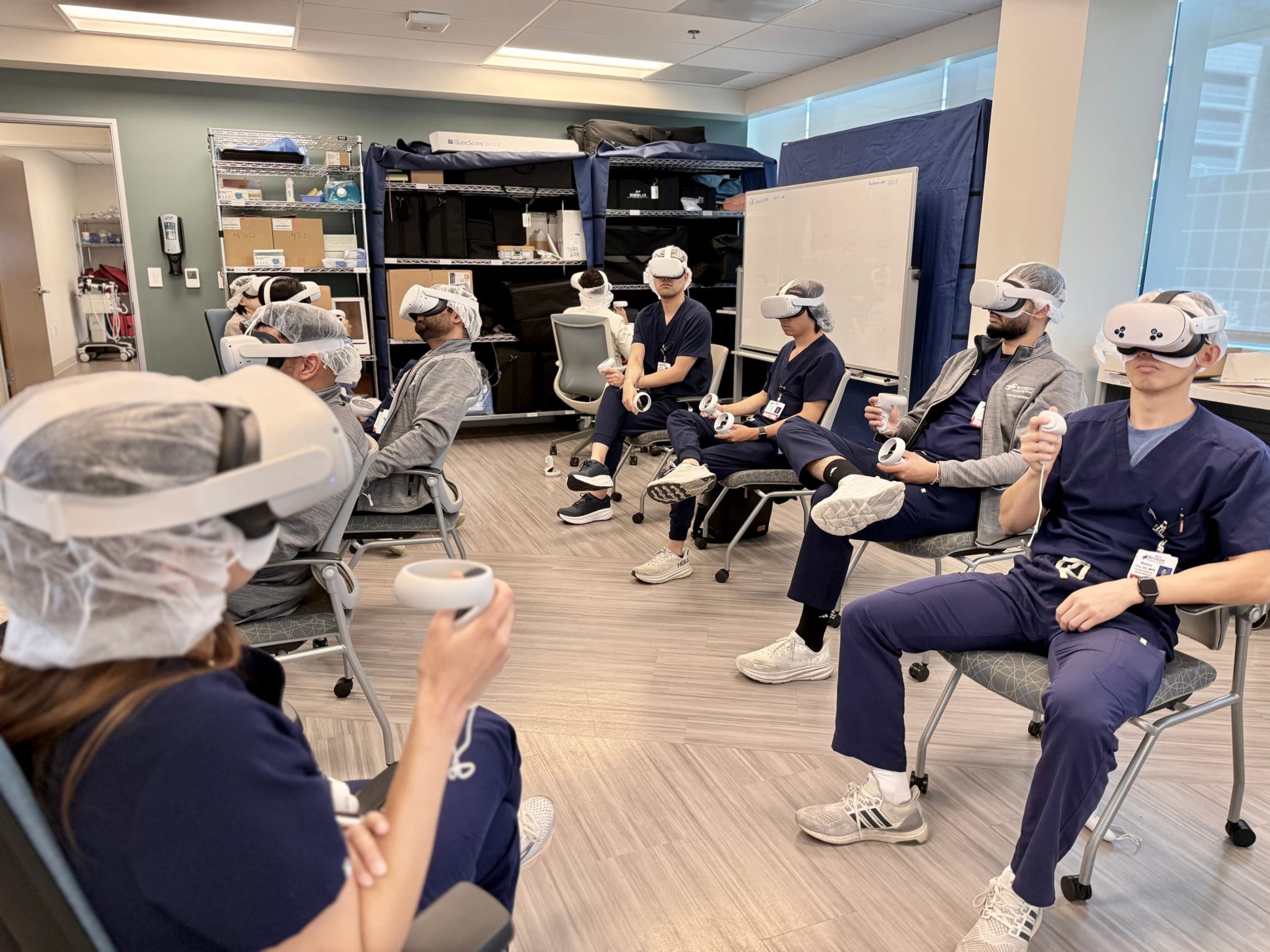
Los Robles Health System's Graduate Medical Education program, based in Thousand Oaks, California, has introduced virtual reality simulations to train residents and fellows. Using a software platform, trainees are transported to realistic virtual clinical environments where they practice patient care, with a focus on communication skills and clinical knowledge.
According to the March 2026 release, first- and second-year residents currently take part across internal medicine, emergency medicine, anesthesiology, general surgery and neurology. Transitional year residents completing first-year rotations at Los Robles also use the program. In the release photo, residents sit in a circle wearing standalone VR headsets and holding handheld controllers.
How the simulations are used
Once a trainee completes a simulation, they receive a base score and feedback. They can then work with Graduate Medical Education staff and attending physicians to improve their interactions with patients, families and colleagues. The health system says the simulations are not meant to replace real-time clinical rotations but to give residents and fellows a resource to practice and refine their skills.
Stated goals
The health system's chief medical officer, Dr. Gabriella Sherman, said she expects residents and fellows to benefit from sharper communication skills and reinforced clinical knowledge. A later Los Robles release from the same publisher family restates that residents and fellows use the simulations.


