


Background
The Metropolitan Museum of Art's collection has appeared inside other people's virtual worlds for years — a Temple of Dendur built in Minecraft, a Great Hall recreated for Roblox players — but until 2025 the Museum had never built one of its own. On 10 November 2025 The Met launched two virtual reality and web experiences, Dendur Decoded and Oceania: A New Horizon of Space and Time, made with the immersive-culture platform Atopia.
The deployment
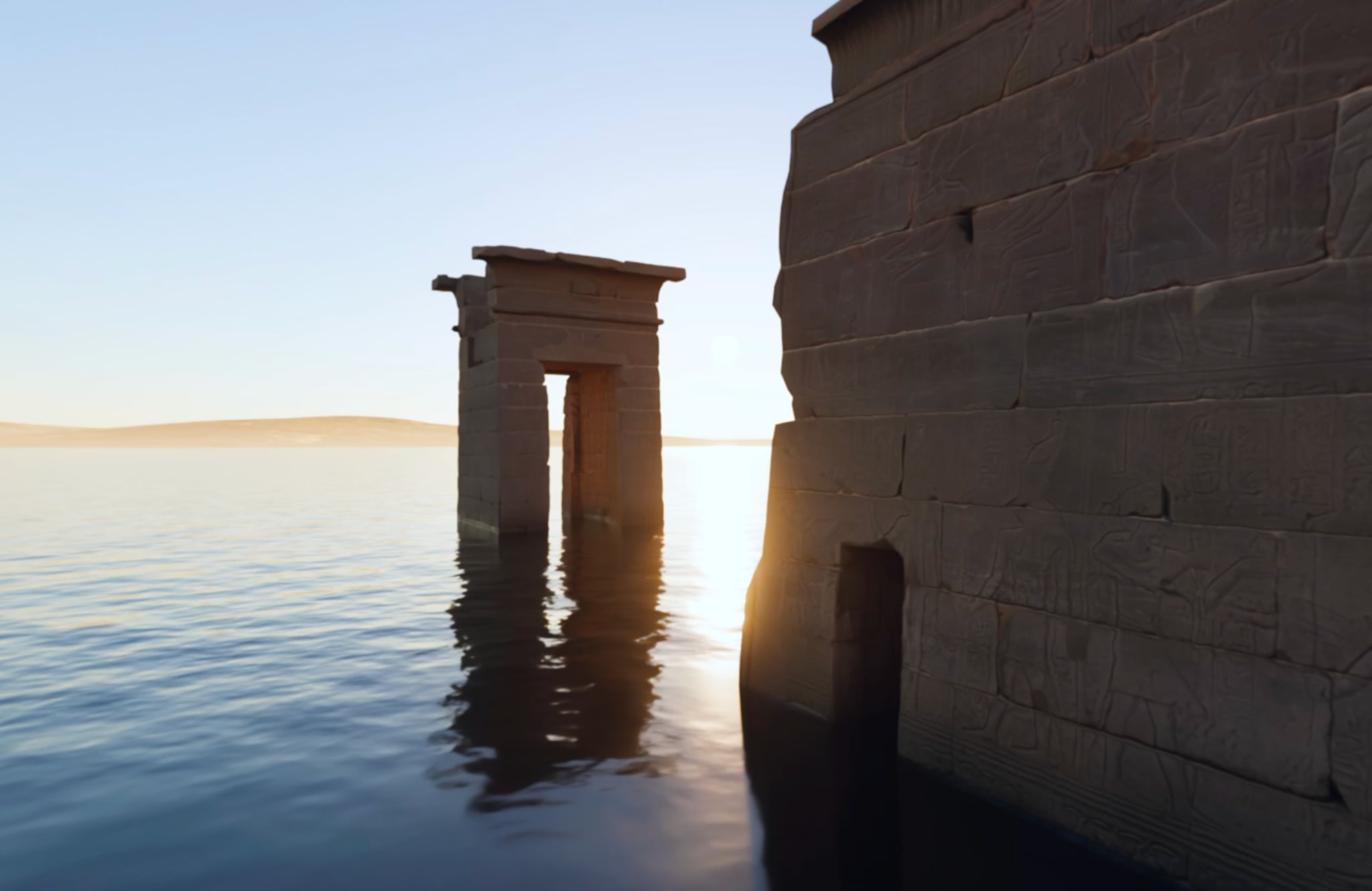
Both experiences run in a VR headset or in an ordinary desktop browser, and both are free. Dendur Decoded is arranged as four acts: an introduction to reading the temple's decoration, a 3D 360-degree film about its original site on the Nile and the UNESCO campaign that saved it from Lake Nasser, a game in which visitors rebuild the temple as The Met did in the 1970s, and a reflective closing space where visitors can leave a voice message. Oceania presents fifteen works from the newly reopened Michael C. Rockefeller Wing in a garden-like virtual space, among them the Ceremonial House Ceiling, the Asmat bisj poles and the 14-foot Atingting kon slit gong from Vanuatu.
The experiences deliberately allow what the physical galleries cannot: walking inside the temple, looking underneath objects, or pulling a seventeen-foot bisj pole down to eye level. Visits are single-user by default, but a visitor can open a shared, invite-only multiplayer session at any point.
3D capture
The Museum's Imaging team supplied the underlying assets, having systematically scanned collection objects for years. For this project they completed a three-week photogrammetry scan of the Temple of Dendur in September 2024, combining 28,685 photographs into a single 3D model. The Collections Management team in Egyptian Art cleaned the temple beforehand.
Curatorial and community input
Content was developed with Met curators including Isabel Stünkel (Egyptian Art), Maia Nuku and Sylvia Cockburn (Arts of Oceania), with Erin Peters of Appalachian State University as outside consultant and narrator for the Dendur experience. Oceania is voiced by Pacific Islander scholars and knowledge holders, including a greeting from Michael Mel of the University of Goroka and a closing sunset ceremony by the Māori leader Che Wilson.
A tool for the wider sector
The Met's Emerging Technology and Digital department worked with Atopia on a no-code editor that lets curators drag and drop images, 3D scans and interpretive text into virtual spaces and publish them to the web and VR at once — intended so that museums without in-house engineering can mount comparable exhibitions. The project was funded by The Met's Director's Fund.
Reach
Access is heavily weighted towards the browser rather than the headset: roughly 85% of traffic arrives via the web. The Met also runs the experiences on-site, lending headsets at Met Expert Talks, at Teens Take The Met, and on Collection Tours offered to audiences who cannot visit the Arts of Oceania galleries in person.

