

Background
Murdoch University in Perth, Western Australia, is using extended-reality technology to train the next generation of forensic scientists. Working with Australian company ForensicXR, the university has brought virtual-reality crime-scene simulations into its forensic science teaching, giving students hands-on investigative practice that is difficult to stage with physical mock-ups.
The deployment
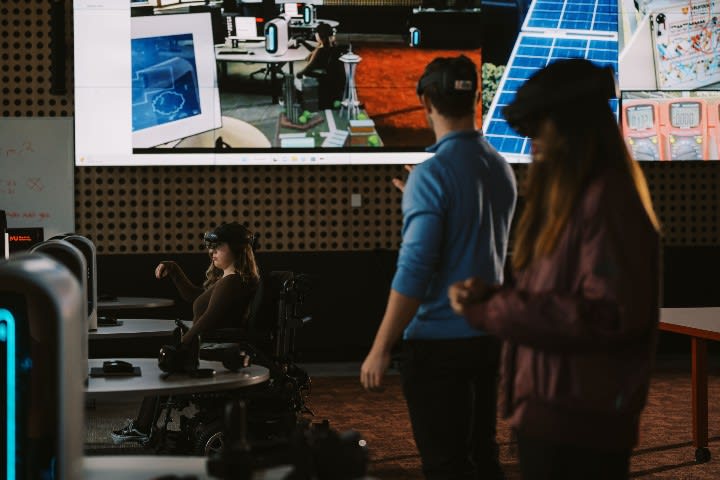
Students, Western Australia Police officers and experienced forensic investigators recently tested the ForensicXR program at Murdoch's Digital Immersive Laboratory, located in the university's Boola Katitjin academic building. Wearing Meta Quest headsets, trainees step into interactive, fully simulated crime scenes and practise the techniques they will use in the field.
How it works
The software was developed by ForensicXR chief executive Kirk Duncan and runs on Meta Quest VR headsets. It can generate an effectively unlimited range of fictitious crime scenes — from simple robberies to homicides, and more complex situations such as mass disasters or high-risk scenes involving explosives. It can also recreate real-world crime scenes captured with Faro LiDAR scanners, converting laser point-cloud data into navigable 3D environments that officers can re-examine to strengthen an investigation.
Elements that are hard or unsafe to reproduce in a physical training setting — blood stains, weapons, drugs — can be modelled in the virtual scene, letting students practise repeatedly in a safe and controlled environment.
Accessibility and inclusion
A distinctive benefit of the approach is inclusion: students with mobility issues or disabilities can take part in investigations that would otherwise be inaccessible. Associate Professor Paola Magni, quoted below, described a student recovering from a knee replacement who could not attend a bushland field exercise but was still able to complete the investigation in VR.
What's next
Murdoch is purchasing Meta Quest headsets so students can continue to use ForensicXR as a learning tool. The university, a leader in forensic science education through its School of Medical, Molecular and Forensic Sciences, will offer a new Bachelor of Forensic Sciences for the first time from 2026.


