


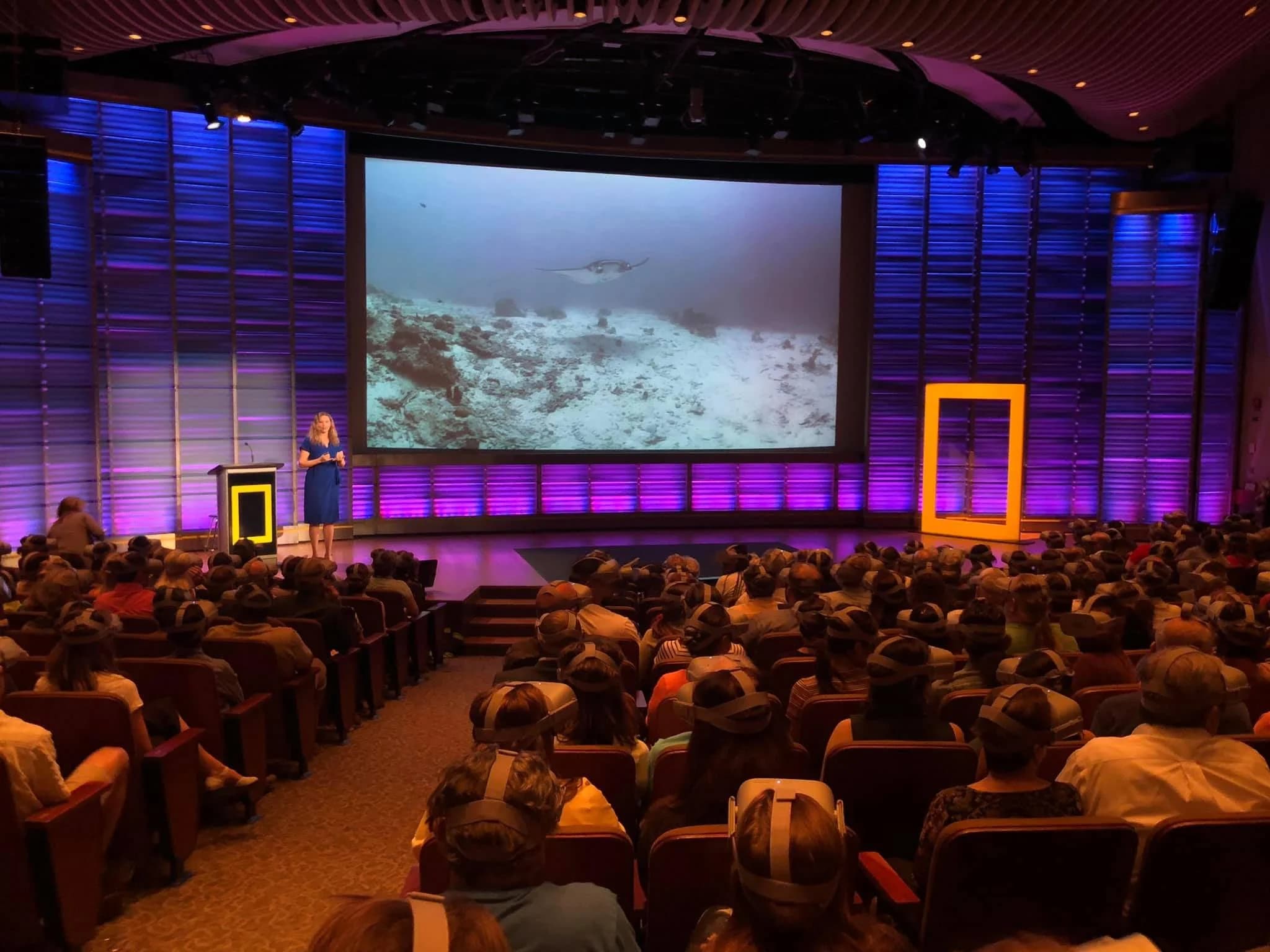
National Geographic's Gilbert H. Grosvenor Auditorium — the 450-seat theater at the Society's headquarters on 17th Street NW in Washington, D.C. — was converted into a shared virtual reality venue, so that an entire audience could be put inside the same 360° scene at the same moment while the explorer or scientist who shot the footage narrated live from the stage.
The installation was designed and equipped by SPACES, a location-based VR company: 450 Oculus Go standalone headsets, a dedicated server running custom playback code, and a remote triggering system that starts every headset together. Kathryn Keane, National Geographic's vice president of public programming and director of the National Geographic Museum, put the purpose plainly — a fully equipped VR theater lets audiences travel beyond the limits of Washington and join the Society's explorers in the field. The theater opened in fall 2018 with two shows built from National Geographic photographers' fieldwork: Aaron Huey on Bears Ears National Monument, and Paul Nicklen in Antarctica. Stanford's Center for Ocean Solutions described it as the largest permanent VR theater in the world.
Diving Palau from a seat in Washington
On 23 April 2019 the format was turned on coral reefs. Dr. Erika Woolsey — chief scientist and CEO of the ocean-science nonprofit The Hydrous, and then an Ocean Design Fellow at Stanford — presented Manta Ray Eden, a 360° dive on the reefs of Palau past manta rays, sea turtles and sharks, narrating live to a full house while everyone in it sat inside the footage. The film was cut with Jason McGuigan of Horizon Productions from material shot for The Hydrous's nine-minute reef film IMMERSE. Two school groups were taken through the theater after the public event.
Woolsey's case for the format, which she has since studied as an affiliate of Stanford's Virtual Human Interaction Lab, is that a headset dive raises both ocean literacy and emotional connection among people who will never scuba dive; she has described audiences coming out of it visibly moved, some of them in tears. Across this and its other programs, The Hydrous puts the total reach of its AR and VR work at roughly 2.75 million "virtual divers".

