

The Namibia University of Science and Technology (NUST) works with San communities in Namibia to build virtual reality experiences that carry cultural heritage to younger generations. The work centres on the Donkerbos community, where a 2020 research paper describes the first introduction of VR to a San community in the Kalahari, and now extends to Tsumkwe, where NUST's UNESCO Chair in Digital Technology Design with Indigenous People is introducing the projects to local youth, elders and teachers. NBC reports that NUST and the Donkerbos community have used VR and AI since 2017 to digitize and preserve indigenous knowledge, languages and cultural practices.
Donkerbos field visit
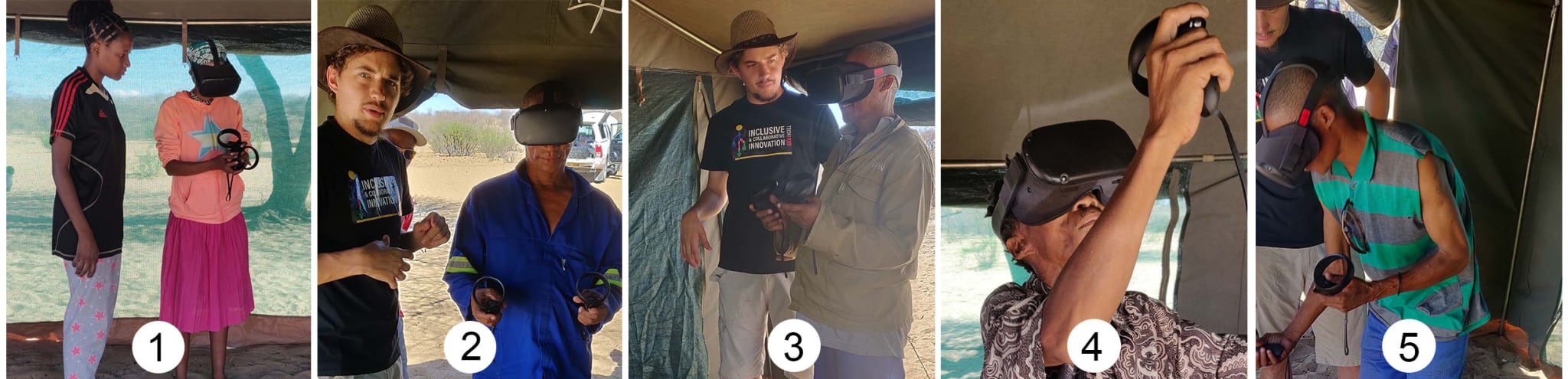
The 2020 paper reports a field visit in which a VR prototype, Termites of the Gods, was played on a standalone, wireless Oculus Quest headset inside a tent with a tracking space of about 3 x 3 m. The game is single-player and moves through a tutorial, a desert home, a journey into a spirit realm and arrival at the House of God. Aalborg University Medialogy students developed the prototype with the authors, and the paper credits Erasmus+ and a local ICT hub with supporting the initiative.
- The visit offered two VR applications, with one day dedicated to each.
- Five community members played Termites of the Gods: one woman and four men aged 24 to 57.
- The paper describes the single-player game as a shared social event, with other community members watching each playthrough.
Community members expressed excitement and a wish to re-create traditional San games in VR, and recorded specific dances to give the student designers authentic material for future games.
Starlore prototype and Tsumkwe
A second prototype, reflecting the intangible heritage of starlore and indigenous cosmology, was co-designed with a Ju/'hoansi story team in north-eastern Namibia by researchers and Northern European students. A 2026 paper reports first findings from returning that prototype to the story team in the community, and lists the European Commission as funder. The work remains at prototype stage.
The UNESCO Chair, launched in 2025 and led by Prof Heike Winschiers-Theophilus, focuses on human-computer interaction research that helps Indigenous communities preserve, shape and share their heritage on their own terms. In Tsumkwe, the team is exploring with young people, elders and teachers how similar games could be developed with the community. The stated aim is for children to learn in their own language and experience traditional practices through VR, and to bring indigenous knowledge and cultural beliefs into schools.


