


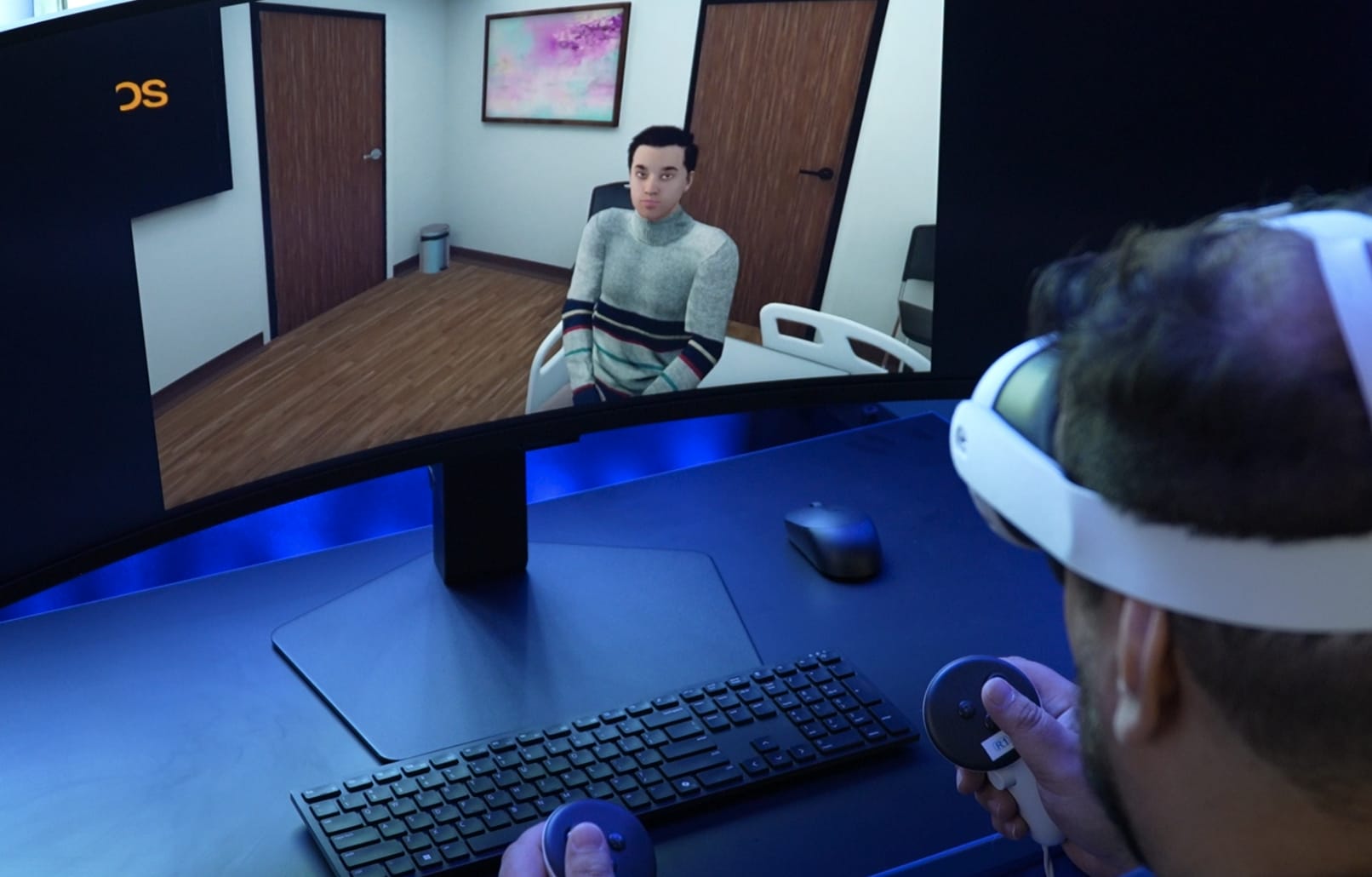
Old Dominion University's graduate counseling program is using virtual reality simulations to let students practise counseling sessions before they work with real clients. Wearing headsets and holding controllers in the university's XR Lab in Norfolk, Virginia, students sit across from AI-powered virtual clients built on the Bodyswaps platform.
The work is part of a research project led by Lauren Robins, an assistant professor in the Department of Counseling and Human Services, alongside doctoral student Chukwuebuka Onyia. It is now part of the learning experience for graduate students in the counseling program.
How the simulations work
Each virtual client exists only in the virtual world, and every question, pause and moment of connection shapes what happens next. Students are placed in a simulated counseling office with avatars that have distinct concerns:
- Santiago, an anxious-looking man seated on a couch in a brightly lit office.
- Maya, who is navigating burnout, physical exhaustion and institutional mistrust, which requires students to practise cultural humility while building rapport.
The headset view is mirrored on a monitor at the lab workstation.
Purpose
The project focuses on rapport building and cultural competence. Robins describes the aim as learning to see the whole person and approaching them with empathy, while Onyia framed the motivation as giving other students like him a chance to practise and catch up before working with real clients.

