

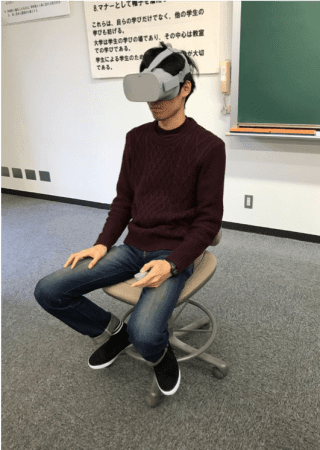
Otemon Gakuin University in Ibaraki, Osaka Prefecture, and the Osaka Prefectural Police develop VR content for crime-prevention education. Seminar students of Professor Akira Harada work with the police to build scenes in which users practise recognising and avoiding the threats that lead to crime, with the aim of supporting crime-prevention classes and awareness activities.
The university's October 2019 release announced the first public crime-prevention class using the VR content for 2 November 2019, at the Ibaraki Soujiji campus during a joint campus festival, in five rotating sessions. The release said the content was developed jointly with the police headquarters' Citizens' Safety Measures Division, mainly to raise women's self-directed crime-prevention awareness. It said the VR experience was for people aged 13 and over and required a signed consent form.
How it works
For the early content, Harada filmed a park with a dedicated 360-degree camera and linked the footage to goggles, so the wearer feels present in the park. According to the 2019 release, this approach needs basically only the camera and goggles and is far cheaper than programming a comparable virtual space from scratch. In the park scene, the viewer walks while looking at, and listening to music on, a smartphone, and a suspicious person approaches from behind, letting users experience how hard it is to notice.
The newest content, reported by the Asahi Shimbun in November 2026, simulates tailgating (following a resident through an auto-lock entrance) and voyeurism threats. Wearing goggles, users come home to an apartment building in the evening and climb stairs, learning behaviours such as looking around 360 degrees and checking behind them. At decision points, such as when a man passes close to home, the user picks a reaction with the controller: the trigger button for not being wary, the A button to be wary. Asahi reported that those who tried the tailgating video realised the ending changed depending on choices such as whether they looked back just before entering. The tailgating scenario was devised in response to an August 2025 incident at an apartment building in Chuo Ward, Kobe.
Scale and use
Harada's seminar students and the police have produced eight crime-prevention VR videos since 2018, according to the Asahi Shimbun, and these are used in crime-prevention classes in various places. The newest content was shown for the first time at the university's campus festival on 1 and 2 November 2026, where students tried it, with the view they were seeing projected onto a wall.
In the 2019 release, Harada said the method is inexpensive and can recreate many situations in which crime might occur, and he hoped it could contribute to crime-prevention classes and other awareness activities.


