

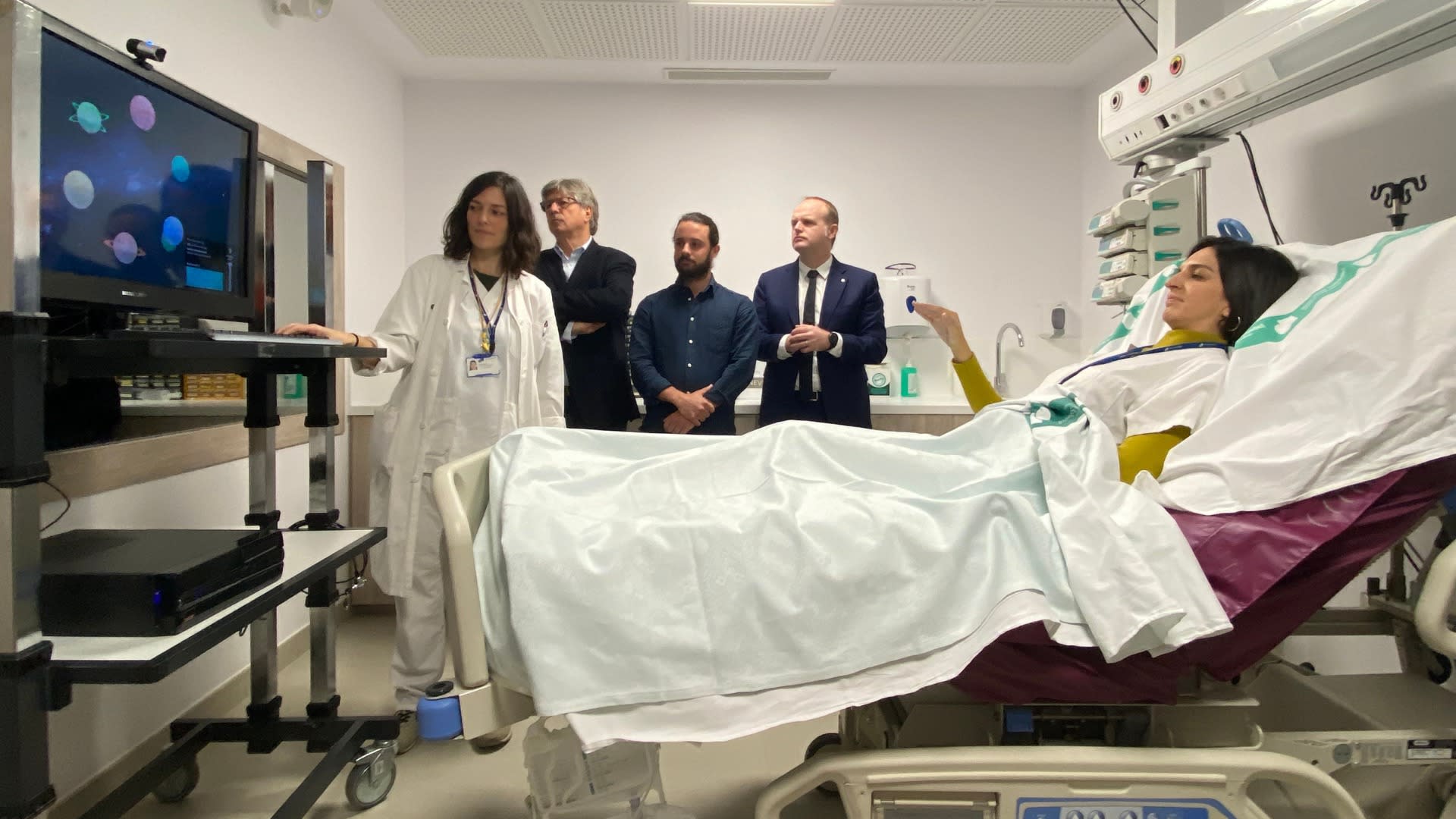
Parc Taulí University Hospital in Sabadell, Spain, tested RGS-UCI with 20 critically ill patients to support motor and cognitive rehabilitation in intensive care. Eodyne Systems developed the software in collaboration with hospital professionals and the Parc Taulí Research and Innovation Institute (I3PT).
The pilot aimed to make rehabilitation accessible and engaging during patients’ ICU stay. Eodyne CEO Santiago Brandi described reducing hospitalization days and avoiding possible aftereffects as goals of combining cognitive exercise with motor activity.
How the exercises work
A camera uses computer vision to detect patients’ arm movements, while a screen presents personalized exercises. Activities are adapted to each patient’s mobility and address:
- Motor function and mobility.
- Memory and attention.
- Cognitive processing speed.
The system combines virtual rehabilitation software with artificial intelligence. Hospital and I3PT professionals helped develop the exercises for this patient setting. According to Brandi, the team used camera tracking because infection risks ruled out placing virtual reality glasses or sensors on these patients.
Pilot findings and support
Parc Taulí researcher Sol Fernández Gonzalo reported that the proof of concept was viable and that patients considered the system useful and beneficial. She described the exercises as simple, intuitive and well tolerated, with patients rating the stimulation sessions very satisfactorily.
The New Barcelona Post reported a 1.3-day reduction in average ICU stay per patient for the pilot. This is an attributed pilot finding rather than evidence of a confirmed causal effect.
An ACCIÓ grant of €70,000 supported Eodyne’s development and testing of RGS-UCI at Parc Taulí.

