

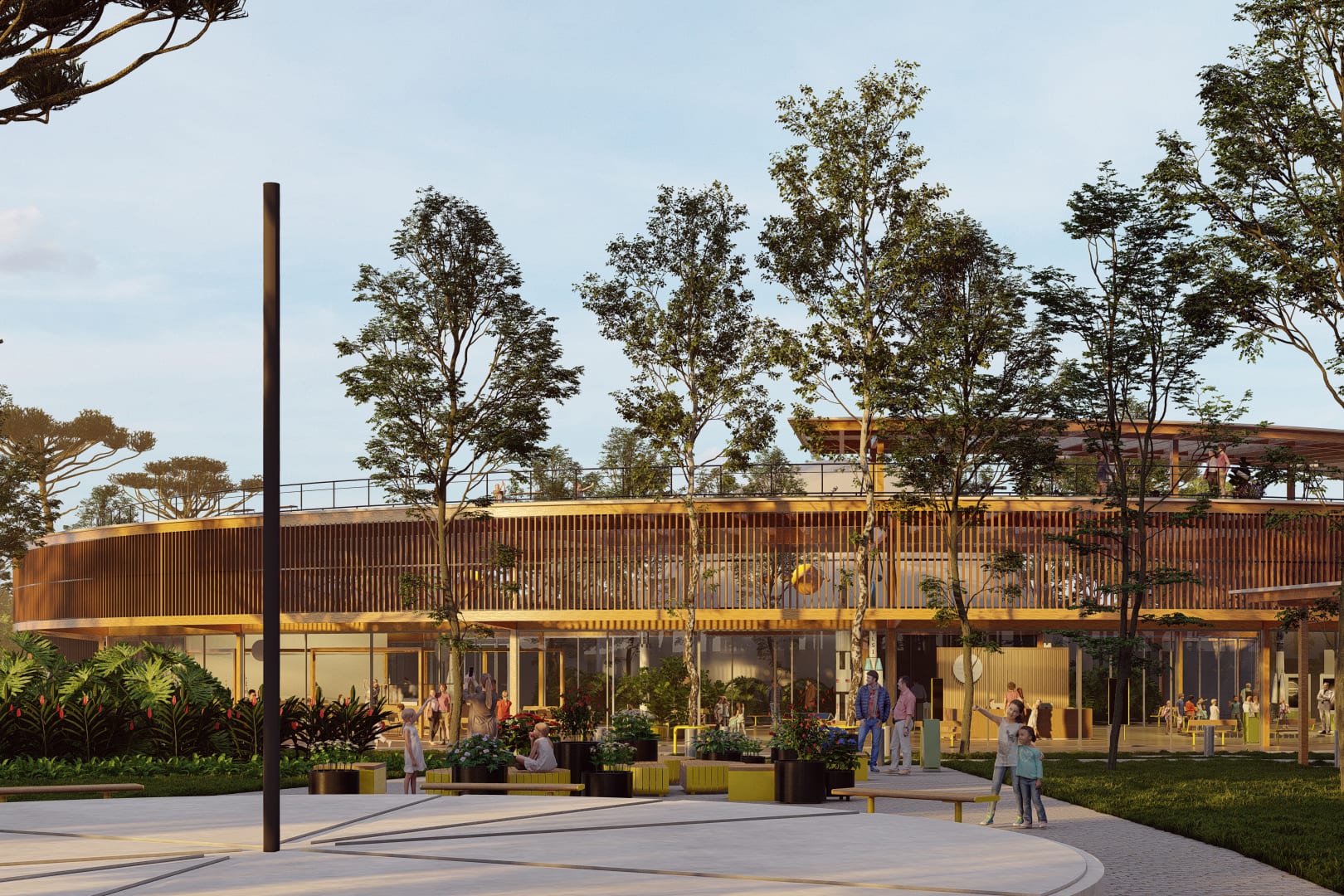
The Parque da Ciência Newton Freire Maia in Pinhais, in the Curitiba metropolitan area of Paraná, Brazil, is building a planetarium for immersive astronomy and science education. Latina-Press reports that the building was 58% complete on 4 November 2026, and describes it as the largest planetarium in Latin America. The project is part of the park's modernisation and involves the state education secretariat (Seed-PR), the science, technology and higher education secretariat (Seti), the education development institute Fundepar, the State University of Ponta Grossa (UEPG) and Fundo Paraná.
The state government says the dome will let students observe planets and other celestial bodies, simulate astronomical phenomena and meet scientific content in an immersive format. Park director Anísio Lasievicz says the aim is to encourage students toward scientific careers and to offer continuing education in astronomy for Paraná teachers, alongside astronomical research and preparation of teaching-degree students in higher education.
How the dome will work
The dome is planned at 18 m in diameter with 508 m² of projection surface. It will use a ZEISS hybrid system, Asterion Premium plus VELVET LED, supplied by the German company ZEISS Planetariums.
- One central optomechanical Asterion Premium projector, which the state describes as able to simulate about 9,000 naked-eye stars under ideal sky conditions.
- Eleven VELVET LED digital projectors spaced around the dome, which will show a single fulldome image across the whole surface for animations, video and content from different fields of knowledge.
The planned building also includes an auditorium, exhibition rooms, and teaching, administrative and visitor areas. Latina-Press gives its planned total built area as more than 4,500 m²; an earlier state news item says almost 5,000 m².
Investment and schedule
According to the state news item, the projection system was bought for €5.16 million and the construction works cost about R$46.5 million, a figure that excludes the projection system. A social media post by creator Cauan Wenderico puts the total investment, including works, projection, furniture and equipment, at about R$90 million; this is a third-party estimate that cites state figures.
Construction began in early 2026 after the tender closed in late 2025, and Fundepar is responsible for the works. An earlier state news item, published when the works were 30% complete, gave Fundepar's estimate of completion in early December, subject to the equipment arriving from Germany and clearing import customs. Latina-Press now reports that the ZEISS system is due at the port of Paranaguá on 7 November 2026 for customs clearance, with installation to begin once it reaches the site. The creator's reel gives March 2027 as the expected delivery date. The planetarium is not yet operating.


