
XRHQ
Brazil+3
Agriculture

PepsiCo Uses VR Potato Harvester Training to Improve Harvest Quality

PepsiCo and Grimme’s VR harvester training helps operators optimize machinery, with pilots reporting fewer bruised potatoes.

Added on

Worked on this project?

Showcase your involvement with your name, profile and website links featured on this page. Help people discover your work, connect with you, and keep the project details up to date.

Free to claim · Reviewed by XRHQ

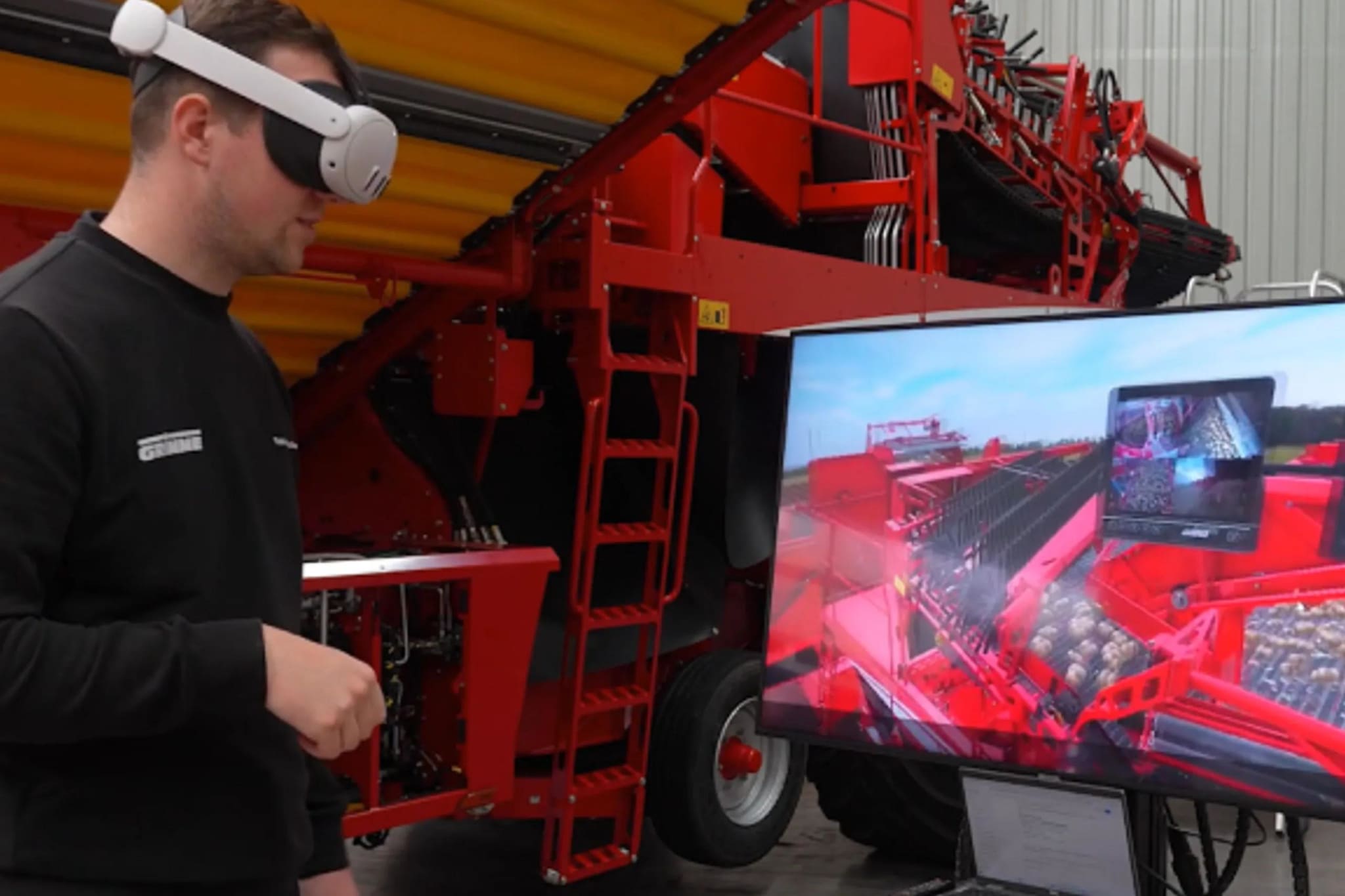
A person wears a white VR headset beside a red harvester and a monitor displaying its virtual model.
A participant uses the potato harvester digital twin developed by PepsiCo and Grimme, with the virtual machinery visible on a nearby monitor.

Sign in to view 3 more media items

Data Points (2)

This information is available to registered members of XRHQ. Sign up for free below.

PepsiCo uses a virtual reality potato harvester training platform developed with Grimme to help operators learn equipment settings and improve harvest quality. The interactive digital twin replicates the harvester’s internal mechanics, allowing operators to practise optimizing machinery performance before working in the field.

The programme aims to protect the quality of potatoes supplied to PepsiCo, reduce crop waste and support growers’ livelihoods.

Training and rollout

The platform launched with pilots in Brazil and Mexico in 2025. PepsiCo reports that the headsets and training have since rolled out to Romania and Poland. The technology was also demonstrated at PepsiCo’s Global Agro University in Germany, attended by farmers from more than 35 markets.

Operators use VR headsets to explore the virtual machinery and its settings. Once the training is loaded, it can run without Wi-Fi or an active mobile service, supporting access where connectivity is limited.

Reported pilot results

PepsiCo reports that digital twin training in the Brazil and Mexico pilots delivered an average 87% increase in bruise-free potatoes and a 1.7-fold reduction in severe bruising. These figures describe potato bruising outcomes in those pilots; they are not a measure of total waste reduction across the wider programme.

PepsiCo attributes the improvements to enhanced operator performance and machine optimization, helping growers protect more marketable crops. The company is refining language support and training content as it expands into further markets.

Quotes

“Training operators at scale has long been an issue for the industry but can result in a costly impact if harvesting equipment is not used effectively”

“This digital approach dramatically expands our ability to support growers globally and improve the amount of quality crop that a farmer can sell”

“We aim to find solutions to challenges that farmers face every growing season while ensuring we get a sustainable supply of quality potatoes. By pairing Grimme’s engineering expertise with PepsiCo’s agronomy insights, we’ve created a scalable tool that can help improve both crop quality and farmer livelihoods and reduce waste that can impact land use and carbon emissions”

“Adapting to local realities is often more important to driving adoption at scale. As we expand into new markets, we’re continuing to refine the experience, including language support and training content. The goal isn’t to introduce complexity. It’s to make proven expertise available to more operators, in more places, before they enter the field”

“One of agriculture’s biggest challenges is delivering consistent, high-quality training to operators who may be seasonal, geographically dispersed or working in different languages and markets. The opportunity with digital tools is their ability to make expert training more accessible and scalable. Of course, cost is always an important consideration for the adoption of any technology. The loss of revenue for a farmer due to bruising can be very high, and the VR technology costs are only a fraction of this risk”

“The primary value demonstrated so far is improved operator capability, reduced bruising, better harvest quality and helping growers protect more marketable crops. “Reducing crop loss could also improve resource efficiency because fewer potatoes may need to be grown to produce the same amount of food. “This creates the potential to avoid some of the water, energy and fertiliser associated with crops that would otherwise be lost, but we will continue to evaluate those impacts as the technology expands into additional markets.”

Project Summary

This information is available to registered members of XRHQ. Sign up for free below.

Experience

Available to XRHQ members

Hardware

Available to XRHQ members

Partners & Service Providers

Available to XRHQ members

Sources

Available to XRHQ members

Know more about this project? Help us fill in any missing details.

Edit this project →

Worked on this project?

Showcase your involvement with your name, profile and website links featured on this page. Help people discover your work, connect with you, and keep the project details up to date.

Free to claim · Reviewed by XRHQ

This write-up is free to reuse with credit — CC BY 4.0.