
XRHQ
Italy
Culture & Heritage

Pinacoteca di Brera Pilots AI Glasses for Accessible Art Visits

Pinacoteca di Brera uses Ray-Ban Meta glasses to provide blind and visually impaired visitors with audio descriptions of eight artworks.

Added on

Worked on this project?

Get credited on this page

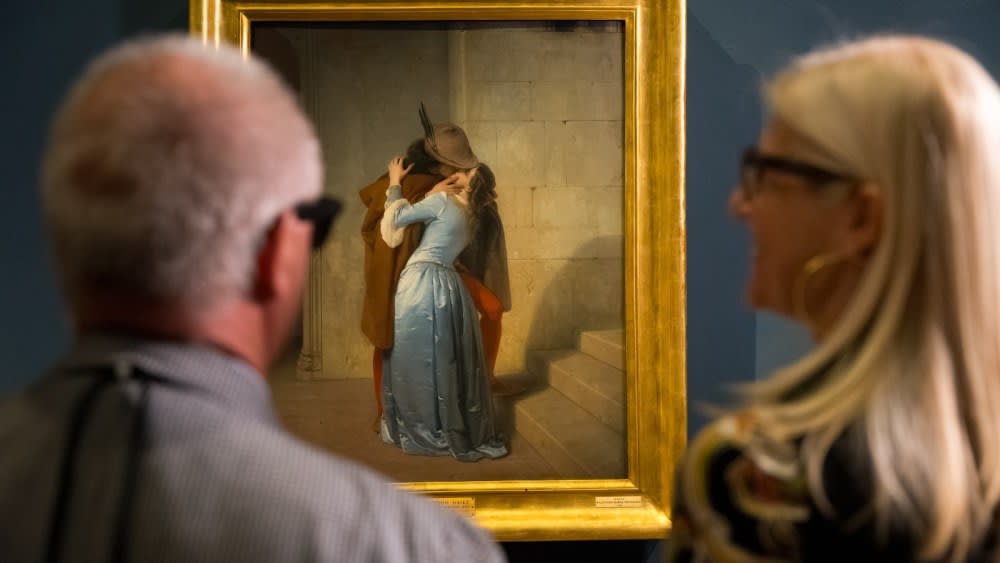
Two visitors wearing glasses stand in front of Francesco Hayez's painting The Kiss at Pinacoteca di Brera.
Visually impaired and blind visitors at Pinacoteca di Brera in front of Francesco Hayez's artwork "The Kiss" with the AI glasses developed by Meta and EssilorLuxottica.Courtesy of EssilorLuxottica

Data Points (3)

This information is available to registered members of XRHQ. Sign up for free below.

Pinacoteca di Brera in Milan has launched Sensing Art – Discovering Masterpieces Beyond What Meets the Eye, a pilot using Ray-Ban Meta AI glasses to help blind and visually impaired visitors explore its collection. The trial tests new forms of cultural accessibility, with visits available by reservation from October 13, 2026.

The project brings together the museum, Meta and EssilorLuxottica, in collaboration with Associazione Nazionale Subvedenti (ANS), Unione Italiana dei Ciechi e degli Ipovedenti (UICI) and Fondazione Istituto dei Ciechi di Milano.

Artwork recognition and audio descriptions

Visitors standing before one of the tour's eight artworks can activate recognition through the glasses and hear the corresponding descriptions through speakers built into the temples. The open-ear audio lets them remain aware of their surroundings while reducing interaction with a smartphone.

According to EssilorLuxottica, each artwork has three content sections developed using ANS's DescriVedendo method, which visitors can access according to their preferences:

  • A morphological description translating shapes, composition, details and visual features into words.
  • A historical and artistic overview.
  • The artist's biography.

Voice assistance and pilot access

Meta AI allows visitors to ask questions about their surroundings. Integration with Be My Eyes connects users through the glasses to sighted volunteers and qualified operators for real-time help with orientation and practical tasks, both during the visit and on the journey to the museum.

Il Sole 24 Ore reports that the pilot launched on October 13, 2026 with 10 pairs of glasses available by reservation.

Quotes

“The project developed at the Pinacoteca di Brera with Meta and EssilorLuxottica shows how new technologies and artificial intelligence can be put at the service of people and inclusion. A tool that can truly improve the quality of life of blind and visually impaired people, combining autonomy and independence in mobility with access to culture, which must be accessible and open to everyone. This is the real shift: reducing those barriers that can sometimes be physical, sometimes sensory, and sometimes cultural, and giving everyone the opportunity to pursue their passions. I hope this important trial can become a model to be replicated in many other museums and cultural venues, so that every person can truly feel fully included as a citizen”

“Making heritage accessible means creating the conditions so that everyone can build their own relationship with art. DescriVedendo has for years represented an important part of our commitment, and today we can enrich it with an additional possibility, born from the encounter between cultural expertise, technology, and people's experience. The Pinacoteca continues to be a place of experimentation in which to explore new languages and tools capable of bringing a universal heritage closer to an ever-wider audience.”

“When innovation addresses real needs, it can create tangible value in people's lives. Technology reaches its greatest potential when it succeeds in making information and daily experiences more accessible, natural, and immediate - like with our AI glasses. It is through initiatives like this—born from an ongoing dialogue with people with disabilities — that we work toward a future with more opportunities for everyone.”

“Having watched these devices come to life in our labs and manufacturing facilities, it is deeply rewarding to see the positive impact that smart glasses can have on people's lives, enriching the way they experience the world around them while building on the tradition of excellence, innovation and craftsmanship that has long defined our eyewear. Thanks to this initiative and the collaboration of all the partners involved, we are unlocking new opportunities to explore and experience art and culture, making them more accessible to blind and low vision people.”

“_Being able to experience culture with greater autonomy means having more freedom of choice: in timing, methods, and the personal connection each individual builds with an artwork. This is why it is essential that blind and visually impaired people participate directly in developing the solutions that concern them. Bringing our experience into this project allowed us to contribute concrete needs, expectations, and feedback, turning dialogue into a driver of innovation.”

“The glasses use content created by Brera and ANS with Descrivedendo: descriptions of the artworks, art history and the artist’s biography. But they do so in a natural way: as you move from one artwork to another, the AI in the glasses recognises what’s in front of you and starts describing it, at your own pace, depending on where you want to go and how you want to experience the art”

Project Summary

This information is available to registered members of XRHQ. Sign up for free below.

Experience

Available to XRHQ members

Hardware

Available to XRHQ members

Software

Available to XRHQ members

Partners & Service Providers

Available to XRHQ members

Sources

Available to XRHQ members

Know more about this project? Help us fill in any missing details.

Edit this project →

Worked on this project?

Get credited on this page

This write-up is free to reuse with credit — CC BY 4.0.