


The deployment
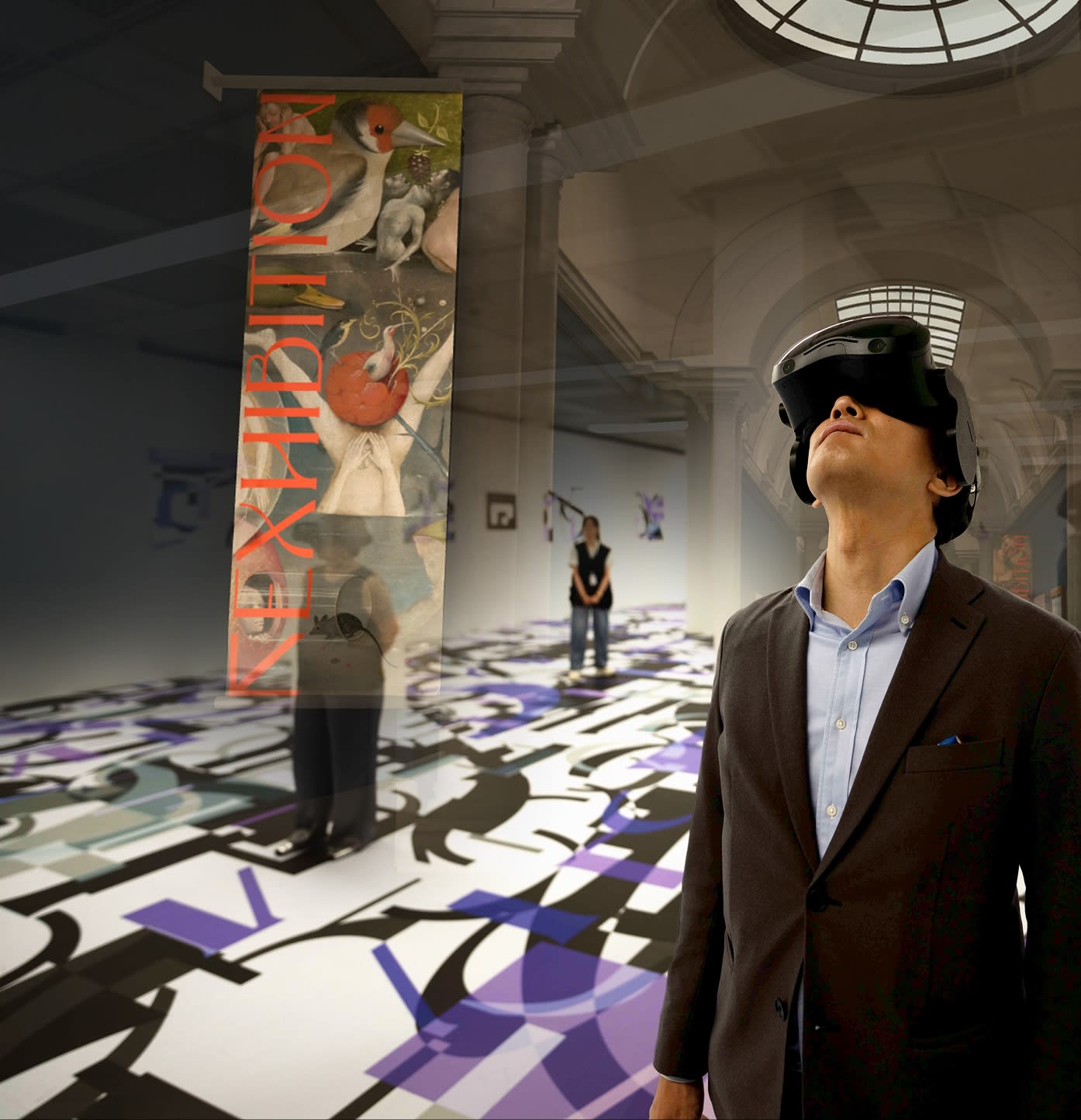
Powerhouse Arts, the nonprofit art-fabrication centre housed in a former Brooklyn Rapid Transit power station in Gowanus, is hosting the US premiere of Masterpieces: A Virtual Experience of the Museo del Prado from 1 October to 20 December 2026. The production was designed and produced by ACCIONA Cultura in collaboration with Madrid's Museo Nacional del Prado, and is billed as the first multi-user, location-based VR experience made with the museum.
How it works
Visitors wear a standalone headset and walk freely around a tracked floor rather than viewing from a fixed seat. Up to 35 people occupy the shared virtual space in a single session, and the installation needs a minimum of 200 m² including its onboarding area. The headset segment runs 30 minutes and is bookended by two physical rooms: an introductory gallery on the Prado's history, and an interactive post-show space.
Five paintings, one narrator
The experience is framed not as a curator's tour but through the voice of a fictional Prado security guard working his last night shift before retirement, putting the accumulated observation of museum staff at the centre of the story. Five works expand from flat canvases into three-dimensional theatrical environments that visitors walk through:
- The Sense of Sight, Peter Paul Rubens and Jan Brueghel, 1617
- Las Meninas, Diego Velázquez, 1656
- Venus and Adonis, Paolo Veronese, ca. 1580
- Witches' Sabbath, Francisco de Goya, 1820–1823
- The Garden of Earthly Delights, Hieronymus Bosch, 1490–1500
Each virtual gallery pairs original storytelling with an original orchestral score and purpose-built 3D environments.
Why the Prado is doing this in VR
Conservation requirements keep most of these paintings in Madrid. The Prado rarely lends The Sense of Sight and prohibits loans of the other four outright, so until now seeing them has meant travelling to Spain. The exhibition is explicitly an experiment in access: it puts the works in front of audiences who may never reach Madrid, or who would not ordinarily walk into an art museum at all. The trade-off is equally explicit — VR cannot reproduce the material presence of a painted surface, and the production positions itself as a different kind of encounter rather than a substitute.
Production and technology
- Design and production: ACCIONA Cultura
- Creative direction and CGI: Tigrelab, Barcelona
- Software development, sound integration and free-roam tracking: Univrse, on its XRoam platform
- Original score: Thomas Roussel
- Academic curatorship: Alejandro Vergara, Museo Nacional del Prado
The experience is built in Unity. XRoam is a multi-user free-roam platform running on standalone headsets, which is what allows a large group to move around the space untethered at the same time.
Track record before Brooklyn
The production debuted at ACCIONA's NEXT IN Summit in Madrid in April 2025, drawing 360 attendees across two days. It then travelled to Shanghai and Chengdu in mid-2025 — the Shanghai run was extended on demand and recorded 11,934 visitors — followed by Buenos Aires, where it drew 9,747 visitors between September and December 2025, and Tokyo. Brooklyn is its first North American staging.
Public programme
Powerhouse Arts is running a season of programming alongside the exhibition: an opening MIXTAPE party hosted by DJ April Hunt on 3 October, a staff art show from 5 November to 6 December, free drop-in Crafternoons workshops on 3 and 17 October and 14 November, neighbourhood Art Where You Are sessions in September and October, and two public conversations on art, technology, replication and access featuring curator and XR producer Jazia Hammoudi, Rubén Polendo of Theater Mitu and NYU Tisch, and artist Pablo Helguera.

