


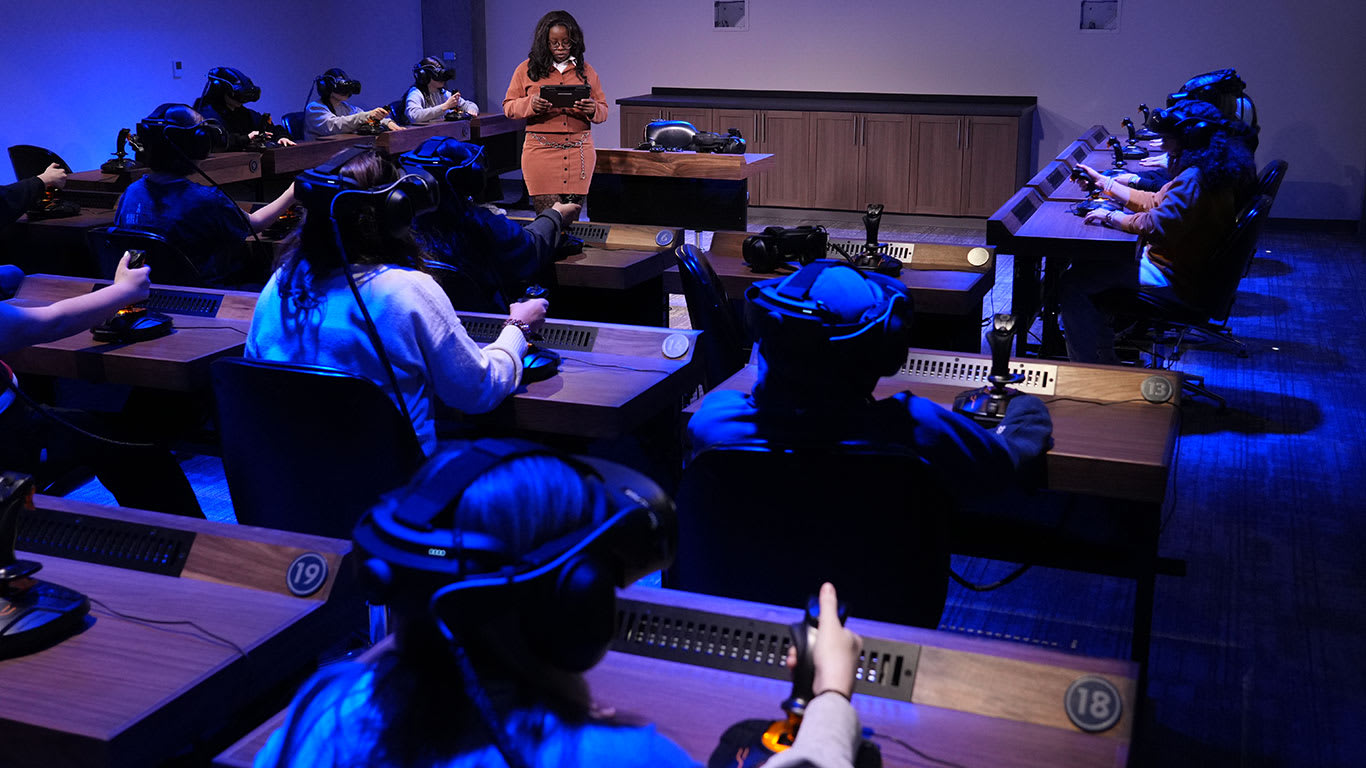
Rowan University in Glassboro, New Jersey, runs a Dreamscape Learn Center at Campbell Library, where students take courses inside virtual reality. The center has two dedicated VR classrooms, and faculty use immersive, story-driven experiences to teach subjects such as introductory biology.
How it works
Each classroom holds 30 students and a faculty member. The rooms are equipped with tethered VR headsets, sensors and tactile feedback tools such as joysticks, fans and vibration systems, so students can work together or individually in interactive worlds.
The first course, introductory biology for non-STEM majors, launched in spring 2025 under Pamela Watson and uses Dreamscape Learn's Biology in the Alien Zoo experience, designed with Arizona State University. Students spend about 15 minutes per class in VR and another two hours in classroom discussion and data analysis.
Scale and faculty-built content
Rowan reports that hundreds of students each semester enrol in courses that use VR in the center. Dreamscape Learn supplies the content platform, and faculty are also building their own modules with the Dreamscape Software Developer Kit. Among them is CASCADE, a disaster-response scenario developed by DeMond Miller, professor of disaster science and emergency management.
Dreamscape Learn's case study says faculty have released experiences in business career-fair professionalism and disaster management, with more planned in anatomy and physiology, American history and other disciplines.

