
XRHQ
United States
Massachusetts
Education

Roxbury Community College Uses VR in Paid Summer STEM Programme for Teens

Roxbury Community College made VR one of 10 hands-on topics in its 2023 paid summer STEM programme for 30 Boston teens.

Added on

Worked on this project?

Showcase your involvement with your name, profile and website links featured on this page. Help people discover your work, connect with you, and keep the project details up to date.

Free to claim · Reviewed by XRHQ

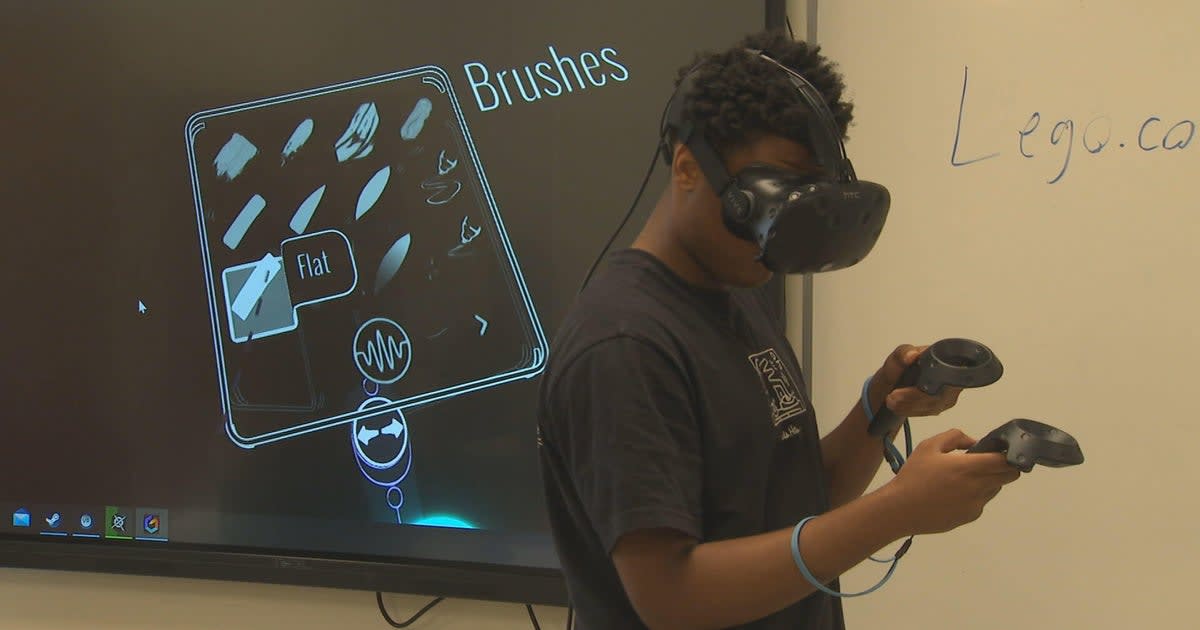
A student wearing a tethered HTC VR headset holds two motion controllers in front of a wall screen showing a virtual painting app's Brushes menu.
A student uses a VR headset and controllers in a painting application during Roxbury Community College's high-school summer STEM programme, with the headset view mirrored on a classroom screen.

Data Points (2)

This information is available to registered members of XRHQ. Sign up for free below.

Roxbury Community College in Boston used virtual reality as one of the hands-on topics in its paid summer STEM programme for high-school students. In summer 2023, 30 teens were paid through a city grant to spend the summer learning different areas of science and technology on the college's campus, rather than taking an ordinary summer job.

The programme's stated aim is to build early interest in science careers. According to CBS Boston, the programme says there are not enough trained workers to fill Boston's life science jobs, especially workers of color from diverse neighbourhoods, and getting students interested early can steer them toward careers they may not have considered.

How VR was used

Virtual reality was one of 10 hands-on topics in the 2023 programme, alongside biology with dissections, 3D printing, robotics and drones. Students used a tethered HTC VR headset with two motion controllers; one was photographed working in a virtual painting application, with the headset view mirrored on a classroom wall screen.

Programme history

The college had advertised the programme the previous year: a free, month-long 2022 edition running from July 18 to August 18 on campus listed VR alongside the maker space and 3D printing, and promotional posts that June named virtual reality among drones, robotics, 3D printing and emergency room simulation.

The college's vice president of academic affairs, Hillel Sims, has described the high-school programmes as having run for several summers. For summer 2025 the college said 30 students would take part in the High School RCC STEM Experience, and its summer programmes were to pay students $15 an hour; the topics listed for that year were drones, 3D printing, physics, chemistry and biotechnology, with VR not among them.

Quotes

“It's a lot more fun than working somewhere else,”

“You get paid to do fun stuff. You get paid to do science.”

“When you're exposing them to these topics, you never know which one they're going to like. All it takes is one thing, and that could change their life and what they do for the rest of their lives,”

“Just so they understand that science is important. Science makes a difference,”

“We’ve been running high school programs for the last several summers, but we keep getting bigger and better,”

“They have to make that choice between, ‘well, am I going to work a job over the summer or work a job during the year or am I going to go and do something that helps me to better my life and my future and for my education,’ and we don’t want students to have to make that choice,”

Project Summary

This information is available to registered members of XRHQ. Sign up for free below.

Experience

Available to XRHQ members

Hardware

Available to XRHQ members

Sources

Available to XRHQ members

Know more about this project? Help us fill in any missing details.

Edit this project →

Worked on this project?

Showcase your involvement with your name, profile and website links featured on this page. Help people discover your work, connect with you, and keep the project details up to date.

Free to claim · Reviewed by XRHQ

This write-up is free to reuse with credit — CC BY 4.0.