

Background
The Royal New Zealand Navy trains its divers on the Companion Diver Drill, an underwater rescue procedure for recovering an incapacitated colleague. Rehearsing it in pools and open water is resource-intensive and hard to repeat consistently, and the service has faced staff shortages and rising operational costs that limit how much instructor time and equipment can be committed to it.
The deployment
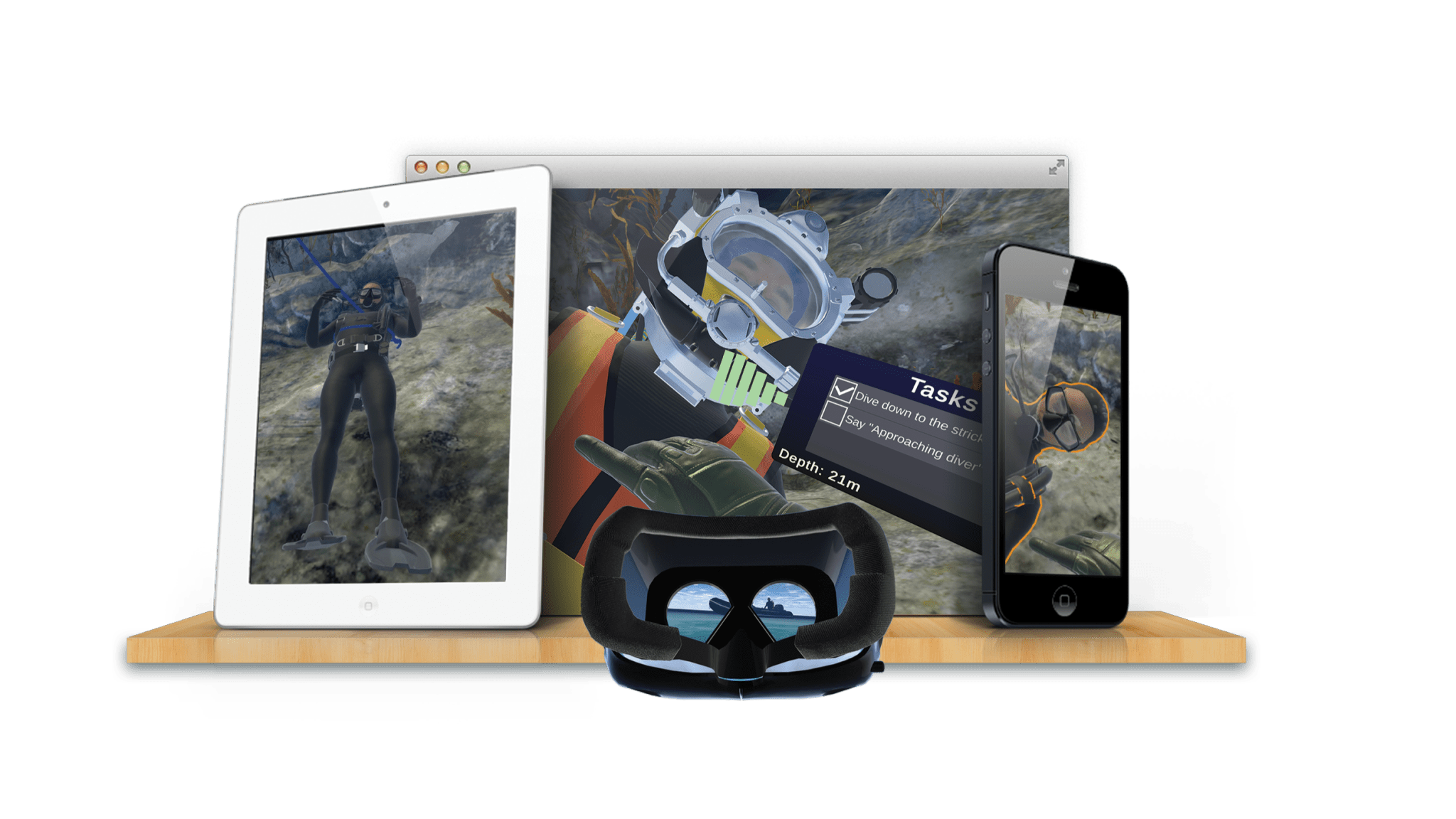
The Navy engaged Hamilton-based software firm Company-X to rebuild the drill as a virtual reality simulation. Trainees enter an underwater environment with dynamic lighting, underwater soundscapes and a surface vessel overhead, and work through incapacitated diver recovery, controlled ascent and surface signalling. The simulation covers the CABA, SSBA and VSWRB diving systems and offers two modes:
- Guided — visual prompting, equipment interaction cues, error correction and ascent-rate monitoring.
- Unguided — self-paced execution with no feedback, for advanced learners.
Instructor in the scenario
The capability the Navy singles out is multiplayer, which it describes as its first use of virtual reality in a multiplayer environment. An instructor enters the same scenario as the trainee in real time to watch performance and correct poor habits as they form, rather than waiting for a post-session debrief. Sessions can also be played back afterwards on Navy laptops for instructor feedback.
Hardware and delivery
The simulation runs entirely on standalone Vive Focus 3 headsets, with no additional hardware needed on the trainee side. It does not require Wi-Fi, so the kit can be taken to different locations rather than tying training to one fitted-out facility.
Status and recognition
Company-X describes the system as in service, supporting Navy diver training programmes ashore and at sea. In May 2026 the company's head of simulation and training, Lance Bauerfeind, received the Auahatanga – Innovation Award at the Minister of Defence Awards of Excellence to Industry, held at Parliament, for leading its development.
The firm has delivered other immersive training to the Navy, including a flight deck officer simulation for landing helicopters on a frigate, and in November 2025 signed an agreement with Babcock International at the Indo Pacific International Maritime Exposition in Sydney aimed at taking its New Zealand-built naval simulation training to defence forces elsewhere.

