


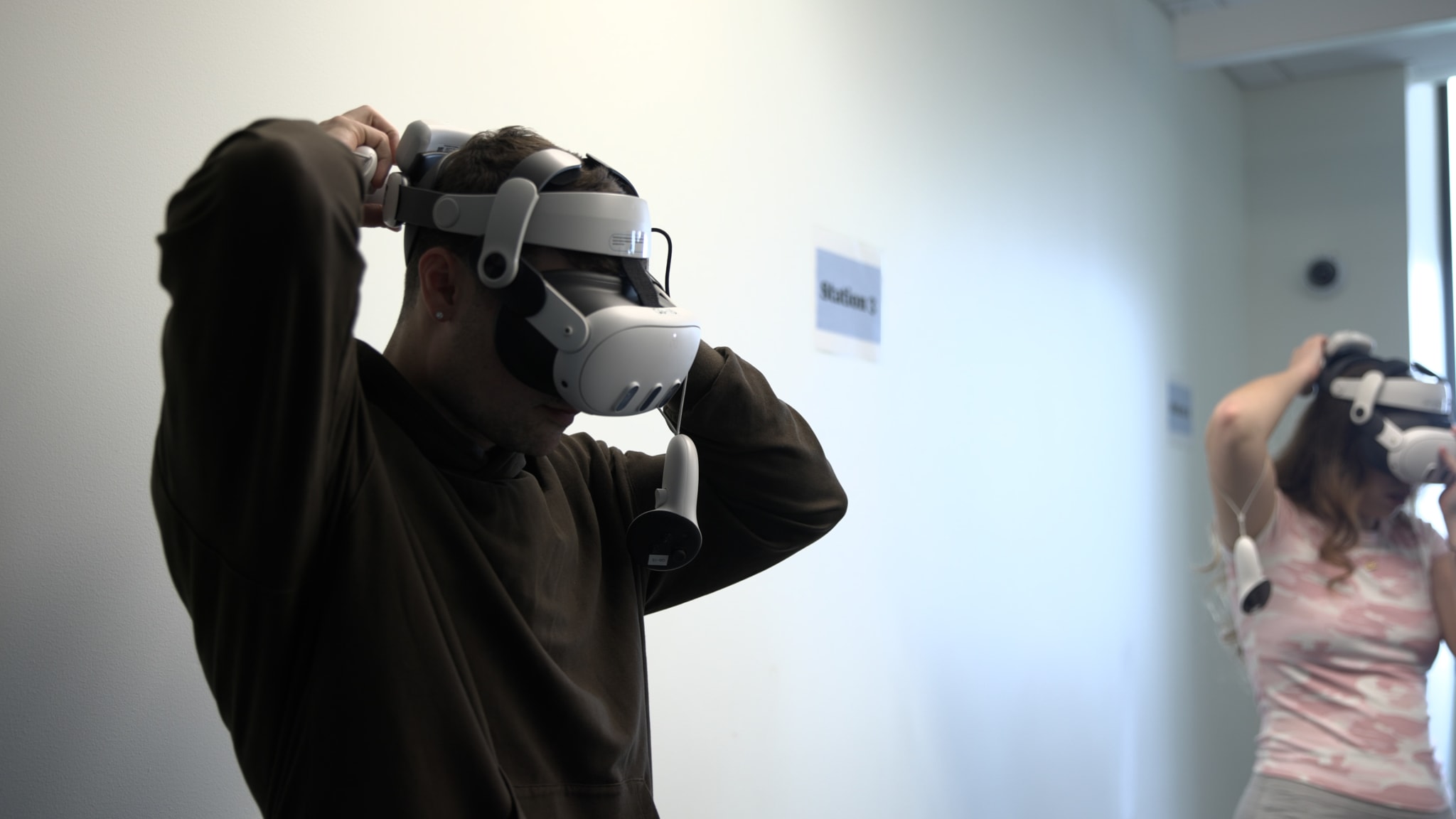
Rutgers School of Nursing–Camden introduced a virtual reality clinical rotation in the spring 2026 semester, after five years of faculty and student trials that began in 2020. Students put on a VR headset and step into a patient room as the primary nurse: they assess symptoms, make treatment decisions and respond as the case deteriorates, without the division of labour of a team manikin simulation.
Sessions run about 20 minutes each, a length the school says limits motion sickness. While one group is in headsets, their classmates follow the same scenario on laptops and give feedback afterwards; the two groups then switch roles. Because several students can run a scenario at the same time, the school says the format expands access to simulation, simplifies scheduling and makes the experience consistent across the cohort.
The first scenarios reported by students covered maternity care. Nursing students normally complete 12-hour rotations on a hospital floor, but crowded units and the nursing shortage have made those placements harder to secure. Faculty describe the VR clinical as filling that gap rather than replacing floor time, and as a way to expose students to rare, high-risk events they might never meet on a single clinical day a week. Each experience is mapped to the clinical objectives students must meet, so performance in the scenario can be measured against them, and the school also uses the scenarios to practise therapeutic communication, empathy and rapport-building.
The programme sits inside a wider modernisation of the Camden simulation lab funded by a $300,000 Johnson & Johnson investment, awarded after the school submitted a proposal to expand simulation-based education. That package also paid for high-fidelity patient simulators, electronic medical record training systems and a pharmacology lab, plus five $10,000 scholarships for first-generation nursing students; the lab was dedicated as the Johnson & Johnson Nursing Simulation Lab on 12 August 2026.
Neither the school nor the press coverage names the VR simulation software or its supplier.

