


Background
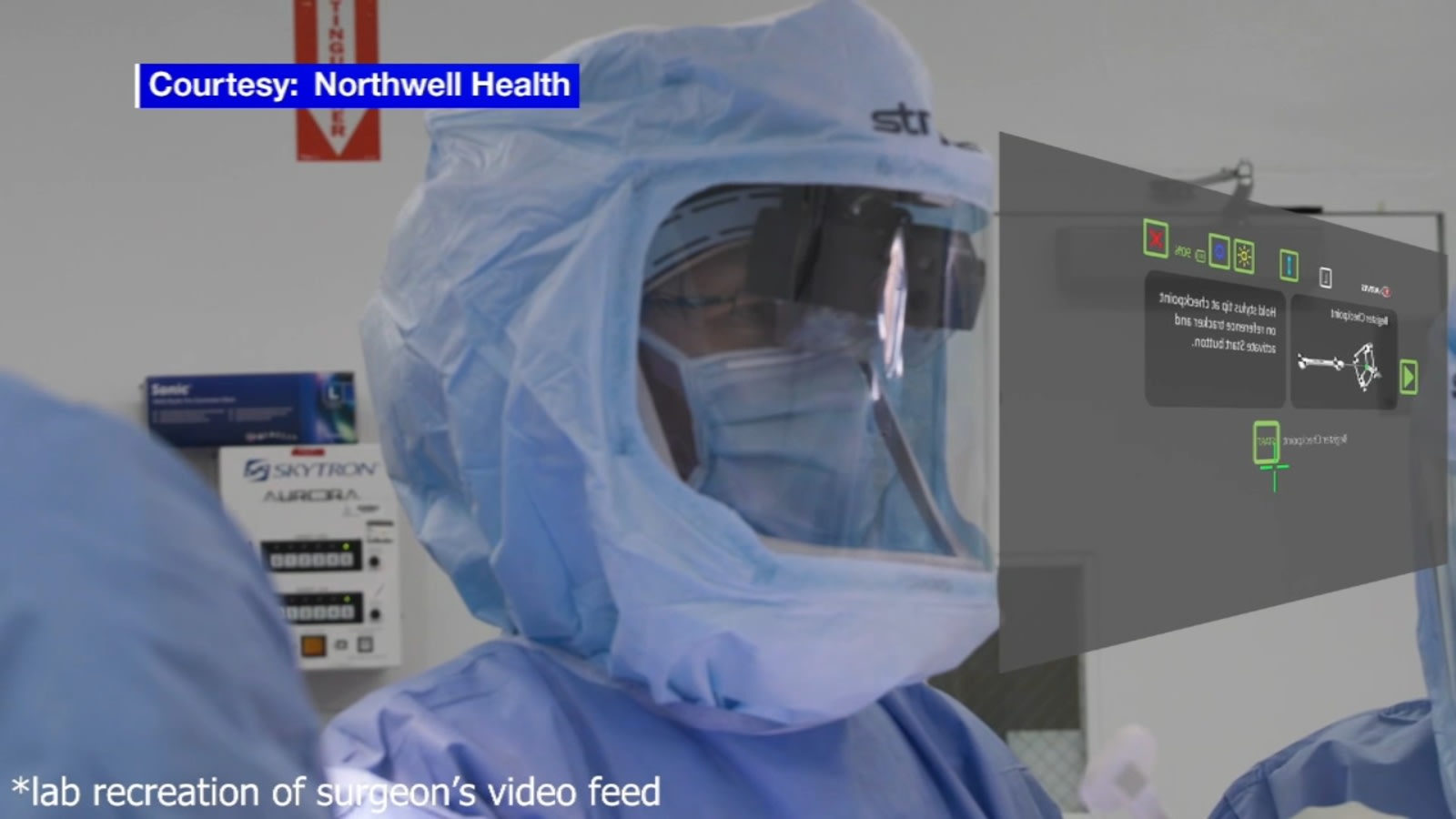
South Shore University Hospital, part of New York's Northwell Health, became one of the first hospitals to bring augmented reality into its operating rooms for joint replacement. In early 2022, Chair of Orthopedic Surgery Dr. Michael Nett performed the hospital's first AR-guided knee replacement, guided by a headset that functions like a GPS for the operation and practising the plan on a 3D-printed model of the patient's knee.
The technology
The hospital uses ARVIS (Augmented Reality Visualization and Information System), a wearable surgical-navigation headset from Enovis that was originally developed by Insight Medical Systems. Worn on a standard orthopedic surgical helmet or the ARVIS headband, the self-contained device uses two stereo infrared cameras to track the instruments and the patient's anatomy, then projects a real-time 3D overlay of the surgical plan, implants and measurements directly into the surgeon's line of sight. The surgeon controls it hands-free with gaze and voice, and it needs no external robot, extra technicians, or pre-operative CT/MRI scans.
Why it matters
By keeping guidance in the surgeon's field of view, ARVIS lets the surgeon check cuts, angles and component placement without looking away from the patient, supporting more accurate implant positioning for hip and knee replacement. Compared with large robotic systems it has a minimal operating-room footprint and a lower cost, making technology-assisted joint replacement practical for community hospitals as well as large teaching centres. ARVIS first saw clinical use in December 2021 and had been used in more than 200 cases across the U.S. by its commercial launch in mid-2022.
Recognition
ARVIS won Best Healthcare & Wellness Solution at the 2026 Auggie Awards, Augmented World Expo's recognition of standout XR.

