


Background
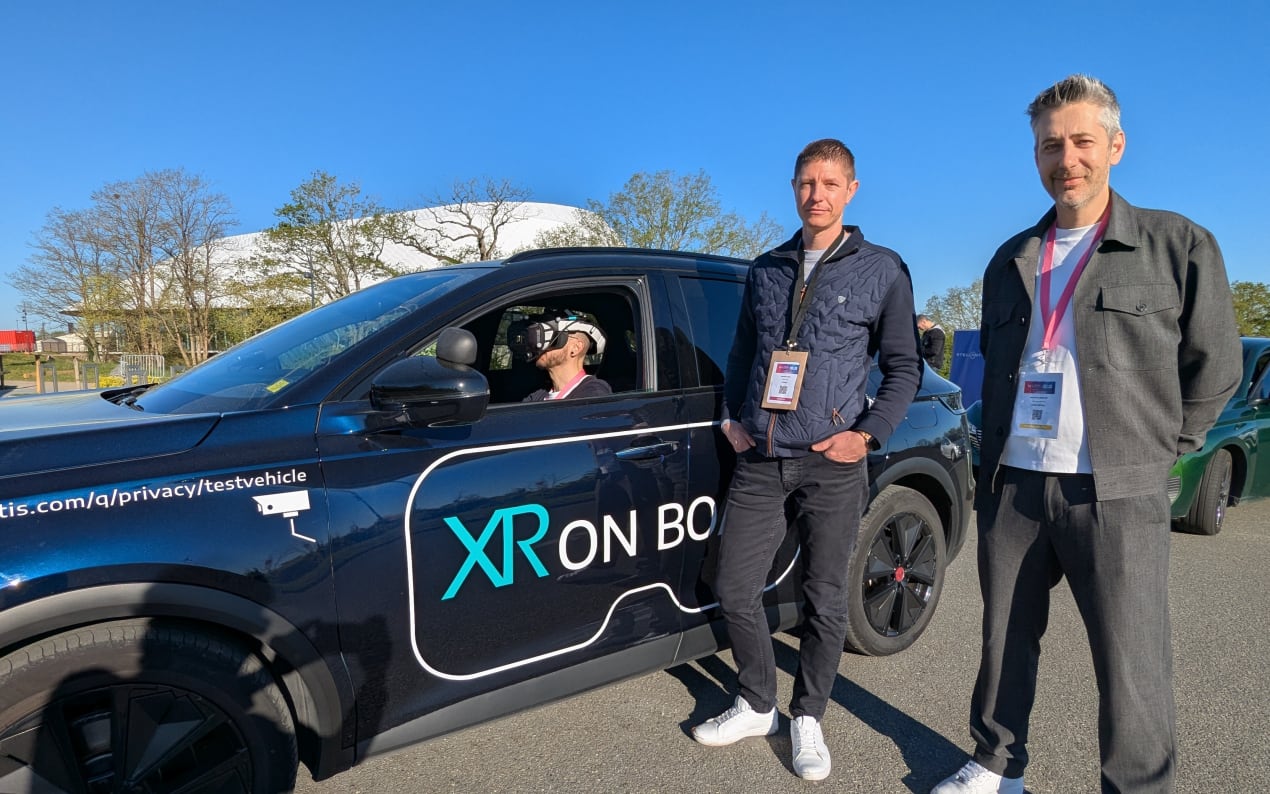
At Laval Virtual 2026, the European trade show for immersive technologies, Stellantis gave the public premiere of XRonBoard — a mixed-reality system that lets an engineer drive a real production car while seeing, through a headset, the dashboard of a model that does not yet exist on the road. The demonstration placed visitors at the wheel of a current DS 7 while the headset rendered the cockpit of the future DS N°7, the brand's next premium electric SUV announced for September 2026.
The system was built with Clarté, a technological development centre based in Laval, and is presented as a world first for the automotive industry: a way to evaluate vehicle interiors in genuine driving conditions rather than in a static simulator.
How XRonBoard works
The driver sits in a standard DS 7 that serves as a real, moving platform, with a safety co-driver controlling a redundant set of steering and pedals. A passthrough mixed-reality headset shows the real road environment captured by cameras, onto which the software composites a virtual cockpit, plus traffic scenarios and moving objects. Engineers can swap between several candidate dashboard and human–machine-interface designs for the DS N°7 and observe how a driver reacts to each one in motion.
Keeping the mixed-reality image stable during dynamic driving was the central technical challenge the team had to solve. Neither source discloses the exact headset model used.
Why Stellantis built it
For a group the size of Stellantis, the value is concrete: dashboards and interfaces can be assessed under real cognitive and behavioural load — posture, attention and mental workload all shift once a vehicle is actually moving — without first building an expensive motorised concept car. The R&D engineer who led the work, quoted below, notes that the feel can now be evaluated at the same level as the end customer would experience it.
XRonBoard extends Stellantis' wider Virtual Engineering Workbench, a cloud-based virtual-cockpit platform developed with BlackBerry QNX and AWS that the group says lets it develop and test infotainment software far faster and well before final embedded hardware is available. XRonBoard is, in effect, the on-road extension of that virtual cockpit.
Development and debut
The project draws on a Clarté–Stellantis collaboration dating back to the PSA era, with the modern mixed-reality effort starting in 2021 and becoming operational at the end of 2025. It was shown publicly for the first time at the Espace Mayenne in Laval from 8 to 10 April 2026.


