
XRHQ
DeploymentProduction

Tampa Police Train Officers for De-escalation in VR Pods

Tampa Police use VR headsets in training pods for de-escalation and shoot/don't-shoot decisions, paid for by a federal grant.

United States
Florida
Emergency Services
Added on

Worked on this project?

Get credited on this page

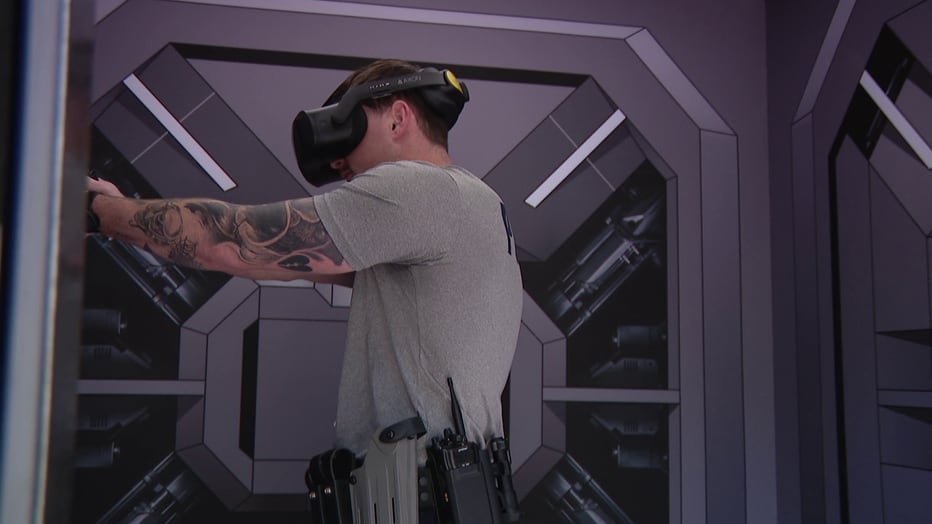
A uniformed police officer wearing a black VR headset holds his arms out inside a grey, sci-fi styled training booth.
A Tampa Police Department officer wearing a VR headset trains inside one of the department's virtual reality immersive training pods, used for de-escalation and decision-making simulations.

Sign in to view 5 more media items

Data Points (1)

This information is available to registered members of XRHQ. Sign up for free below.

The Tampa Police Department uses virtual reality training pods so officers can practice de-escalation and decision-making before real calls. Inside the pods, officers wear VR headsets and work through high-stress simulations that mimic real calls for service, interacting with AI-created characters and giving them commands.

The department's training unit says it is using VR technology by Axon to strengthen verbal skills, enhance decision-making and improve readiness for high-stress calls. Local news reports say the pods were paid for through a federal grant the department received for de-escalation.

How the training works

Officers navigate scenarios on their own, and some include training weapons integrated into the VR in shoot or don't-shoot situations. The technology can also simulate a citizen's point of view, so officers sometimes play a person in crisis and watch responding officers attend to them. TPD training specialist Jared Douds said this can remind officers what it is like to be on the other side of an encounter.

Instructors watch from control room pods. The pods have an intercom so instructors can hear officers, and a tablet that shows what each trainee sees inside the headset, according to TPD's VR pods training officer Richard Fujimoto.

Rollout and scale

  • May 2025: FOX 13 reported that TPD was incorporating VR into its de-escalation training for the first time that year.
  • Summer 2025: TPD debuted its VR headsets, which are now used in the pods.
  • January 2026: The department showed off the new immersive training pods, a total of 10 pods: eight student pods and two control room pods where instructors watch and give feedback.

Chief Lee Bercaw described the pods as a way to further enhance the training the department already does, making it more frequent and more engaging for officers.

Quotes

“We have an intercom system, so we can hear what it is they're saying, and then we have a tablet that actually sees what they're seeing inside their headsets.”

“It's a way for us to do more training, more efficiently, and more effectively”

“It allows us to have officers in a simulated, three-dimensional environment and go through a variety of training skills”

“That's also good for our officers, because sometimes it reminds them of what it is like to be on the other side of things and not just to be the officer on scene”

“We want the best possible officers out there working with the community. And to get them as good as possible, they need the best possible training. And by having both the content and the technology available to give them that training, that's what's going to make that happen”

“This is just a way to further enhance the training that we're already doing and bringing that technology there that makes it more frequent and actually more engaging for the officers”

Project Summary

This information is available to registered members of XRHQ. Sign up for free below.

Experience

Available to XRHQ members

Hardware

Available to XRHQ members

Software

Available to XRHQ members

Partners & Service Providers

Available to XRHQ members

Sources

Available to XRHQ members

Know more about this project? Help us fill in any missing details.

Edit this project →

Worked on this project?

Get credited on this page

This write-up is free to reuse with credit — CC BY 4.0.