

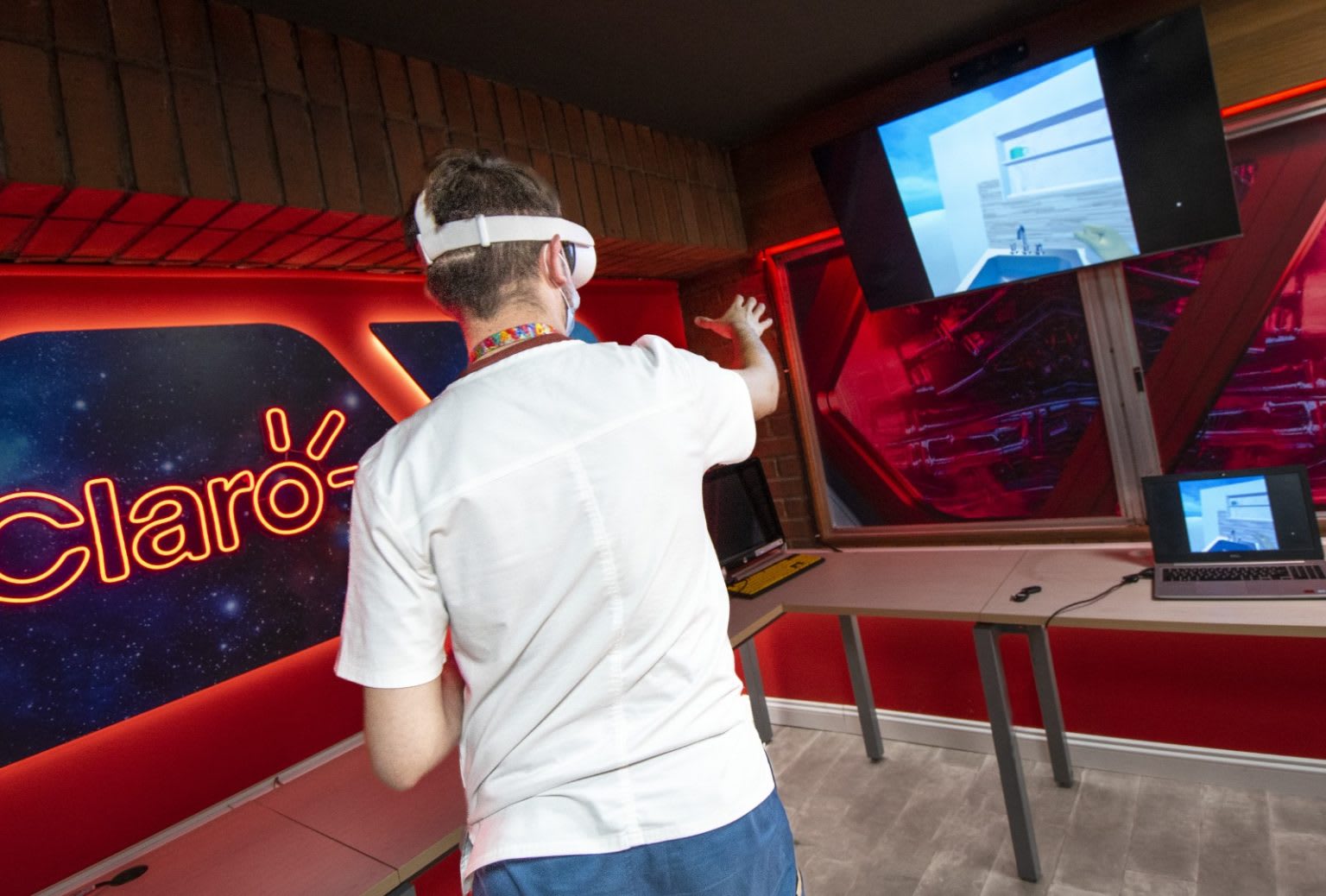
Teletón Chile, the rehabilitation charity, uses virtual reality rooms in its centres to support therapy for children, young people and other patients. Claro Chile, a long-standing Teletón partner, implemented the rooms, which pair VR headsets with specialised software from Kinesix VR offering more than 300 therapeutic exercises and games adapted to each patient's needs.
How it works
Each room has a delimited area where the patient moves wearing a headset, and an interactive screen that shows the exercises and challenges the patient is attempting. A Teletón professional accompanies the session and follows the patient's progress. A patient described the headset view as an animated 3D world that replaces her view of the room.
Therapists at Instituto Teletón Santiago use the rooms mainly for upper-limb rehabilitation, and also for balance, motor control, wheelchair handling and general skills training, depending on the diagnosis. One therapist said the rooms have let the team work on motor and cognitive skills with children and young people, a group that was harder to reach in the spaces Teletón has available. Claro Chile's head of sustainability and corporate responsibility describes the technology as a complement to the work of Teletón's professionals, with games and a space for fun making therapy more relaxed for the youngest children.
Rollout and scale
Claro Chile says it took the technology to Teletón centres in 2023; BioBioChile dates the provision from 2024. Reported figures, all from Claro Chile material:
- Rooms in 14 centres from Arica to Coyhaique (a Claro executive separately cites 15 centres for the 2023 rollout).
- More than 4,000 sessions recorded since 2023, a sponsor-reported usage count.
- Two further rooms planned for the Teletón institutes in Rancagua and Chillán.
Patient experience
Emilia Eugenín, a Teletón patient, says she can cook, has returned to playing her instruments and helps at home again, and that controlling her hand in VR and grabbing virtual objects was the most striking part, since she did not use that hand in daily life before. She continued the exercises from her home in Chiloé with a tablet and her own headset, which she and her family bought, without travelling to the centre for each session.

