

Background
TGS, a global provider of seismic data for the energy industry, trains crews to operate complex equipment aboard offshore seismic vessels. Traditional hands-on training meant flying personnel around the world for in-person sessions and safety certifications — a process that was expensive, logistically complex, and carried a significant environmental footprint.
The challenge
Beyond cost and logistics, conventional methods struggled to reproduce the unpredictable, high-stakes scenarios crews face at sea, where the margin for error is slim. The approach also scaled poorly: adapting training to new equipment or operational changes was slow and tied to legacy methods.
The deployment
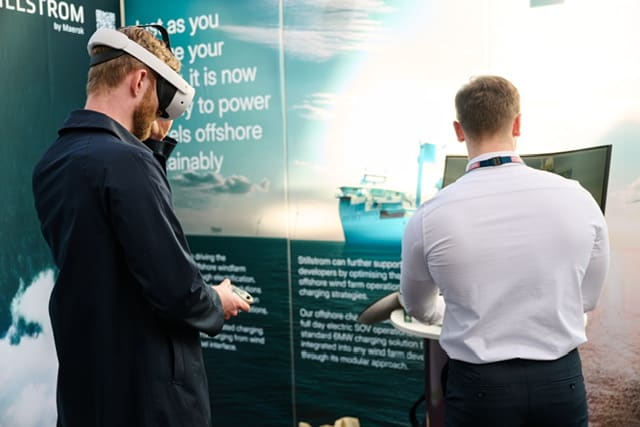
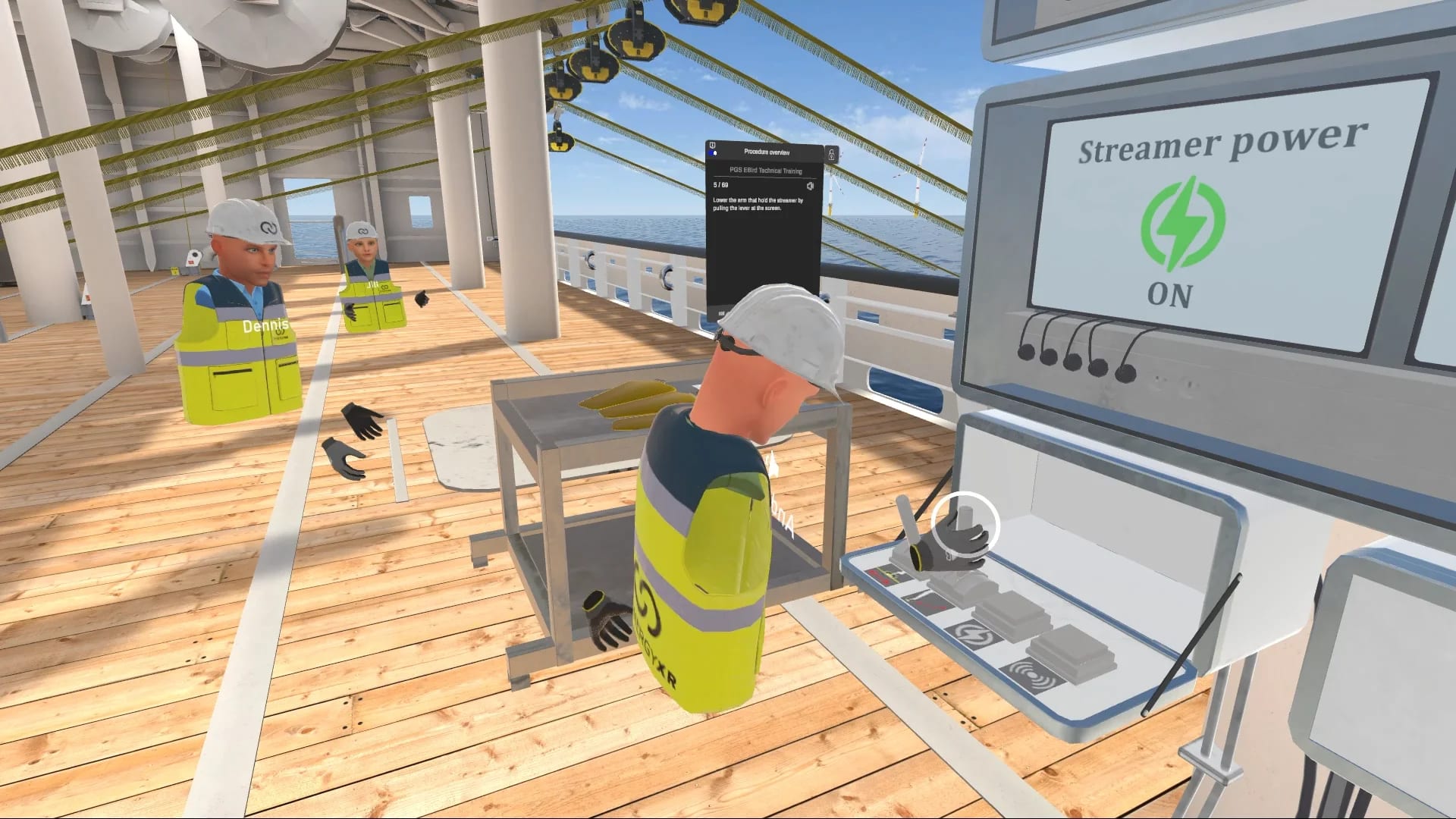
Working with platform provider SynergyXR, TGS built tailored virtual-reality training modules. Existing 3D ship and equipment models were repurposed into immersive, walkable environments delivered through VR headsets, letting crew members explore vessels — including the back deck — and rehearse procedures in a risk-free simulation. The rollout emphasised user feedback, with modules refined iteratively based on real-world use.
Outcomes
TGS reports that simulating real operations in a risk-free environment improved operational readiness and safety, with realistic scenarios helping reduce the potential for operational error. Internally and with clients the response was strongly positive, and the programme won executive endorsement.
The financial case was a headline result: TGS estimates roughly 50 training days saved per vessel each year, and savings of up to $10,000 per crew member for a week of training. Because the heavy lifting is in the initial build, scaling the training to more personnel mainly requires additional headsets, making expansion comparatively cheap. TGS's Head of Special Projects, quoted below, described the initiative as surprisingly successful.