

Fondazione Mont'e Prama, which manages the Tharros archaeological site in Sardinia, Italy, offers visitors ArkeologIA, a platform from Carraro LAB that combines an artificial intelligence audioguide with 3D and virtual reality content. The aim is to make a site of fragmentary remains easier to understand for people who are not specialists. According to Carraro LAB's owner, many visitors find such visits difficult and not very engaging because the explanations are written for specialists.
How it works
- AI audioguide: visitors put questions directly to the AI, which answers in several languages and adapts its language for children, students or foreign tourists. The platform also includes speech synthesis for editable audioguides.
- 3D glossary: specialist terms such as "acroterio" or "periptero" are no longer only explained aloud but become explorable 3D models, including in augmented reality.
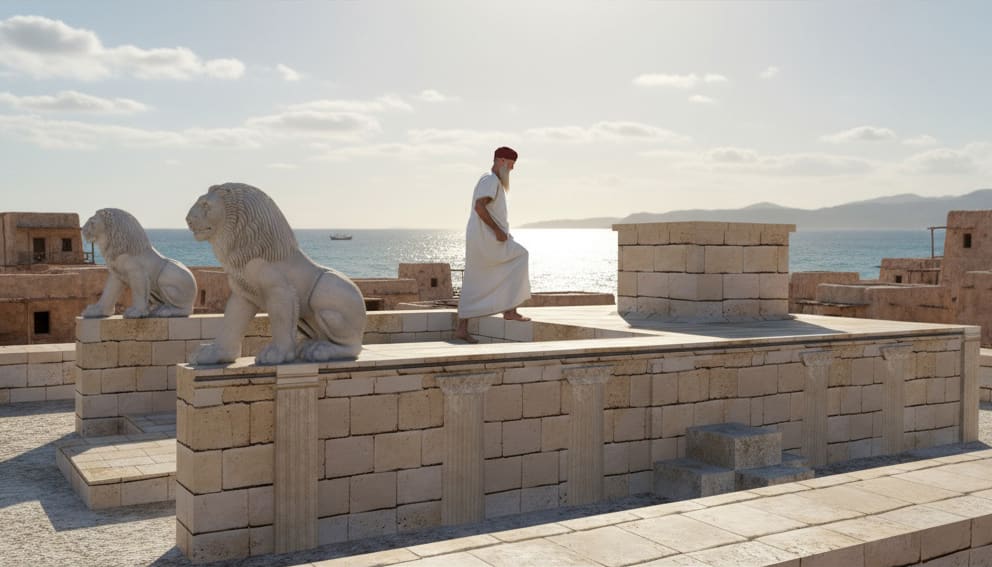
- Virtual reconstructions: the platform offers reconstructions of the excavations' original settings. The report describes the platform generally as accessible from PC, smartphone, VR headsets and immersive installations; it does not say which of these are used at Tharros. Images from the Tharros platform show a reconstructed temple terrace with a Phoenician priest, lion statues and the sea behind.
Status and next steps
Carraro LAB and Fondazione Mont'e Prama presented the Tharros Extended Archaeology platform in November 2025 as a preview of the application at the site. That announcement described a planned digital twin of Tharros built from footage and 3D reconstructions. By late October 2026 a local media report, relaying the vendor's announcement, says the platform is already active at Tharros, as well as in teaching labs of tourism ITS Academy schools in Rome, Cernobbio and Syracuse. The same report says the National Archaeological Museum of Paestum hosts the platform's first public presentation from 29 October to 1 November 2026, which is separate from the Tharros deployment.


