

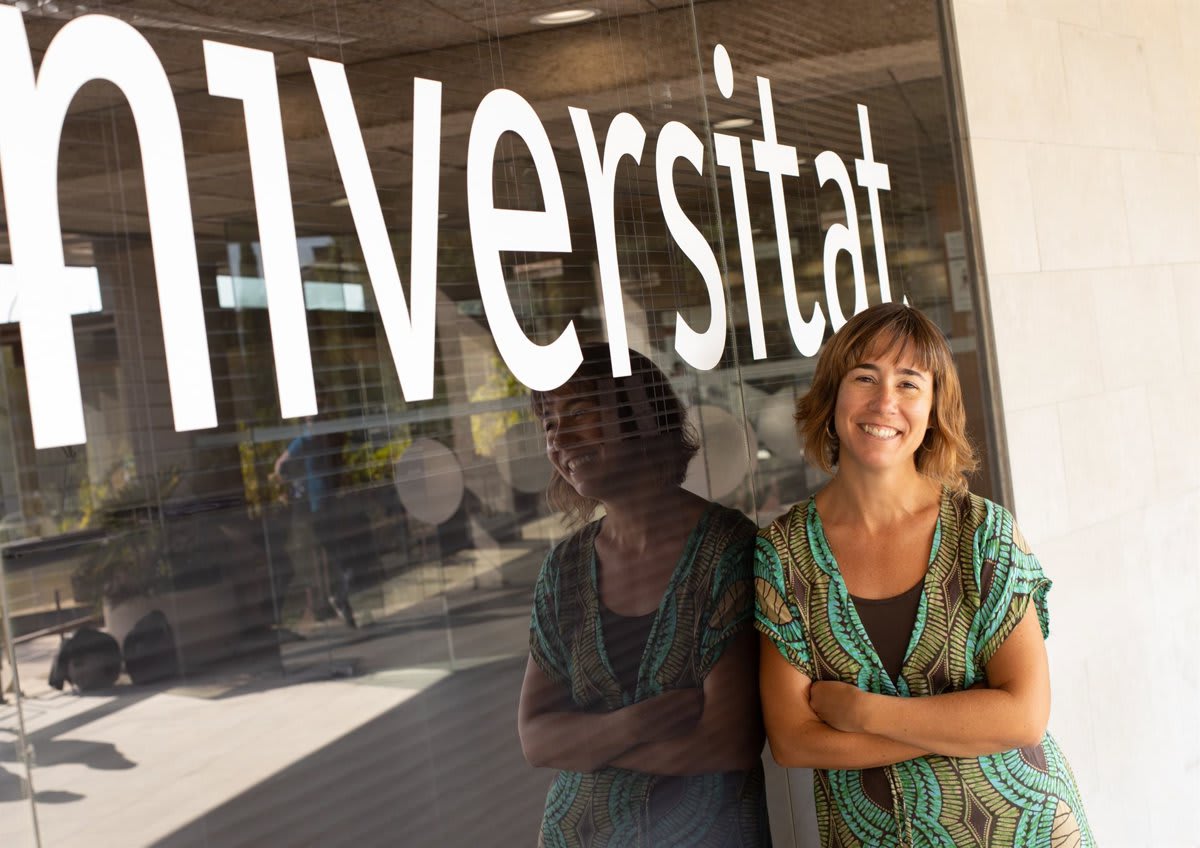
Researchers at the Universitat Internacional de Catalunya (UIC) are developing a cognitive rehabilitation programme in immersive virtual reality for women who are victims of gender-based violence. The project, called NeuroDones, is led by the university's BrainXR Lab research group in the Department of Psychology, under researcher and lecturer Anna Carballo Márquez.
The project is in an initial phase and is planned as a pilot trial. Its aim is to validate adding cognitive rehabilitation to the services that support victims of gender-based violence.
How it works
The intervention is to use VR tools that reproduce interactive environments built around mini-games, delivered through the specialized EnhanceVR platform. Participants are to use virtual reality devices to interact with immersive environments across ten planned sessions spread over five weeks.
According to Carballo Márquez, VR simulates situations closer to everyday demands, adapts exercise difficulty in real time, removes environmental distractions and can train working memory, sustained attention, mental flexibility and decision-making in a safe digital setting.
Pilot and partners
The pilot is planned with a sample of 30 women who use the Specialized Intervention Service (SIE) of Garraf and Baix Llobregat in Catalonia. Partners include:
- Associació Benestar i Desenvolupament (ABD): collaborates on the project and manages the SIE of Garraf and Baix Llobregat.
- Consorci Sanitari de Terrassa (CST): its Neuropsychology Unit collaborates, according to the project website.
The researchers frame the work as addressing the cognitive consequences of gender-based violence, which they describe as a little-visible and insufficiently addressed reality, alongside emotional recovery.


