

Background
The UK Ministry of Defence has run game-based virtual simulation as a core training tool for years, under the Defence Virtual Simulation (DVS) programme. In June 2022 Defence Equipment & Support (DE&S), the MoD's procurement organisation, secured a £7.2 million contract with Bohemia Interactive Simulations (BISim) to deliver DVS2, the successor system and the department's common virtual simulation capability. It replaces DVS1, which was built on an earlier generation of the same simulation software.
The deployment
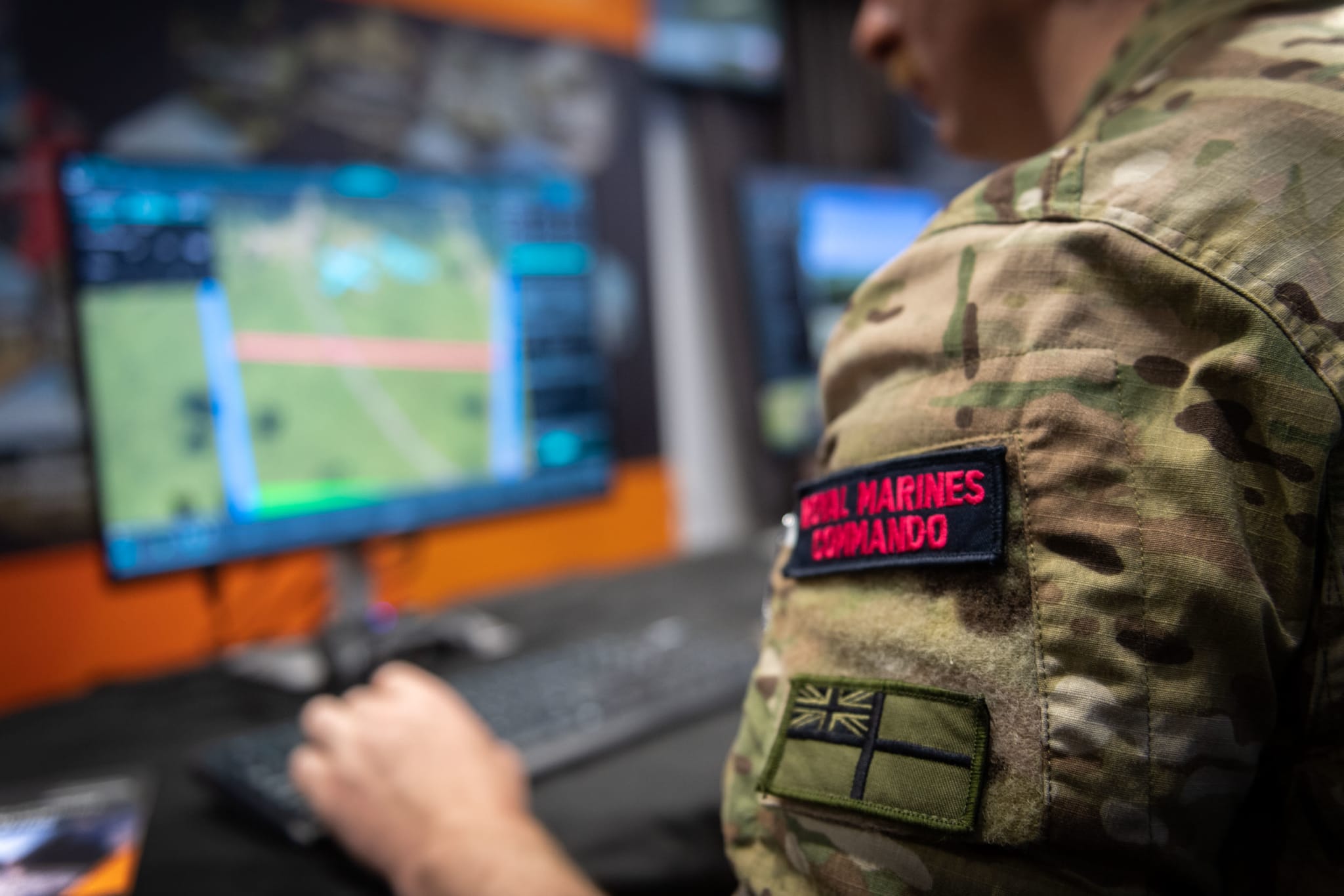
DVS2 is a real-time 3D training environment that simulates multiple military environments and operations, so personnel can train across many terrains and with a range of weapons and equipment without deploying to a physical range. It is issued to Front-Line Commands across the armed forces and can be used by an individual, by a team, or jointly with NATO allies. Rollout across UK military sites at home and abroad had already begun when the contract was announced, and BISim's managed service is contracted to run until at least 2027.
What personnel train on
The system ships with over 100 training scenarios, including:
- Piloting a fast jet
- Parachuting into a warzone
- Supporting humanitarian work from an aircraft carrier
- Operating weapons, equipment and vehicles
- Tactical support for an individual
- First aid training
Trainees work dismounted with infantry on the ground and mounted in vehicles and platforms, operating weapons, radios, targeting systems and optics.
Distributed and coalition training
DVS2 offers flexible networking for distributed training and can integrate with external simulators such as complex flight or gunnery rigs, which allows Battlegroup-level training and experimentation events. More than 60 countries, including 14 NATO allies, run similar or compatible technologies on a secure training network, so UK personnel can exercise alongside other militaries. In one example cited by DE&S, the Scottish and Northern Irish Yeomanry conducted manoeuvres and Fires training with Australian Light Cavalry more than 9,000 miles away.
Software and authoring
BISim supplies VBS4 together with the VBS Blue image generator as the DVS2 solution. An Editor tool lets instructors place buildings, vehicles, infrastructure and objects to build their own scenarios, for example urban warfare or vehicle recognition training. Alongside the desktop simulation, DVS2 offers a virtual reality training capability; the Army's training capability staff, quoted below, framed VR as the emerging technology the system is intended to exploit. BISim also provides training courses, support and professional services, with the software guided by military subject matter experts over almost two decades of iterative development.

