

Background
Universiti Malaya Medical Centre (UMMC) in Kuala Lumpur is one of Malaysia's principal university teaching hospitals, and quality medical education is one of its stated aims. Its ear, nose and throat (ENT) specialist training programme carries roughly 30 to 40 residents at any one time, but hands-on practice is constrained by the number of robotic surgical systems available and by the physical capacity of an operating theatre, which limits how many trainees can observe a procedure at close quarters.
The deployment
On Thursday 11 December 2025, UMMC and mobile operator CelcomDigi ran what the partners describe as one of the world's first real-time, multi-country live ENT surgeries combining 5G, artificial intelligence and extended reality. The 40-minute procedure was led by Professor Dr. Mohd Zulkiflee bin Abu Bakar, UMMC's Director and a head and neck oncosurgeon, together with Dr. Julius Goh Liang Chye, who leads the hospital's ENT robotic surgery programme.
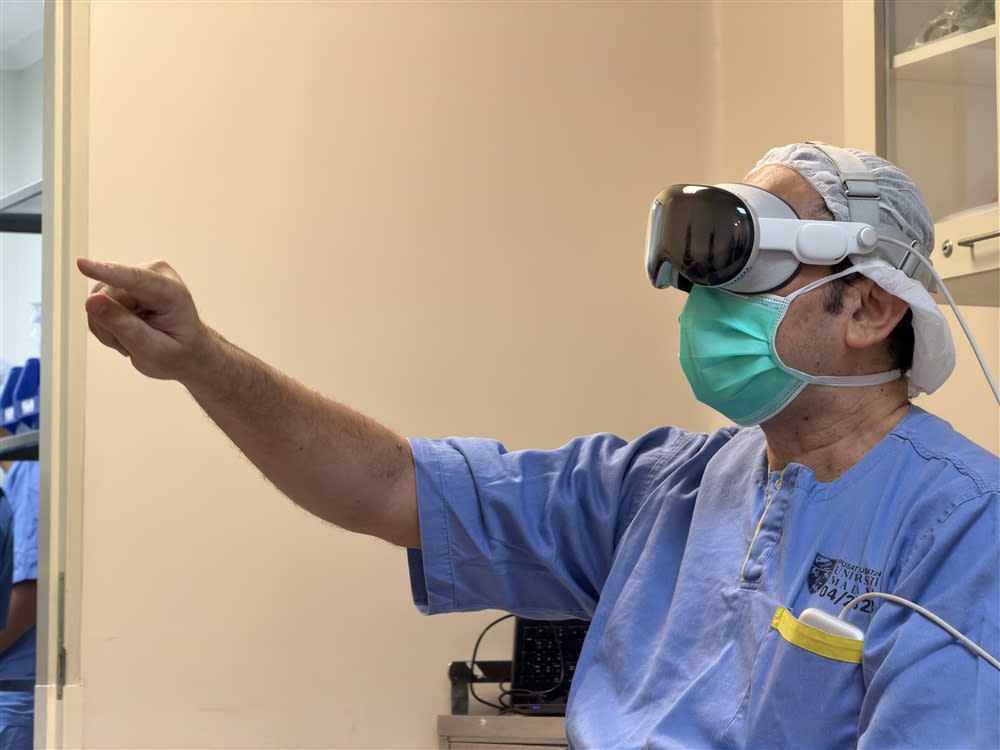
An audience of 25 medical students and specialists followed the operation live. Participants joined from three leading United States institutions — Harvard Medical School, the Mayo Clinic and Vanderbilt University Medical Centre — and from South Korea, Bhutan, the Philippines, Indonesia, Thailand and Singapore, as well as from Putrajaya, Kedah, Johor and Sarawak within Malaysia. All were connected to the theatre through apoQlar's HoloMedicine Robotics XR platform, which carried the surgical field, audio and two-way clinical interaction. Photographs from the theatre show Apple Vision Pro headsets in use by the on-site team.
What it was, and what it was not
The surgery itself was performed conventionally and on-site by the UMMC team; no remote-controlled instruments were involved. The 5G, AI and XR components delivered real-time visuals, audio and clinical interaction for teaching and guidance — remote proctoring and live feedback between the theatre in Kuala Lumpur and the international audience — rather than remote robotic surgery.
Network and integration work
The demonstration followed almost three months of preparation by the UMMC project team, with three main workstreams:
- Connectivity — reception in operating theatres located underground or inside dense building clusters is often poor, so low-latency 5G transmission was installed around the hospital with CelcomDigi, which contributed routers, network connectivity and engineering expertise in kind.
- Systems integration — fitting the required software to both the robotic surgical system and the holomedicine platform was the hardest part, and needed extended fine-tuning with software engineers and device suppliers.
- Clinical protocols — operational and clinical rules for live streaming from a working theatre were written from scratch, including what the team should do if a procedure does not go to plan.
Outcomes
Participant feedback on the pilot was largely positive, with no reported problems with network latency or image quality. The hospital frames the value in training terms: trainees can observe surgical steps from the surgeon's point of view without travel and without the capacity limits of a physical theatre, and case findings, complications and key learnings can be shared more readily. Beyond teaching, the same set-up lets surgeons in theatre reach experts elsewhere for advice or a second opinion while an operation is under way.
Next steps
UMMC planned a further series of live surgical demonstrations in the days that followed, covering urology, colorectal surgery and additional ENT cases, to test the platform across specialties and widen regional access to specialist mentorship. Longer term, the clinical lead has pointed to remote surgical delivery as a way to close gaps in access to care for patients who cannot travel to the hospital. Elsewhere in Asia, comparable holomedicine deployments are running at Singapore's National University Health System and Hong Kong's Prince of Wales Hospital.


