

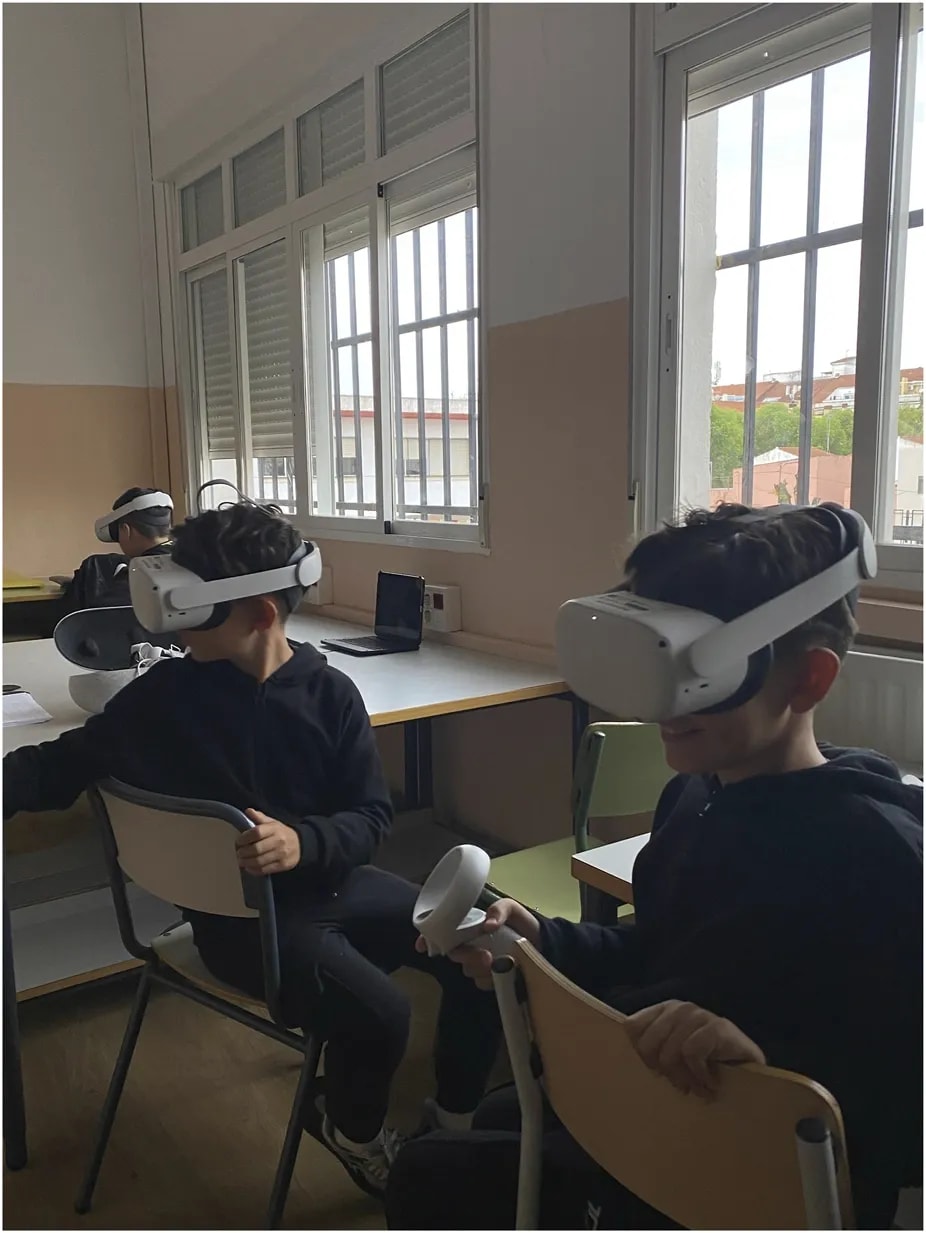
Researchers at the University of Extremadura built a virtual museum about the city of Badajoz and used it to teach local heritage to primary school pupils. The museum was created on the Delightex platform and can be explored through VR headsets or on screens in a 360-degree navigation mode.
In the second term of the 2024-2025 school year, 105 pupils in 4th, 5th and 6th grade (ages 9 to 12) from two public schools in Badajoz used it during regular Social Sciences class time. The study authors describe it as a quantitative, descriptive, quasi-experimental study, and it had no control group.
How the museum works
The museum is organised into three themed rooms: History, Monuments and Historical Figures. Each room combines 360-degree panoramic images, explanatory audio adapted to the pupils' educational level, and mini-games. Pupils answer questions over the scenes, and the historical figures room includes a virtual roller-coaster experience.
Classroom delivery
- Each classroom took part in six sessions of about 50 minutes.
- Each classroom had four Meta Quest 2 headsets with controllers, in a classroom with Wi-Fi. Pupils took turns on the headsets while the others followed the same content in 360-degree screen mode on their own devices.
- A member of the research team co-supervised each session with the classroom teacher, providing technical support, checking headset use and managing transitions between groups.
Reported results
The figures below are the authors' own measures from the 105 pupils, not independently evaluated.
- On a 10-item local heritage test, the mean score rose from 1.19 before the sessions to 8.39 after.
- On the authors' four-point questionnaire, the mean rating for "I would like to repeat the VR experience" was 4.00, the top of the scale. This is self-reported, and the authors note a possible novelty effect.

