


Background
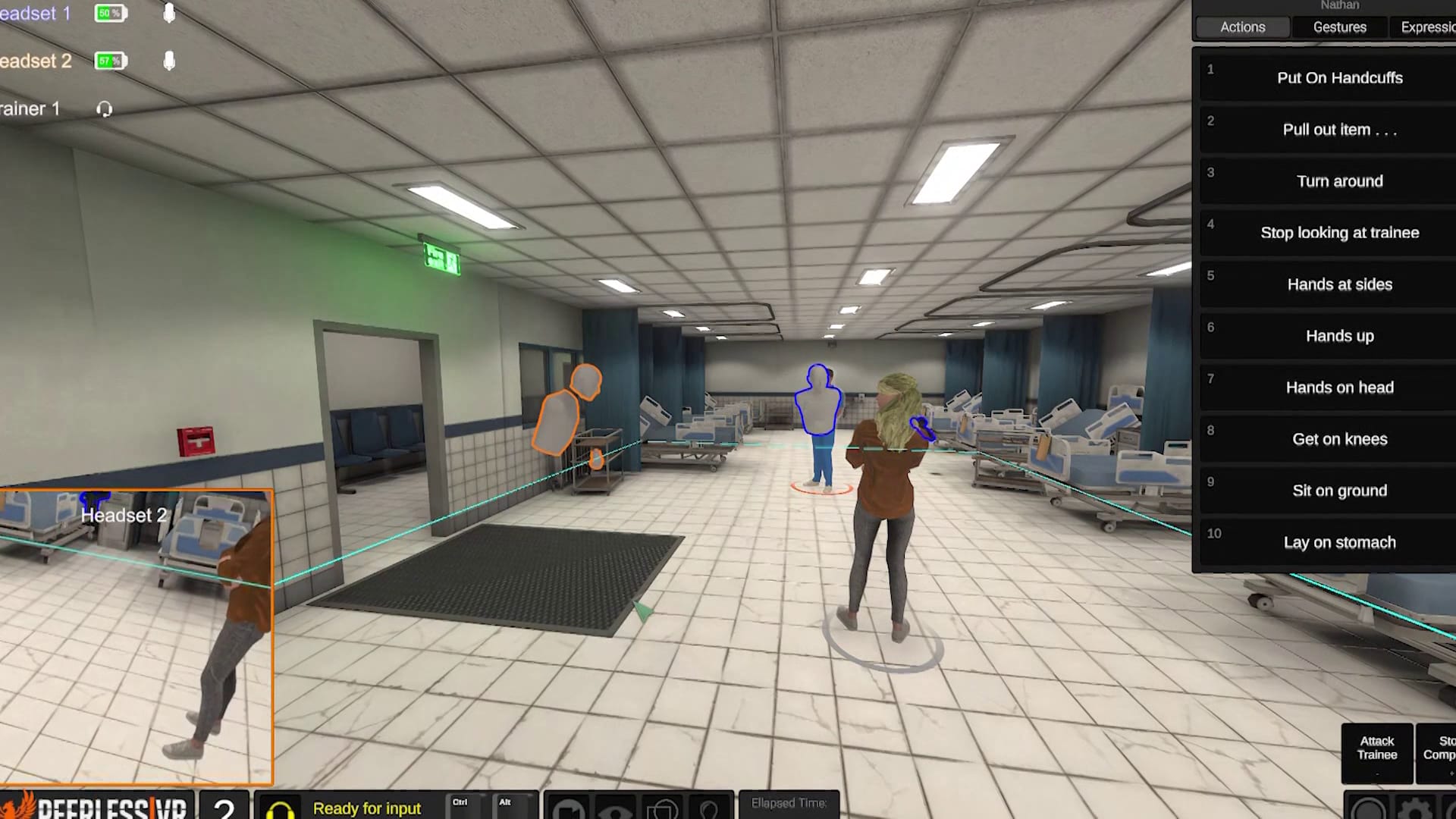
VA Police Boston Division has deployed virtual reality technology to improve staff readiness across three scenario types: de-escalation, crisis intervention, and active threat response. The programme is a joint effort between VA law enforcement and clinical nursing staff, who train together in a shared physical space while operating inside immersive virtual environments.
The Deployment
Trainees from the police division and the nursing team work side by side in a large room, each using VR headsets to enter simulated scenarios. One session observed by WCVB placed participants in a virtual emergency room, where they had to manage a confrontation with an angry family member of a veteran. Instructors can cycle staff through scenarios repeatedly, allowing trainees who lack confidence in high-stress situations to build competence and composure before encountering similar events on the job.
The training is voluntary, but staff report strong uptake and consistently positive feedback. Lt. Alfred Cateon, the division's training coordinator, cited confidence-building as the central benefit: trainees who initially struggle with difficult interactions improve noticeably after repeated VR exposure and carry those gains back into the real world.
Clinical and Regulatory Context
Jude Nicoletti, a psychiatric nurse with more than two decades at the VA, described the simulations as the most realistic training environment he has encountered across his entire career. Jennifer Moyer, a clinical resource nurse, noted that the approach aligns with Joint Commission guidance that designates de-escalation as the first-line response to disruptive behaviour.
Outcomes
Participants cite realism and psychological safety as the primary strengths of the programme. The controlled virtual environment allows trainees to make mistakes, learn, and repeat scenarios without risk, a quality both the nursing and law enforcement participants regard as impossible to replicate through conventional training methods.

