


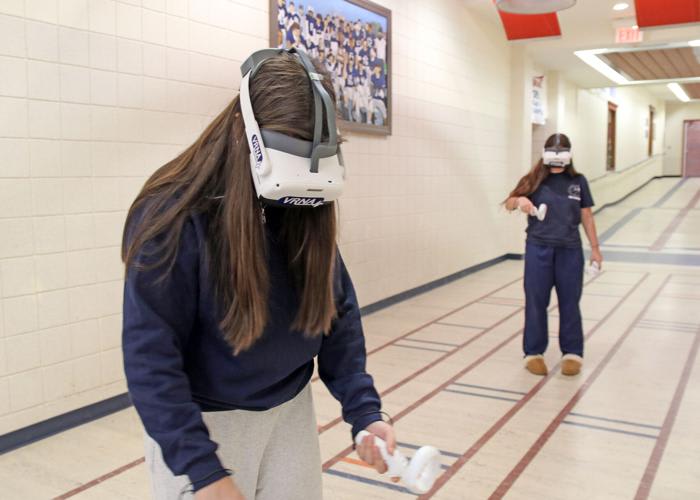
Westerly High School in Westerly, Rhode Island, has added virtual reality headsets and an interactive anatomy "table" to its Medical Pathways program. The VR headsets let students work on patients in virtual medical scenarios, and the table displays full-sized bodies, including organs and bones. The equipment is being integrated into the curriculum of the program's classes.
How students use the VR headsets
Students wear VR headsets with hand controllers that place them in a virtual setting where they must react to immediate medical needs. The headsets allow them to perform mock CPR and treat patients in the field, and Maranda says they work through healthcare scenarios in which they treat the VR patients. Other students in the hallway assist the headset wearers so they do not run into people or objects.
The anatomy table
A centerpiece of the new equipment is the Anatomage Table, which offers digitized human cadavers. Instructor Duane Maranda says the table can build a body from the inside out, showing the brain, spinal cord, and skeletal and vascular systems at real size. Through this technology, students can practice and learn from real patient cases and see the simulation of real-tissue physiology. Maranda says the table supports assessments, with students able to point to a bone and name it or dissect body systems.
Program leadership
The program is headed by Maranda and Kim DePerry, an EMT-Basic and supervisor at the Westerly Ambulance Corps. DePerry says the training is a good opportunity because most students go into a medical field even if they do not pursue EMS.


