

Background
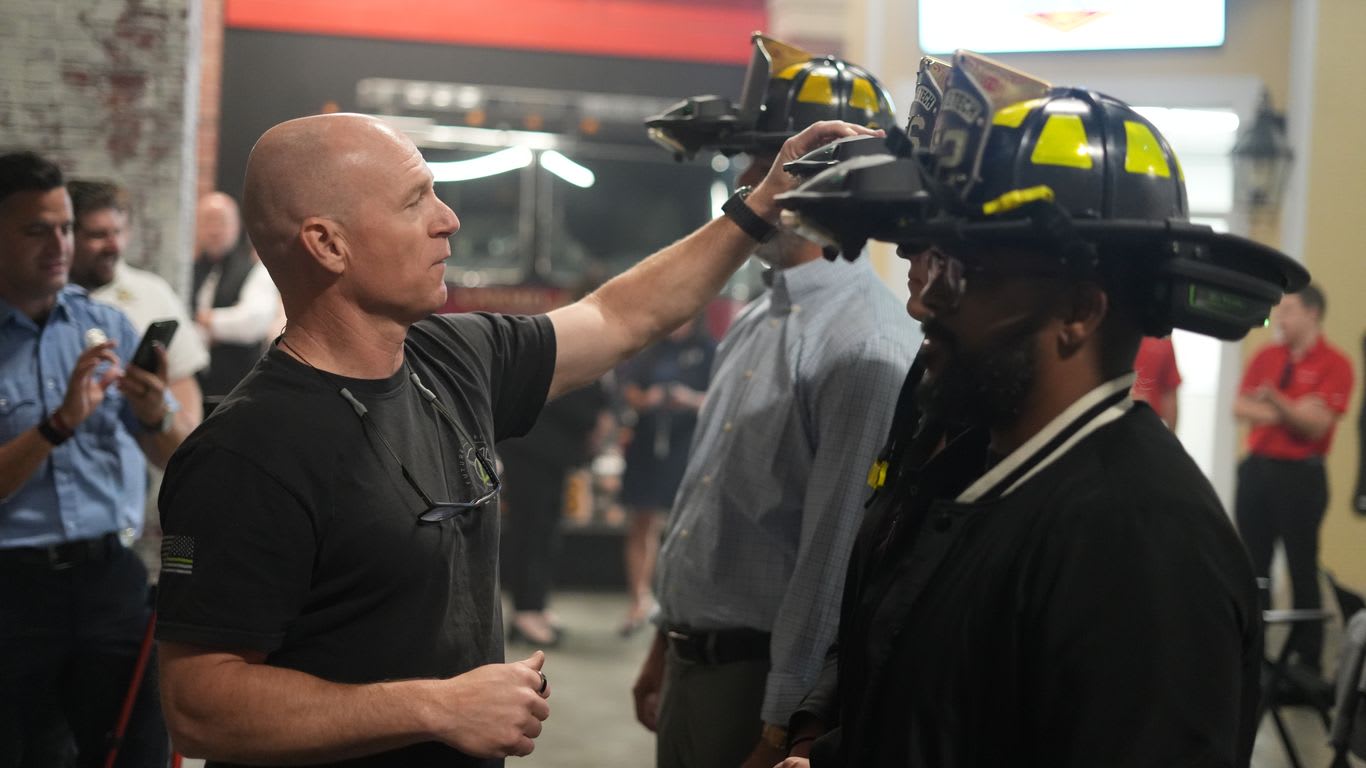
The Carmel Fire Department (CFD) in Indiana is piloting augmented reality helmet technology for active firefighting operations, becoming the only department in the Midwest to adopt the platform. Carmel is one of ten U.S. departments chosen for early access through Qwake Technologies' Pioneer Program, a nationwide deployment designed to shape the technology's eventual wider rollout.
The C-THRU Platform
The C-THRU Navigator is a head-up display unit that mounts to a standard firefighting helmet and deploys a flip-down screen over the user's field of view. It uses proprietary computer vision and edge detection to wireframe a room's geometry in real time, overlaying thermal outlines of people, walls, and doorways onto otherwise pitch-black, smoke-filled conditions. The system delivers turn-by-turn navigation to exits and enables hands-free scene recording for after-action review.
A paired C-THRU Command Tablet streams live helmet video to incident commanders stationed outside the burning structure. Commanders can monitor personnel locations, send visual directions to firefighters' in-helmet displays, and coordinate complex operations in real time.
The underlying technology was developed over more than a decade through a $10 million contract with the U.S. Department of Homeland Security, refined through feedback from thousands of firefighters across many iterations.
Deployment in Carmel
The CFD expects to receive 16 helmets and four command tablets by midsummer 2026. The three-year pilot is funded at approximately $375,000, with more than $200,000 contributed by the Heroes Club of Carmel, a local philanthropic organization. The department plans to integrate the gear into both training exercises and active emergency responses.
Outcomes and Future Capabilities
CFD Chief Joel Thacker cited a significant reduction in primary search time, noting that the technology eliminates the need for firefighters to crawl one-handed through a structure while operating a separate thermal camera. A DHS operational field assessment concluded that C-THRU improved situational awareness and enhanced incident command visibility during simulated smoke drills. Indiana has recorded more than 550 residential fire deaths since 2019, and the CFD expects faster search times to improve survival outcomes for victims and reduce carcinogen exposure for firefighters.
Qwake is continuing software development through the Pioneer Program, including predictive AI tools designed to alert incident commanders when structural collapse is imminent. Work developed in partnership with Carmel is intended to inform the platform's broader global rollout.