

Background
Outer Hebrides Unearthed is a digital archaeology programme run by the archaeology team at UHI North, West and Hebrides, part of the UHI Archaeology Institute and based at Cnoc Soilleir in South Uist. It uses augmented reality to let visitors see reconstructed archaeological sites standing in the landscape where they actually stood, and virtual reality to bring those same reconstructions to people indoors.
The programme began as the Uist Virtual Archaeology Project, which started in February 2020 and launched the Uist Unearthed app in July 2021. As it has expanded across the islands the app has been renamed Outer Hebrides Unearthed.
The augmented reality trails
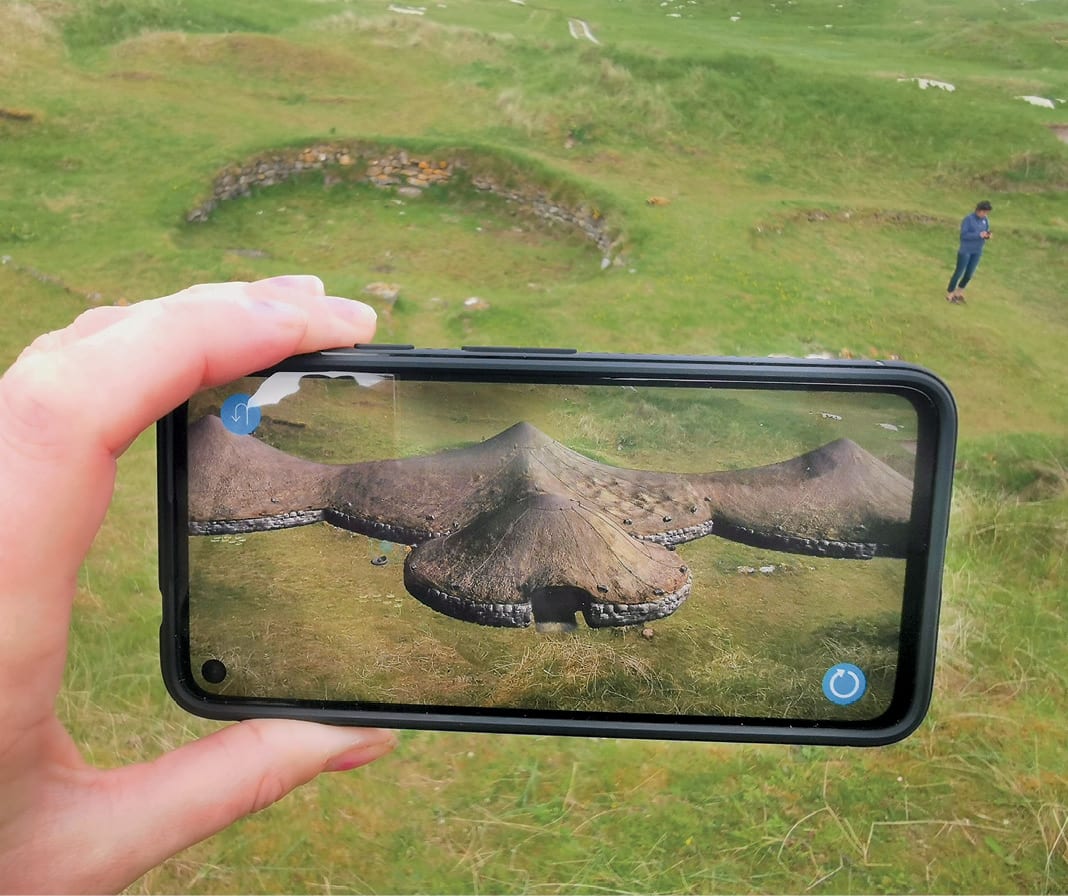
Visitors use their own smartphone at the site. The app overlays life-sized 3D models of archaeological structures onto the physical landscape — triggered by location and by QR codes at each site — blending reconstructions of the past with the present.
Five sites on Uist came first: the Bronze Age settlement at Cladh Hallan, where some of the earliest known mummified bodies in Europe were found; the Iron Age wheelhouse at Cill Donnain; and the Norse settlement at Bornais, all in South Uist, plus the Iron Age Dùn Torcuill and the multiperiod Dùn an Sticir in North Uist.
Two sites on Barra followed in July 2026. At Dùn Bharpa, users can crawl inside a life-sized reconstruction of a 5,000-year-old Neolithic burial tomb to explore prehistoric spirituality and burial practices. At Cille Bharra, runic inscriptions come to life within the chapel walls, exploring belief and identity in Barra's early historic period.
The virtual reality exhibition
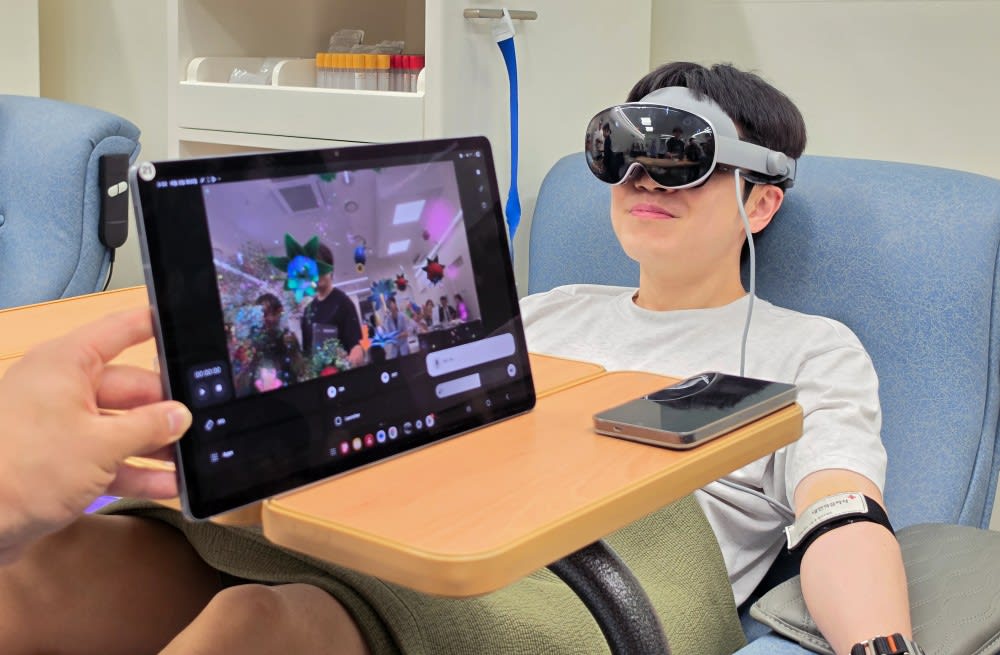
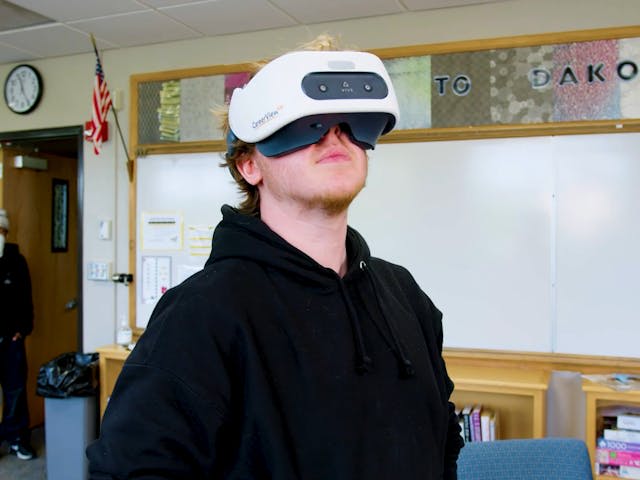
A travelling multimedia exhibition takes the same content indoors. Visitors put on a VR headset linked to the app and step inside the reconstructed settlements, fully immersed rather than viewing them through a phone. The exhibition also carries interactive touchscreens, 3D-printed replica artefacts, interactive maps and games, and has toured venues across the islands and on to the Scottish mainland. The headsets have proved one of its most popular elements.
How it was built
The app and the exhibition were created with Peel Interactive, drawing on decades of excavation. Artefacts were digitised by photogrammetry, and the sites are rebuilt as real-time 3D models grounded in the archaeological evidence — the Bornais longhouse interior, for instance, reproduces the wooden dividing walls and side aisles used for sitting and sleeping. The app combines those reconstructions with bilingual audio narration and soundscapes, 2D animations, in-app games and interactive maps. UHI music students composed a bespoke score for the project, About Time.
Gaelic and co-production
Gaelic runs throughout. Working with Ceòlas Uibhist, all content is available bilingually, and researcher Liam Crouse has recorded traditional stories and folklore that users can listen to at points along each trail. Communities co-produced the content: on Barra, local artist Sheena Beaton and pupils from Castlebay and Eoligarry primary schools created original artwork and animations embedded in the app. The underlying archaeology draws on the long-running SEARCH excavations by Cardiff University, the University of Sheffield and University College London, with finds-handling workshops run alongside National Museums Scotland.
Funding
The programme has been funded in two phases, totalling £989,450:
- Uist Virtual Archaeology Project — £373,220 (from February 2020): £271,000 from the Natural and Cultural Heritage Fund, administered by NatureScot and part-funded through the European Regional Development Fund; £85,000 from The National Lottery Heritage Fund; and £17,220 from Comhairle nan Eilean Siar, with further support from Stòras Uibhist.
- Barra and Harris Unearthed — £616,230 (three years from 2025): from Historic Environment Scotland, Highlands and Islands Enterprise, The National Lottery Heritage Fund, SSEN Transmission's Regional Community Benefit Fund and Comhairle nan Eilean Siar.
Impact and next steps
The Uist phase won three Archaeological Achievement Awards in 2022 — for Innovation, for Public Dissemination and Presentation, and for Overall Outstanding Achievement. The project has directly engaged more than 11,000 people through the app, the exhibition and pop-up events, and the app has passed 7,800 downloads. In evaluation, 90% of users said they had learned something new about the islands' archaeology, 96% that it gave them more to see and do, and 48% that it inspired them to visit other archaeological sites. VisitScotland data shows visits to archaeological sites across the Outer Hebrides more than doubled from 2017.
Seven sites are live today. A third Barra site is due later in 2026; three Harris sites — spanning the Mesolithic to a 20th-century whaling station — follow in summer 2027; and a new travelling exhibition is planned for 2028.