


Background
Training students in agroforestry and landscaping is difficult and hazardous. Learners must build hands-on skills with chainsaws, brush cutters, lawn mowers, cranes and other heavy equipment — machinery that demands precision, safety awareness and fast reactions. Traditional training exposes students to expensive equipment and unpredictable conditions from day one, leaving little room for mistakes and few chances to repeat exercises until they build real confidence.
The deployment
NATVRSIM is a Spanish national vocational-training innovation project created to close that gap. It developed virtual reality teaching tools that let students practise operating agroforestry machinery in a safe, controlled setting adapted to real classroom needs. Rather than starting on real equipment, learners first rehearse procedures, absorb safety guidelines and repeat exercises as often as they need inside the simulation — where a mistake is simply part of learning rather than a hazard.
Partners
The project brought together vocational education and industry:
- CIFP Nekazaritza Eskola de Derio (Basque Country) — coordinating centre
- CPIFP Movera (Zaragoza, Aragón) — participating vocational-training centre
- Guifor — specialist in tree-treatment and processing machinery, providing technical support and equipment expertise
- Innovae — developer of the virtual reality training solution
Hardware and delivery
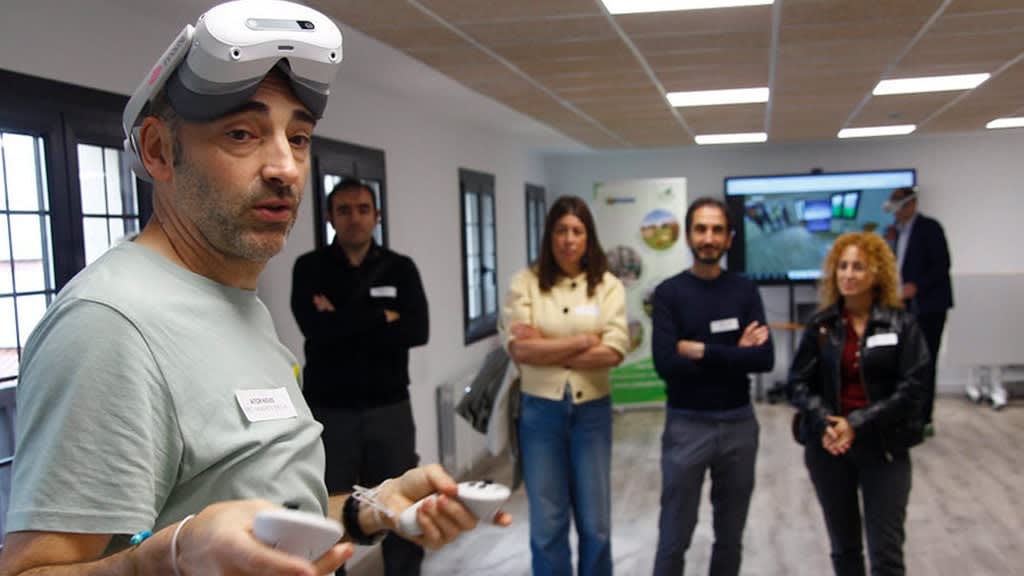
Students train using standalone VR headsets in a room-scale setup, operating the simulated machinery with handheld motion controllers. The untethered headsets let several learners practise at individual stations in the classroom.
Safety and impact
The agroforestry sector has a high rate of occupational accidents, and NATVRSIM's central aim is to reduce incidents when students later handle real machinery by giving them a stronger foundation before their first hands-on sessions. The project also seeks to narrow the gap between classroom learning and workplace demands, familiarising students with new ways of training and assessment. Organisers expect sustainability gains as well: cutting the hours real machinery runs during training reduces fuel use, operating costs and emissions, with plans to track both the financial and environmental savings.


