

Background
Foróige, one of Ireland's largest youth organisations, runs GoVirtual, a digital youth work programme that uses immersive virtual reality to reach young people who cannot easily access in-person services — those who are socially isolated, rurally cut off, members of the LGBT+ community, or whose disability makes attending a youth club difficult. The programme's VR Development Officer describes its value as giving an isolated young person the agency to put on a headset and meet their youth worker from home.
The partnership
Case Study 3 documents an Erasmus+ Small-Scale Partnership (reference IE01-KA210-YOU-000171010) between Foróige GoVirtual and HUMAK University of Applied Sciences in Finland. Running in 2023, the project set out to grow the digital capacity of both organisations and to explore how digital youth work can support isolated and marginalised young people across two countries.
A spatial gallery instead of a report
Rather than publishing its findings as a conventional PDF, the partnership built a walkable spatial gallery in Spatial — an immersive 3D environment that visitors move through to explore the collaboration's shared learning, youth-centred tools and outcomes. The gallery itself became a demonstration of the borderless, collaborative way of working the project was advocating.
Technology
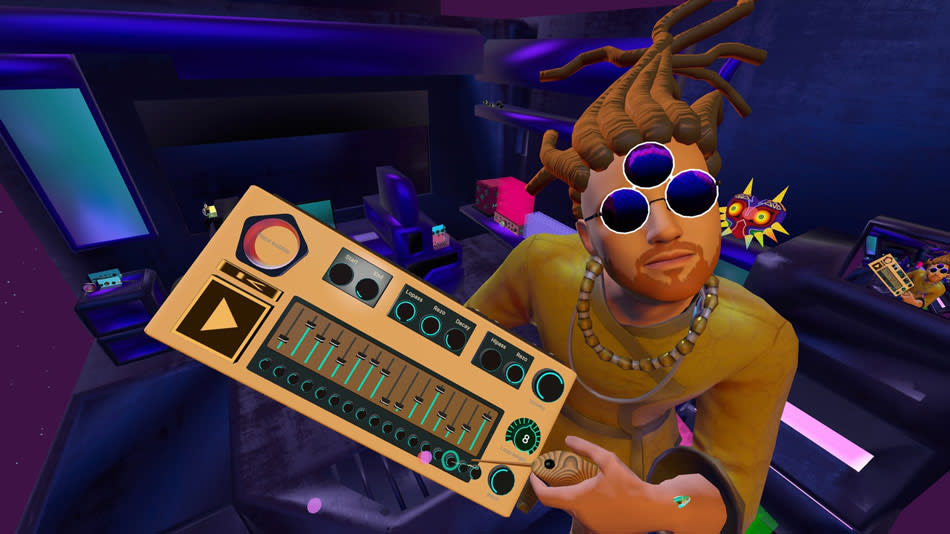
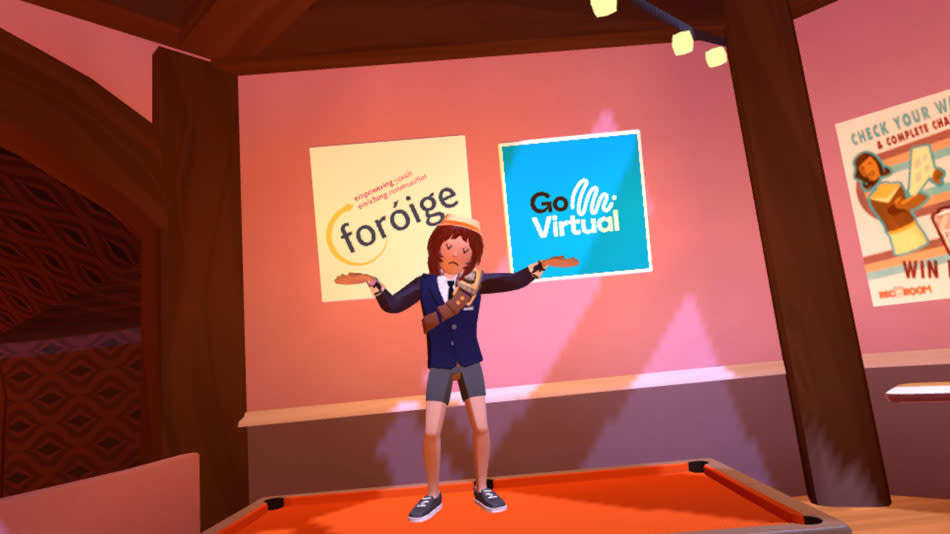
The collaboration took place in social VR, with participants from both organisations meeting in a shared multi-user virtual space spanning Ireland and Finland. The documentation gallery was built on the Spatial platform and rendered as realtime 3D content, accessible as an immersive walkthrough.
Why it matters
The partnership concluded that the future of youth work is not only digital but collaborative, borderless and full of possibility — a reflection of GoVirtual's wider goal of meeting young people wherever they are, regardless of distance or circumstance.