

Background
Sabena Technics, a French aircraft maintenance, repair and modification specialist, set out to validate the design and ergonomics of two cockpit variants as part of an avionics renovation programme. The digital modelling team wanted an alternative to the sequence of lengthy review meetings, 2D drawings and costly physical mock-ups that had historically driven cockpit sign-off — a process in which interim validations could take months and leave design questions unresolved for clients.
The deployment
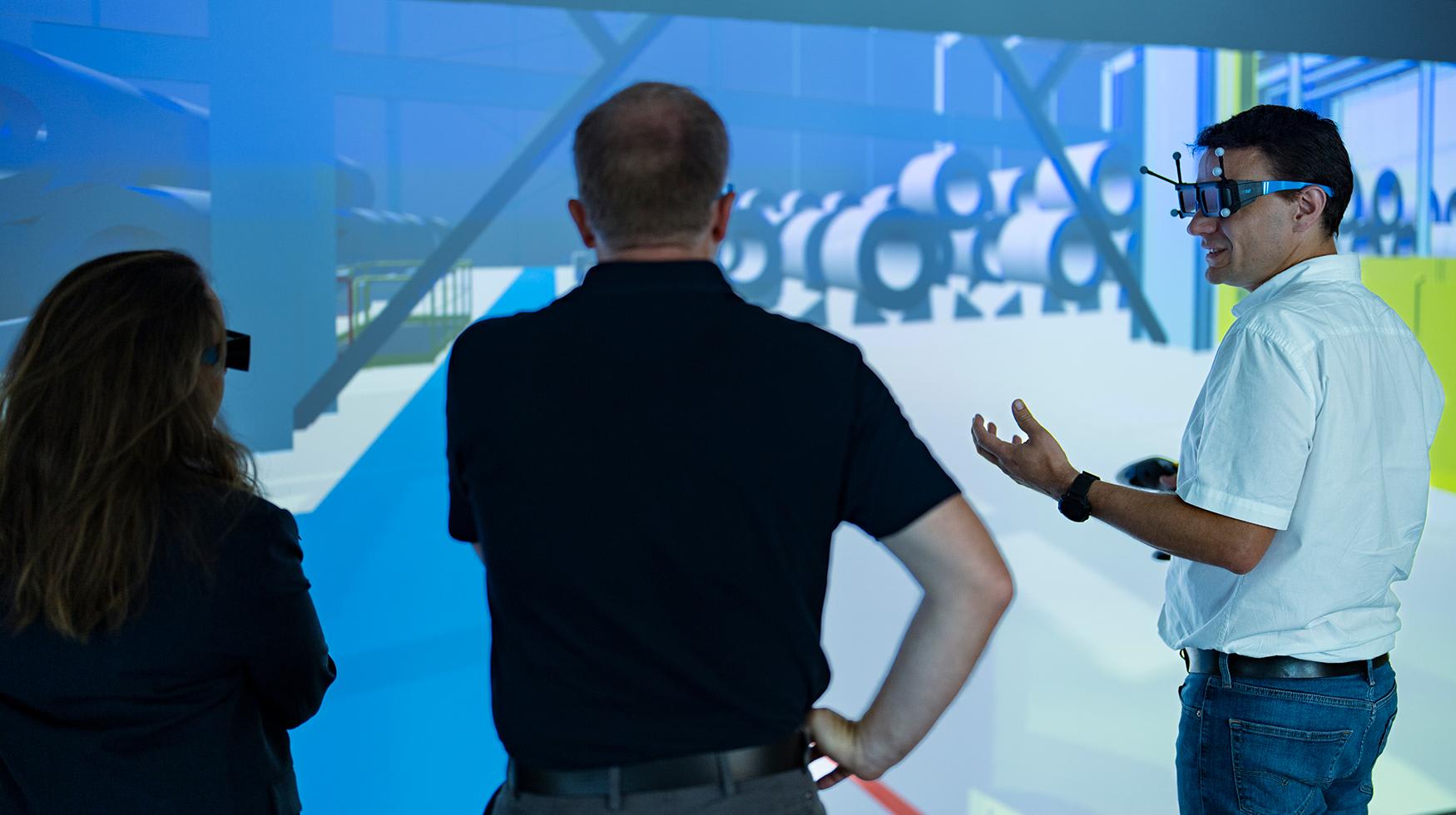
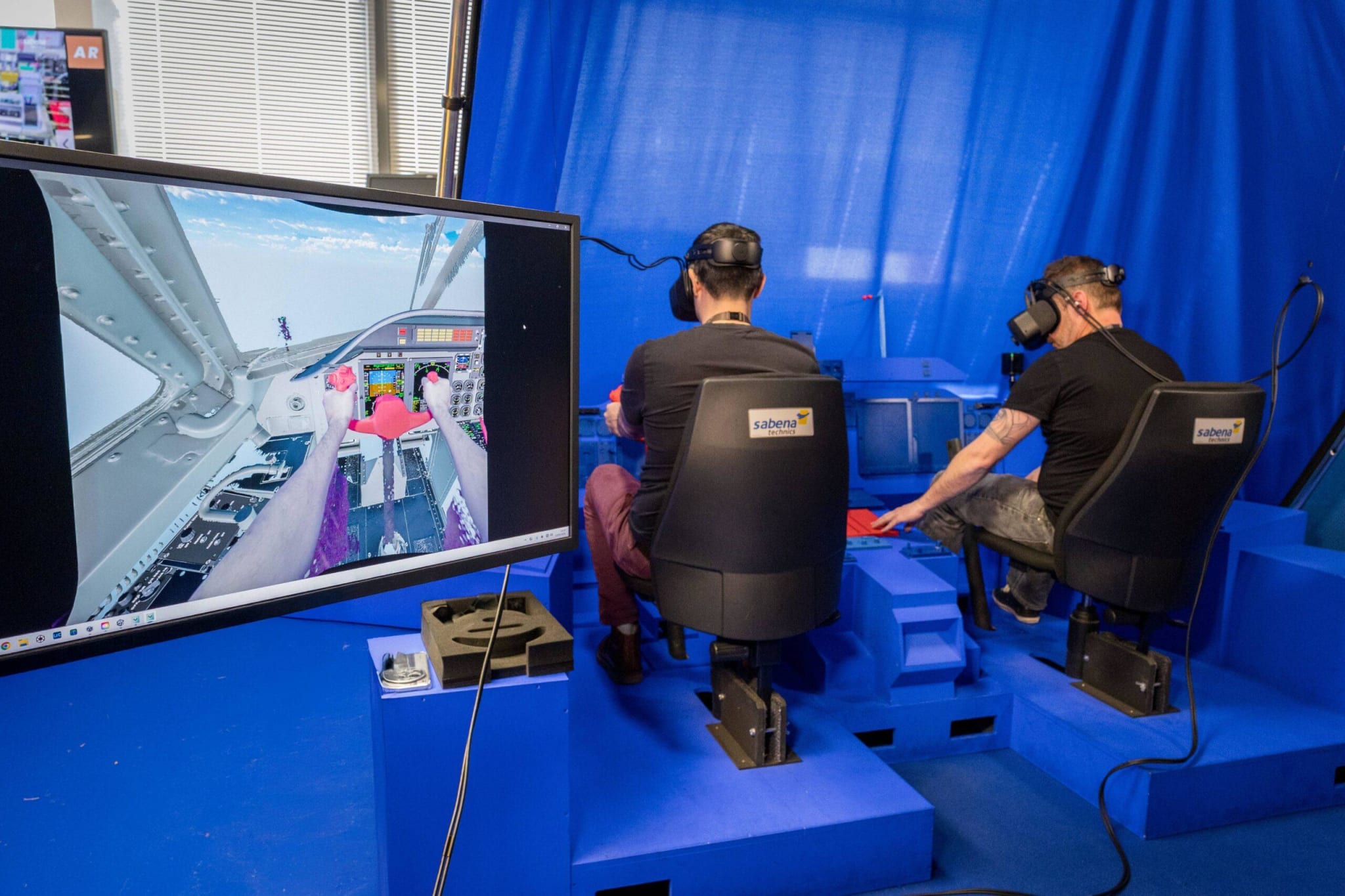
Sabena Technics' digital modelling department partnered with French XR integrator Immersion to build a mixed reality workflow anchored on two Varjo XR-3 headsets, one each for pilot and co-pilot. A custom Unity application — developed by Immersion and progressively handed over to Sabena Technics' internal team — renders high-fidelity 3D models of each cockpit variant, built from high-resolution 3D scans and the engineering department's CAD studies. A simplified physical cockpit mock-up, produced by Sabena Technics' in-house furniture workshop, sits inside the headset's passthrough view so that pilots, ergonomics specialists, subcontractors, certification authorities and end customers can physically reach and touch real hardware while the digital avionics layout is registered to it.
Hardware and software stack
- Two Varjo XR-3 mixed reality headsets, PC-tethered to workstations
- Custom Unity application developed by Immersion
- High-fidelity digital models generated from high-resolution 3D scans and engineering CAD data
- Simplified physical cockpit mock-up providing the real-world reference
Outcomes
Validation of both cockpit variants' design and ergonomics was completed in 10 months, with interim design reviews that previously took several months now running in a matter of days. Design risks are surfaced earlier, ambiguity in stakeholder communication is reduced, and clients can be brought into the process much earlier in the design cycle. The process was qualified internally by installing the complete setup — PC, headset and chroma-key backdrop — directly inside a real cockpit at the Dinard site, with certification stakeholders including EASA and the French DGA observing pilots and co-pilots running flight scenarios and checklists. Feedback from pilots, internal teams and regulators has been uniformly positive.
Scale-up
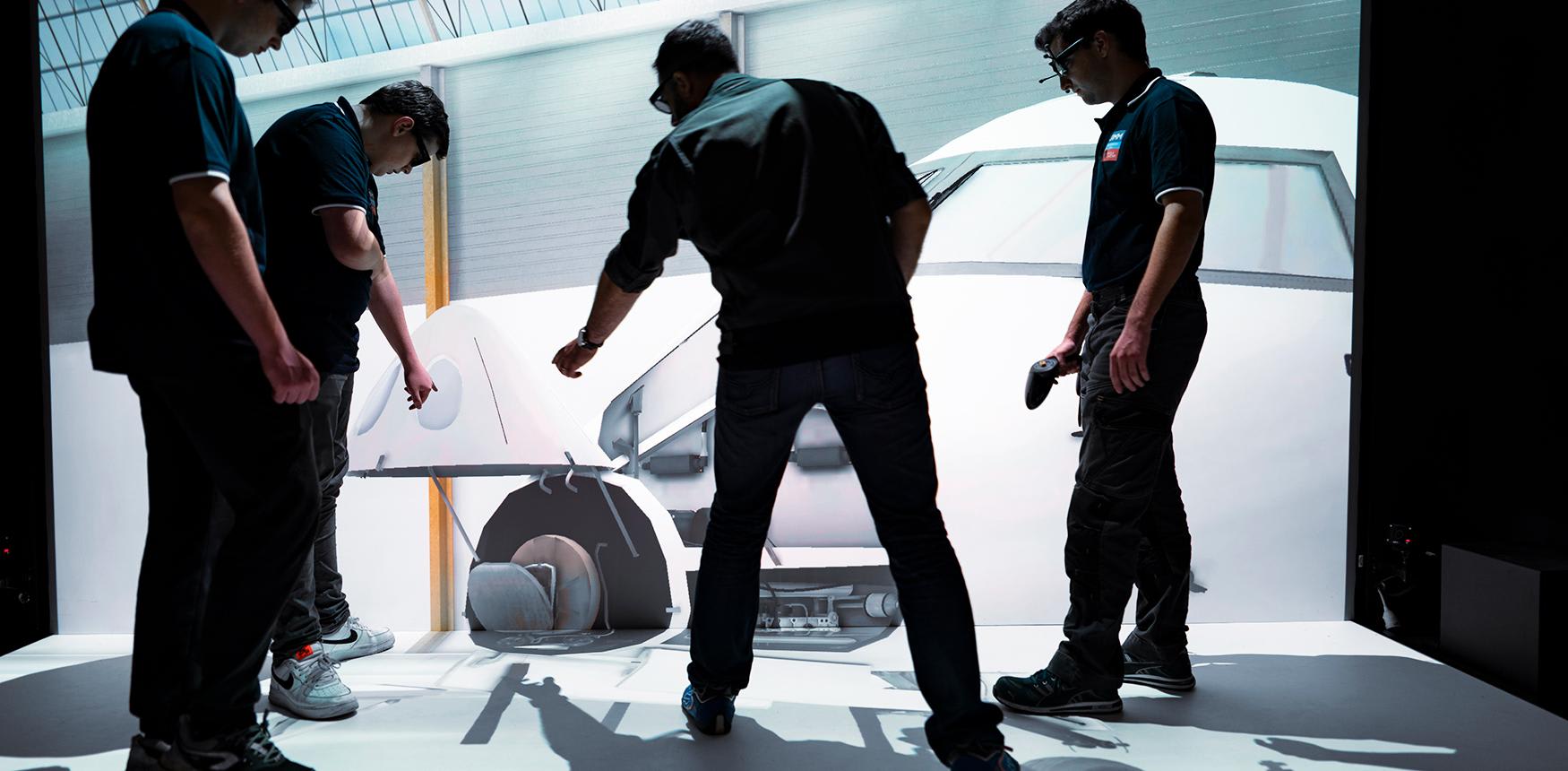
Following the cockpit project, Sabena Technics built out a permanent XR capability that extends beyond the cockpit to the whole aircraft — including a blue-film-lined chroma-key immersive room at Bordeaux for larger-scale simulations covering wiring, integration and maintenance workflows. The digital modelling team has developed its own Unity templates and scripts, trained a Master's-level Game Programming apprentice on industrial XR projects, and now operates the environment end-to-end. Demonstration videos produced from the project are used at recruitment events including the Paris Air Show.